Inside Sotheby's Madison Avenue Headquarters: Where an Auction House Becomes a Museum
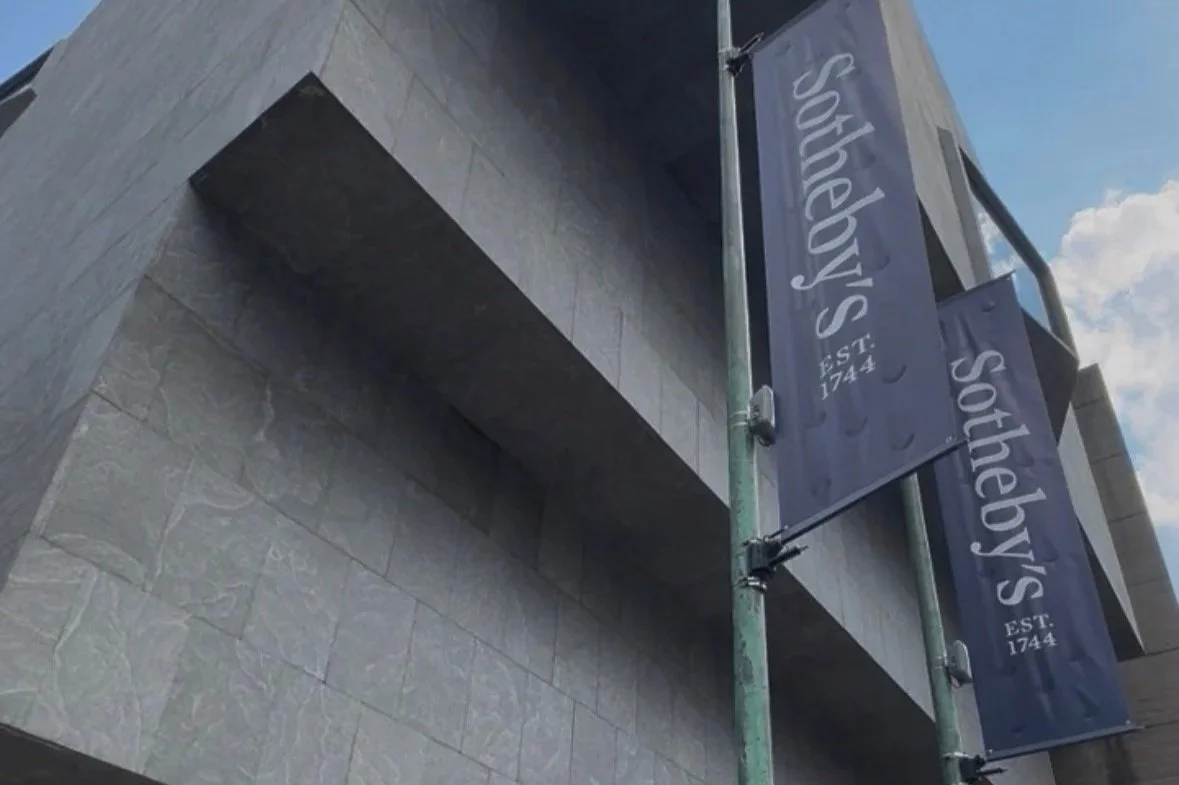
Photo by Ava Chieffo
A building with more lives than most museums
Visitors strolling through auction house Sotheby's Madison Avenue headquarters this summer are in for a treat.
The address is 945 Madison Avenue, at 75th Street, and the structure itself is nearly as much of a draw as anything inside it. Designed by Marcel Breuer for the Whitney Museum of American Art and opened in 1966, the building — with its cantilevered granite, deep trapezoidal windows, and bush-hammered concrete walls — is a Brutalist landmark in its own right.
After the Whitney decamped downtown to its Renzo Piano-designed building in 2015, the space had a run as an outpost first for the Metropolitan Museum of Art, then for the Frick Collection during its own renovation. In 2024, Sotheby's bought the building outright, and after a renovation led by Herzog & de Meuron — the firm behind London's Tate Modern and Hong Kong's M+ — the auction house relocated its global headquarters there, trading its longtime home on York Avenue for Museum Mile prestige and Gagosian-adjacent real estate.
The result is a genuinely unusual hybrid: a working auction house, gallery space, and, as of this year, even a restaurant (Marcel, a partnership with the design studio Roman and Williams), all operating inside what was for decades one of the most recognizable museum buildings in the country. Walking through, the space reads like a museum-and-auction-house joint venture — polished like a five-star gallery, with the added charge of knowing that virtually everything on display technically has a price.
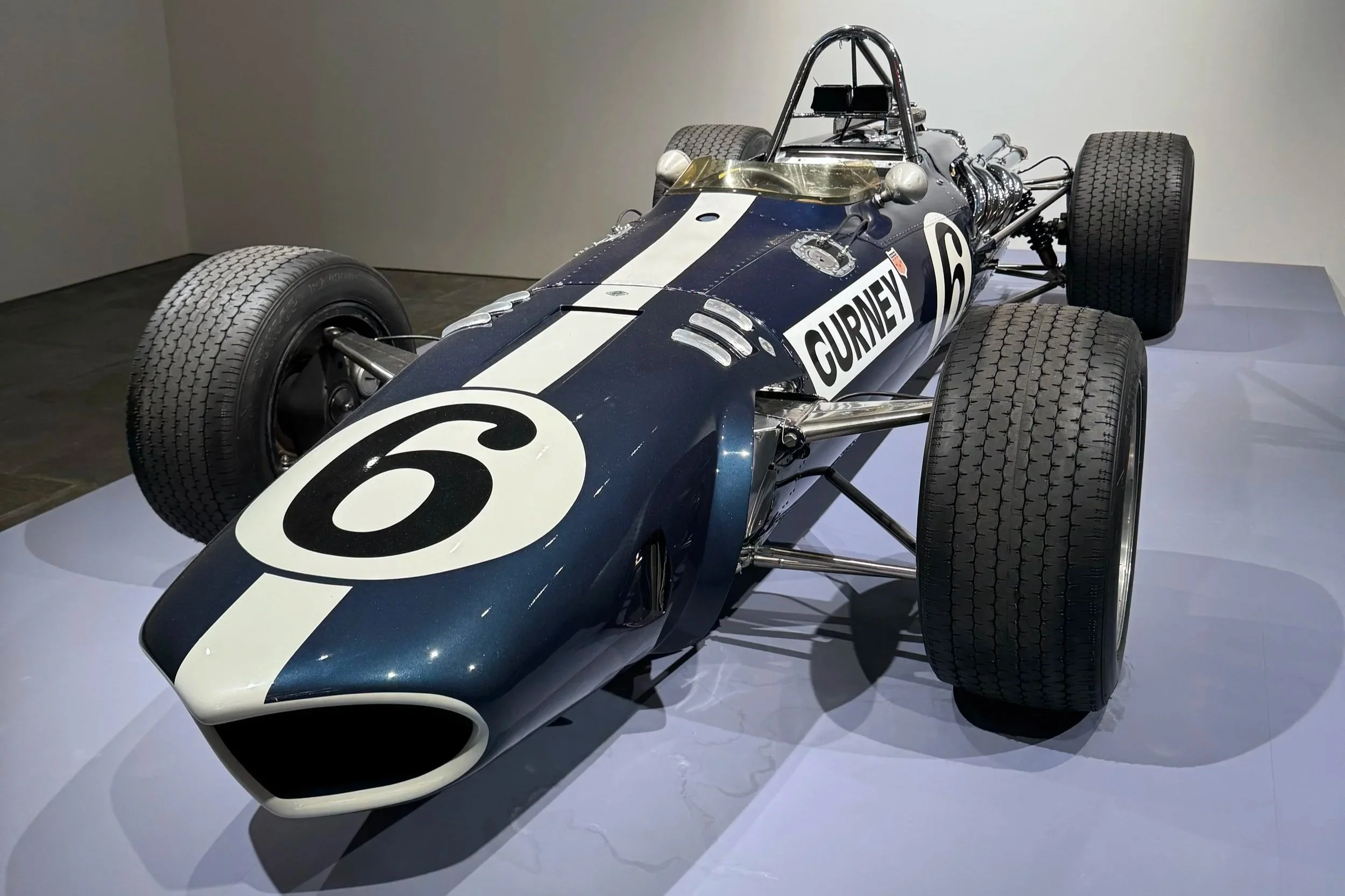
Photo by Ava Chieffo
The race car
The car on view is chassis 103 of the AAR Eagle Mk I Gurney-Weslake, one of the Formula One machines that came out of Dan Gurney's All American Racers. Gurney founded the team with Carroll Shelby in 1964, an outfit that traced its origins to a Goodyear-backed effort to finally dethrone Firestone at Indianapolis. From that Santa Ana, California base, Gurney's ambitions expanded across the Atlantic to a second shop in Rye, England, where his team worked with engine builder Weslake and Co. to produce a purpose-built three-liter V12 for a genuine crack at Formula One.
Designer Len Terry, who had just come off drawing the Lotus that carried Jim Clark to an Indianapolis 500 win, laid out chassis 103 as the second Eagle built around that V12. It debuted at Brands Hatch's Race of Champions in 1967 with Richie Ginther at the wheel, then went to Gurney himself for that year's Monaco Grand Prix, where a failed fuel pump belt ended his run after four laps. The car's strongest showing came two months later at a rain-soaked Mosport, where Gurney brought it home third. Grand Prix glory ultimately belonged to a different chassis — 104, the sister car Gurney piloted to victory at Spa-Francorchamps that June, a result that remains the only Formula One win by an American constructor in over a century.
RM Sotheby's has now consigned chassis 103 for a September auction, carrying a presale estimate between $7 million and $9 million. In the decades since AAR folded its Formula One operation in 1968, the car changed hands repeatedly — at one point landing with NHRA drag racer Danny Ongais — before crossing back to England in 1998 to return to competitive historic racing at venues like the Goodwood Revival. It's been with its present owner since 2002. Cars with this kind of layered history, more defined by engineering ambition and near-misses than outright silverware, have become a particularly hot corner of the collector market. And whatever it eventually fetches, there's something arresting about encountering a machine engineered for 200-mile-an-hour circuits standing motionless under museum lighting.
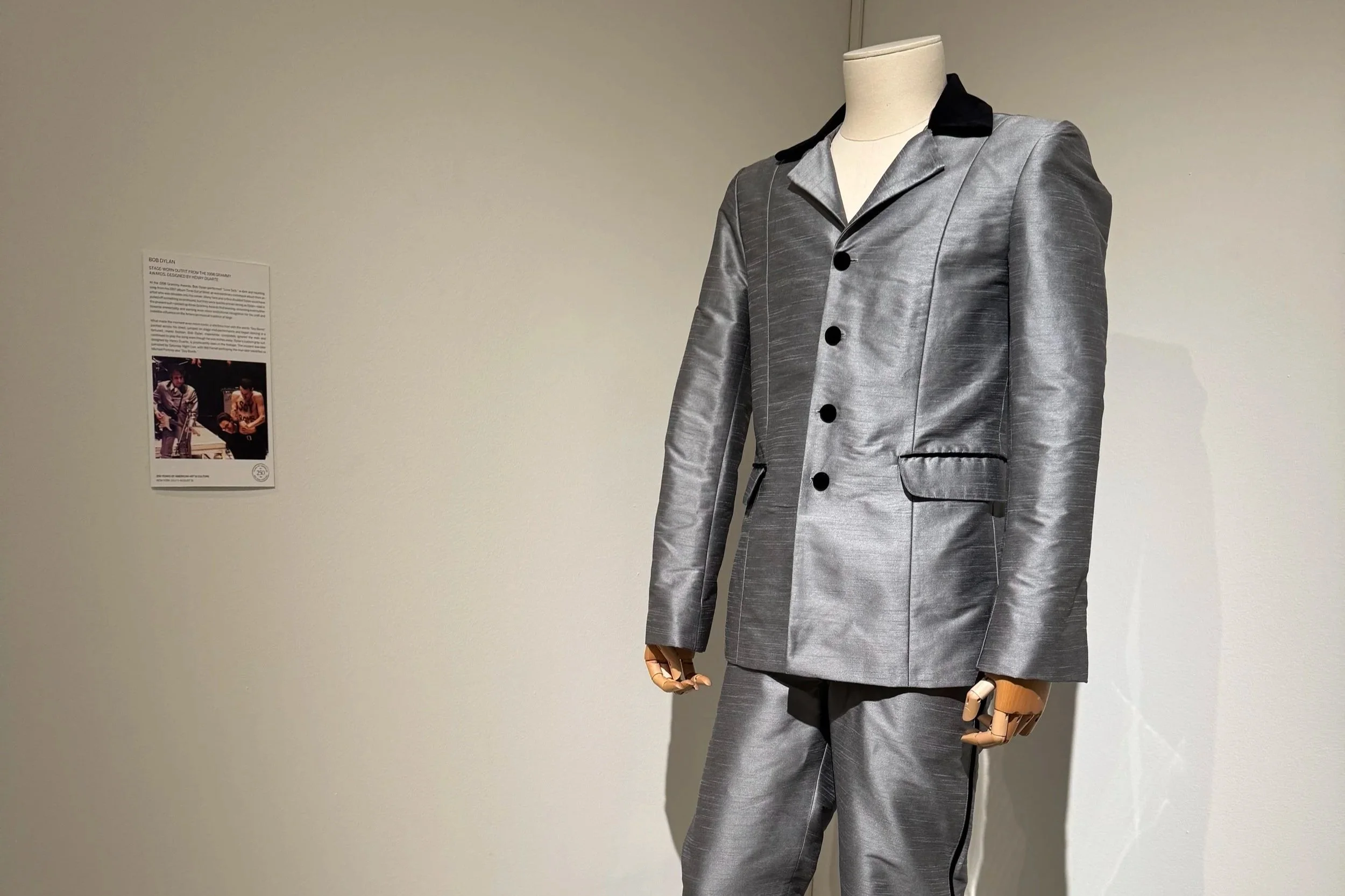
Photo by Ava Chieffo
Bob Dylan's suit
A few rooms away, mounted with the same careful reverence typically reserved for a painting, is a stage-worn suit belonging to Bob Dylan. Displayed like sculpture — no music, no crowd, just fabric standing in for six decades of American cultural history — the piece underscores how seriously auction houses now treat music memorabilia. Dylan's clothing and personal effects have become significant collector's items in their own right in recent years, turning up everywhere from the Smithsonian's collections to dedicated music-memorabilia auctions, and their presence at Sotheby's fits a broader pattern of treating American pop culture with the same institutional weight once reserved strictly for fine art.
The timing isn't incidental. The pieces are part of a season-long exhibition Sotheby's has titled 250 Years of American Art & Culture, tied to the United States' 250th anniversary and running at the Madison Avenue headquarters through mid-August. The show is built around tracing American art and culture — fine art, literature, craft, and ephemera — as one continuous narrative rather than as separate categories, a framing that explains why a Formula One car and a Bob Dylan stage suit can share space with fine jewelry and old-master paintings without feeling out of place.
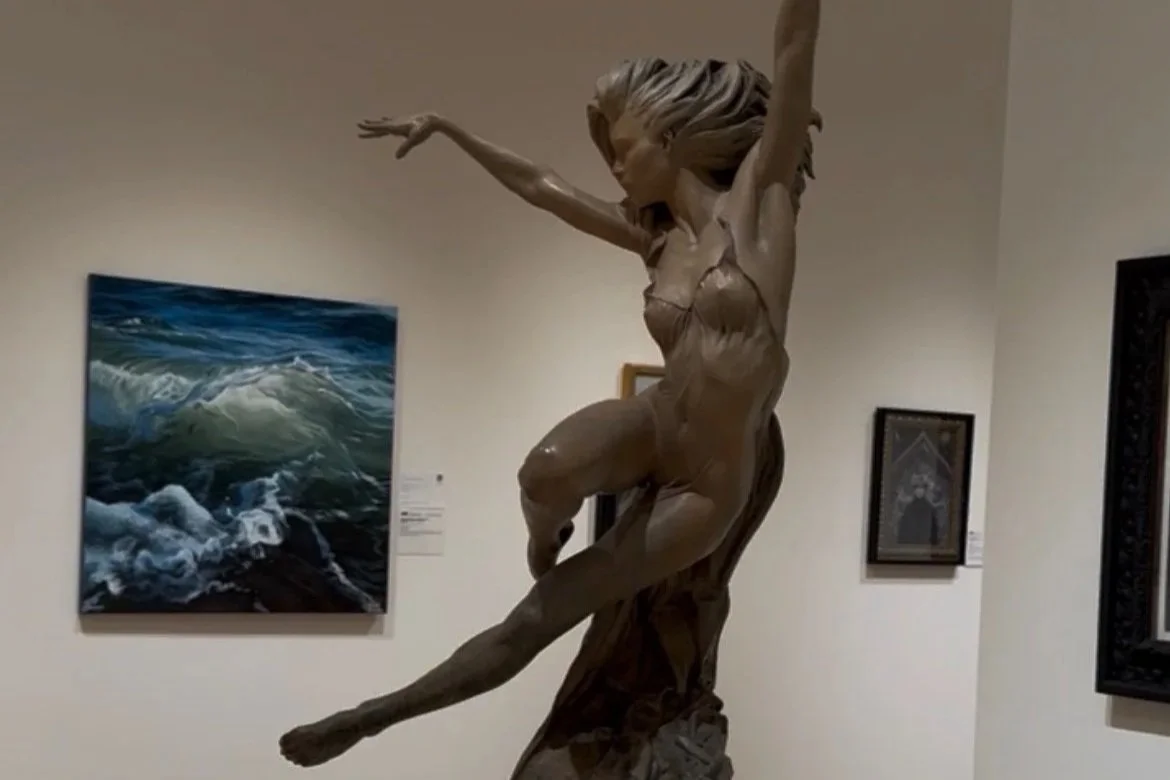
Photo by Ava Chieffo
Worth the detour
New Yorkers are lucky to have a home where international brands come to be seen, high ticket items go on display to get auctioned, and even chefs come to show off their skills. It’s one of the few places on the planet where you can find people with unique talent as well as exceptionally rare items to view or purchase. In terms of unique items to auction off, this is especially true at Sotheby’s Madison Avenue headquarters.
For visitors expecting little more than a lobby, the current exhibition amounts to a genuinely substantial, free museum-caliber show — one that happens to double as a very expensive store.
With the show running through mid-August, it offers a rare chance to see an auction house doing its best impression of a museum, in a building that spent decades being exactly that.