2 World Trade Center: Construction On The Final Piece Of Downtown NYC’s Skyline Begins
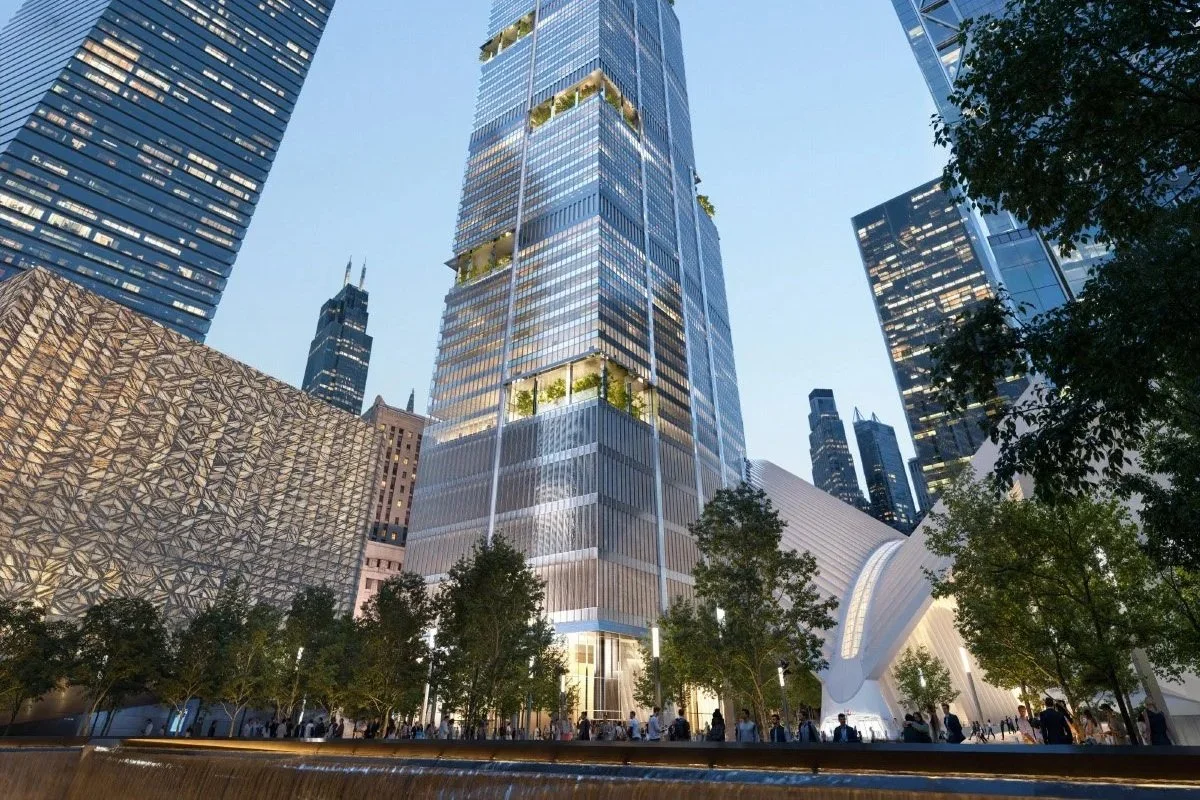
Photo Credit: Foster + Partners
A Tale of Two Visions
The reconstruction of the World Trade Center site remains one of the most ambitious and symbolically charged urban redevelopment projects in global history. While buildings like One World Trade Center and 3 WTC have long since defined the new lower Manhattan silhouette, 2 World Trade Center (200 Greenwich Street) stands as the final, unbuilt crown jewel of the complex.
The final architectural vision for 2 World Trade Center is designed by Norman Foster of Foster + Partners. Stepping away from the older diamond-topped and stacked-block iterations, the final blueprint delivers a 55-story, 1,226-foot-tall supertall skyscraper optimized as a modern corporate hub.
A primary focus of the design is the seamless integration of outdoor space and wellness features into a corporate environment. The building incorporates over an acre of vertical green space, which is distributed across multiple landscaped corner gardens and lush open-air terraces built directly into the upper office floors.
At the street level, the tower features a massive, floor-to-ceiling glass lobby designed to maximize natural light and maintain clear sightlines to the surrounding 16-acre campus. This expansive base functions as a major transit link, offering employees and visitors direct underground access to the neighboring Oculus hub. This connection provides immediate, indoor entry to twelve New York City subway lines and the PATH train system, fully integrating the final tower into the lower Manhattan grid.
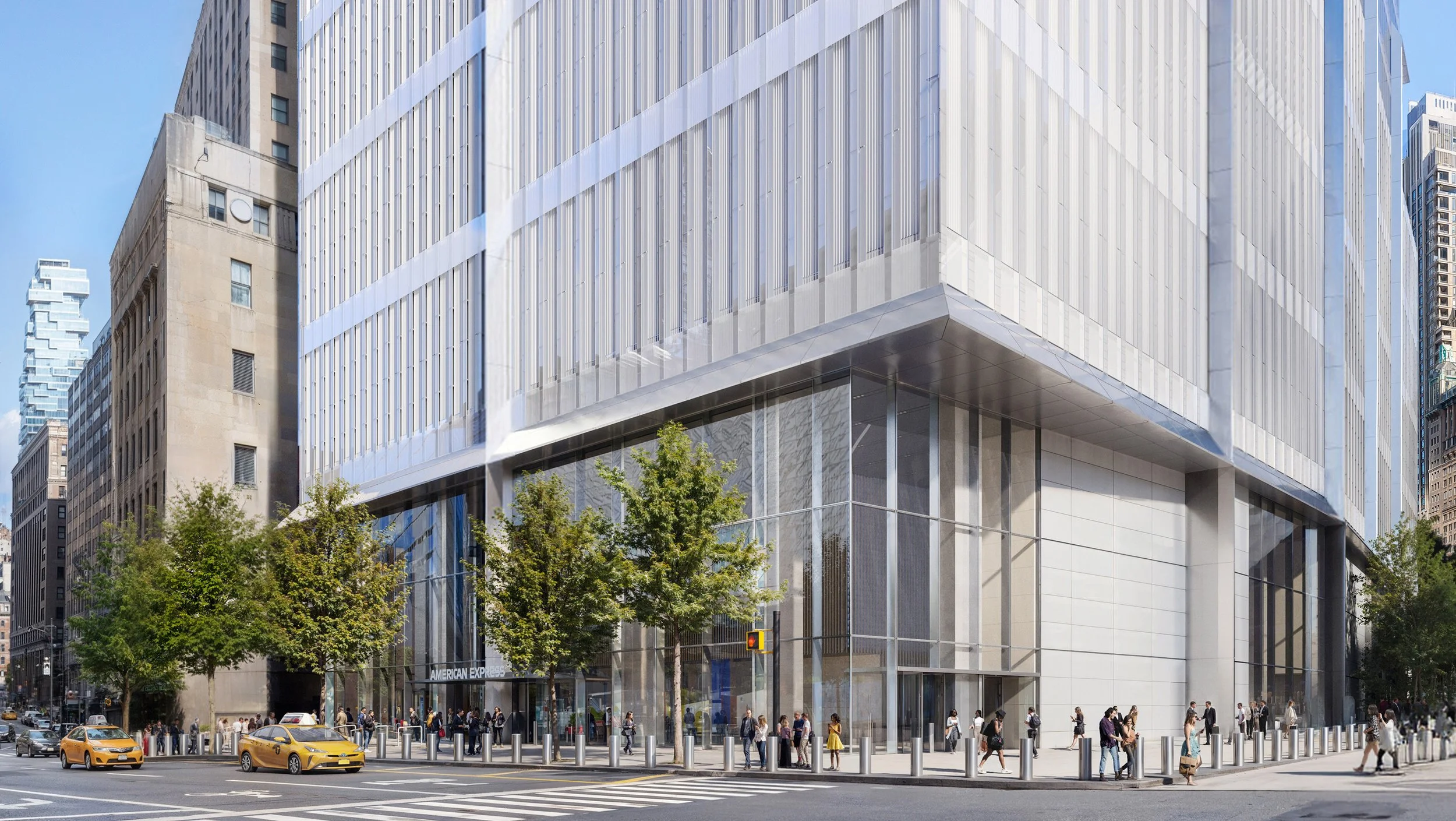
Photo Credit: Foster + Partners
Current Status: The "Stub"
The construction of 2 World Trade Center (2 WTC) has officially reached a historic turning point. After sitting idle for over a decade as a one-story foundation stub, the final commercial piece of the World Trade Center master plan is back underway.
The official groundbreaking ceremony on July 9, 2026, marked a historic milestone for Lower Manhattan. Held right at the 200 Greenwich Street site, the event brought together top state and city officials, construction executives, and corporate leadership to celebrate the formal start of construction.
The massive revival of the project stems from an agreement finalized in February 2026, when American Express announced it would develop and occupy the tower as its new global headquarters. The financial giant plans to relocate roughly 10,000 employees to the building, filling a crucial tenant vacancy that had stalled the site's progress for years.
Several major details regarding the local economic impact were spotlighted during the event:
100% Union Labor: It was explicitly emphasized that the massive project will utilize 100 percent union labor to complete the building’s core, shell, and core interior construction.
Job Creation: The construction pipeline is projected to create more than 2,000 union construction jobs and over 3,200 total jobs across the city during its multi-year timeline.
Financial Impact: Economic analysis shared at the event estimates the project will inject approximately $5.9 billion into the New York City economy and $6.3 billion into the state overall.
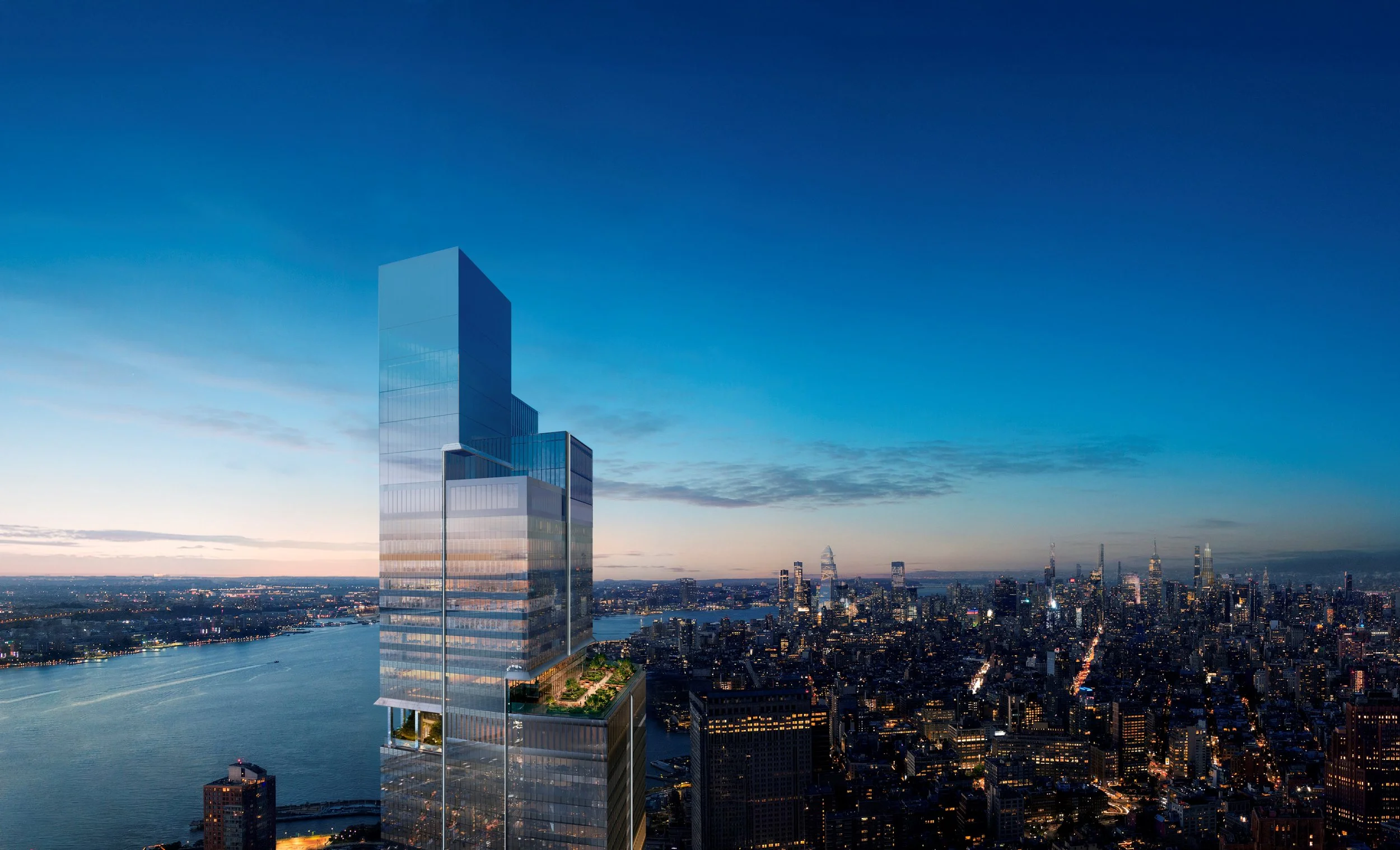
Photo Credit: Foster + Partners
The Future of 200 Greenwich
Building 2 WTC is not a typical construction project. Because it sits directly atop a web of active subway lines and the PATH rail system, the tower’s load must be meticulously distributed.
Vibration Mitigation: Engineers have integrated sophisticated damping systems to ensure that the rumble of the trains beneath does not affect the precision-heavy environments of future office tenants.
Integration with the Hub: The tower must seamlessly connect to the underground "spine" of the WTC complex, requiring intricate coordination with the Port Authority of New York and New Jersey.
For New Yorkers, 2 WTC represents the closing of a chapter. When completed, it is expected to stand approximately 1,350 feet tall, making it the second-tallest building in the complex. It will provide the final architectural backdrop to the memorial pools, completing the "spiral" of heights that Daniel Libeskind originally envisioned for the site’s master plan.
While the cranes are currently quiet, the site remains "shovel-ready," waiting for the right commercial partner to finally complete the most resilient skyline in the world.