

The Book of Mormon Turns Fifteen on Broadway
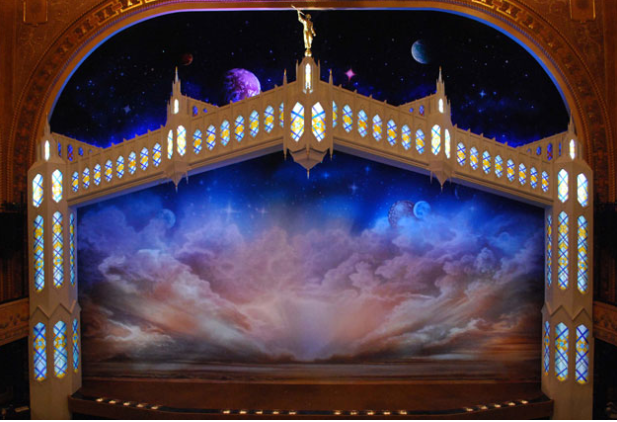
Source: Scott Pask
The Success of the Book of Mormon (Musical)
This year marks the fifteenth anniversary of the Broadway musical The Book of Mormon–a satirical comedy that follows two missionaries, Elder Price and Elder Cunningham, in their challenges to convert Ugandans to Mormonism. Whereas most Broadway musicals rarely run for a year, the Book of Mormon is firmly established as the tenth longest running Broadway musical, and with every performance, it inches closer to taking the ninth spot from Mamma Mia!
The story was written and produced by Trey Parker and Matt Stone, the co-creators and lead writers of South Park, an immensely popular–and regularly offensive–animated television series. With Parker and Stone attached to the production, it attracts those who wouldn’t normally consider themselves fans of musicals, and it doesn’t disappoint as the comedic value of the production is enhanced by numerous raunchy and hilarious musical numbers.
While the musical doesn't have the classic grandeur of other Broadway musicals, it doesn’t fail to exaggerate stereotypes, while portraying the upsides and downsides of the Mormon faith. Through using the premise of the life of Mormon missionaries–a process unknown to the vast majority of Americans–the story demonstrates the peculiarities and beliefs of Mormon life and greatly exaggerates them.
The story focuses on a Mormon’s mission, one of–if not–the most important part of a Mormon’s life, by devoting an entire song to the subject, called “Two by Two.” The musical uses stereotypes in a clever manner, with Elder Price, as the “model” Mormon, and Elder Cunningham, as the misfit and looked down upon Mormon. These two Elders are paired together and sent to a rural, poverty-stricken town in Uganda with residents, who are more interested in surviving each day than following a religion. In fact, the residents of the town routinely use expletives when referencing God and ascribe blame on God for their circumstances.
The Ugandan town is used as the backdrop for the majority of the plot after the initial song, with the setting only changing for Elder Price’s “Spooky Mormon Hell Dream” and his “Orlando” song, where he recalls his dream of having his mission in Orlando, with the golf courses and Seaworld. While the musical satirizes the doctrine of the Book of Mormon, the main Elders are well-meaning characters that truly hope to help the Ugandans. Ultimately, the musical succeeds in telling a rather twisted and satirical story whilst also providing a cohesive and compelling narrative.
A Reflection on a Life of Faith and Irony
The show begins with two faithful naive Mormons who (spoiler alert) are quickly forced to question their beliefs as Mormons. True to his character as a misfit, Elder Cunningham’s solution is to combine the teachings of the Book of Mormon with fantastical tales of fictional characters, like Darth Vader, and perhaps unintentionally, create the Book of Arnold. By coupling popular fiction with what Mormons believe to be truth, the musical creates questions about conformity, religion and the community surrounding them. It also creates a stark contrast between the Mormons and the Ugandans, who lack any faith.
The Mormon’s outfits are an indication of their sameness, with all the Elders dressed in the same black-and-white attire and programmed to propagate and boast about their religion. By contrast, the Ugandans are dressed in colorful garb, and their actions are lively, creative, and intentionally offensive. At the beginning of the musical, there is a large emphasis on a Mormon’s mission—and the subsequent spread of Mormonism—but the characters do not explicitly mention how the two year mission to a foreign place tests each Mormon’s faith.
Upon their arrival in Uganda, Elder Cunningham and Elder Price join the other stranded Mormon pairs in the town, who remain hidden in the Ugandan Latter Day Saints house after having their religion rejected by the local residents. These missionaries exhibit anti-Mormon traits due to their inability to spread their values and serve the Ugandans as spiritual guides. When Elder Cunningham is unable to interest the Ugandans in actual Mormon doctrine, he resorts to lying to pique their interest, sacrificing his Mormon beliefs. He is applauded by the Ugandans for giving them the hope of a better life, but he is scolded by the leaders of his church for reinventing the Mormon principles to baptize the Ugandans.
Then when Elder Price arrives in Uganda, he is initially overzealous in sharing his Mormon values but fails to do so and nearly leaves Uganda in disgrace. However, after Elder Cunningham shows him the ways in which his stories have helped the Ugandans endure their harsh lives, Elder Price realizes that faith is more about an emotional attachment and abstract ideals than the actual Mormon principles. Ultimately, both he and Elder Cunningham resort to using make-believe to make the Ugandans’ reality more bearable.
The Book of Mormon Musical was on Fire, Literally
In early June, there will be a week-long special event to commemorate the Book of Mormon’s fifteenth anniversary, referred to as the Magical Mormon Mystery Week, where a few original cast members will spontaneously reprise their original roles. This event will happen during the shows between June 9th and 14th, with many other surprises, including appearances of the creators of the show.
Unfortunately, on May 4th, the Eugene O’Neill theatre was temporarily closed due to an electrical fire. The spotlight room, roof, and a nearby hotel were severely damaged. As of now, performances have been cancelled through May 20th but were expected to resume on May 27th. The Book of Mormon website states that they are working with a team of professionals to make repairs to the theater, but to date, there has been no announcement of the special Mormon event being cancelled or delayed.
Written by Isabela Belani