

Americans Around The World, Including Celebrities Like George Clooney, Are Now Voicing How Ashamed They Are Of President Trump’s Blatant Lack Of Morals

Source: Squarespace/ Unsplash
The Absence Of A Moral Compass
He himself may have no shame but Americans that actually have souls feel shame for the dishonor he has brought the nation.
Political commentators often point out that Donald Trump operates without a traditional moral compass. In the vernacular of clinical psychology and public discourse, critics regularly invoke terms like "unhinged" or "psychopath" to describe his relentless disregard for norms, truth, and conventional decency. But while the individual at the center of the political storm may be immune to self-correction or remorse, millions of citizens carry an entirely different burden: profound, unrelenting vicarious shame.
For many Americans, watching the political spectacle unfold is an exercise in second-hand embarrassment. The dynamic creates a stark paradox in public life—a leader who experiences no personal shame, governed alongside a populace left to process the humiliation on his behalf.
The Phenomenon of Vicarious Shame
Psychologists describe vicarious shame, or "second-hand embarrassment," as the discomfort felt when witnessing another person break social rules, act foolishly, or violate accepted moral standards. Normally, social pressure works because the actor eventually feels shame, recognizes their violation, and modifies their behavior.
When an individual lacks that capacity—when shamelessness becomes a central feature of their persona—the burden shifts outward. Observers who value dignity, institutional respect, and public decorum are left holding the emotional tab.
When a prominent public figure displays conduct that breaches long-standing standards—whether making outrageous claims, insulting allies, or dismissing legal and democratic guardrails—the reaction from a broad swath of the country is not just disagreement. It is personal embarrassment that such behavior represents the nation on the global stage.
George Clooney and the Duty to Speak Out
Cultural figures have frequently articulated this exact dynamic. Speaking at the Venice Film Festival, which wraps up today 9/12, Oscar-winning actor and director George Clooney captured this sentiment when addressing the state of American governance under the Trump administration.
In an Arab News Instagram post, Clooney is seen calling the administration a "kakistocracy"—a government run by the least qualified or most unscrupulous people—Clooney pointed directly to the daily cruelty and lack of basic decency coming out of Washington, referencing public behavior by top officials and cabinet members.
"The idea that cruelty is the base, that being cruel and unkind is part of the fun of all of this," Clooney remarked during a press briefing. "Where is the sense of decency in all of this? I’m ashamed of all of that, but we will get through it, and we will come out better on the other side."
Clooney has been vocal against the Trump Administration both outright through comments made publicly and also indirectly through the arts. Clooney debuted on Broadway in 2025 starring as Edward R. Murrow, the legendary CBS journalist who took on Senator Joseph McCarthy during the height of the Red Scare, Clooney delivered a commanding and nuanced performance. The play, called “Good Night And Good Luck,” named after Murrow’s famous closing lines on television, drew substantial parallels between the rampant corruption under Senator McCarthy and today’s Trump Administration.
Clooney’s perspective underscores a core driver of public reaction: for those who value accountability, watching shameless behavior normalized from the top creates a deep, lasting personal humiliation for Americans, New Yorkers and citizens across the country.
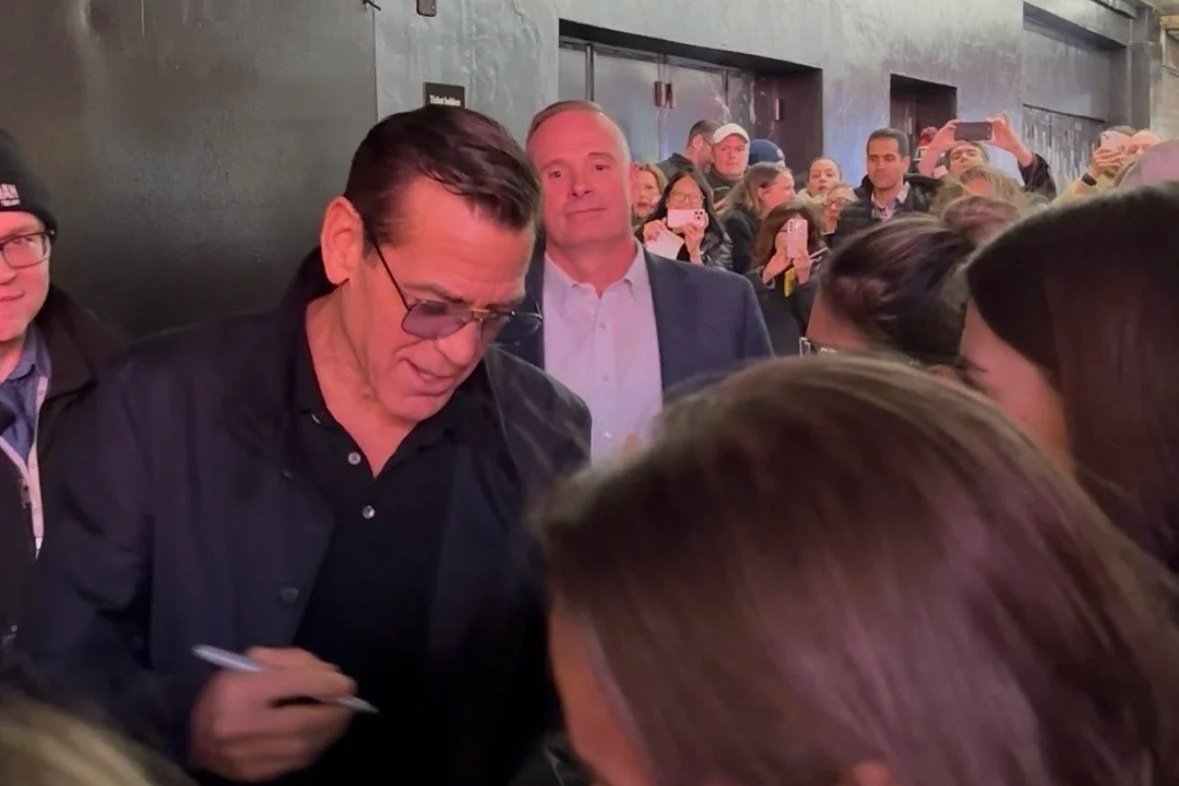
George Clooney signing autographs after a showing of “Good Night And Good Luck” on Broadway. Source: The Empire City Wire.
The Asymmetry of Modern Politics
This dynamic highlights a growing asymmetry in political life. Traditional governance relies heavily on informal guardrails—the understanding that shame, public pushback, or bad press will curb extreme behavior. When an actor proves completely resistant to those traditional pressures, the system faces an unprecedented test.
For our readers, this underlying tension explains much of the ongoing friction in contemporary national discourse. One segment of the electorate views complete immunity from shame as a form of strength or authenticity, while another sees it as a fundamental breakdown of civic responsibility.
As long as this gap persists, millions of Americans will continue to navigate the uncomfortable reality of disagreeing with the majority of the actions of the nation’s president and in turn, feeling ashamed on behalf of a leadership style that refuses to feel ashamed of itself.
Donald Trump’s net approval rating remains in the dumps at -26, according to The Economist’s tracker of YouGov polling. 61% of those polled disapprove of the president as of September of 2026.