New York City is a haven for bagel enthusiasts, boasting a diverse array of bagel shops that cater to every palate. Among the myriad options, a handful stand out as the best in the business. In this guide, we'll take you on a mouthwatering journey through the city's bagel scene, highlighting the unique offerings of each renowned establishment.
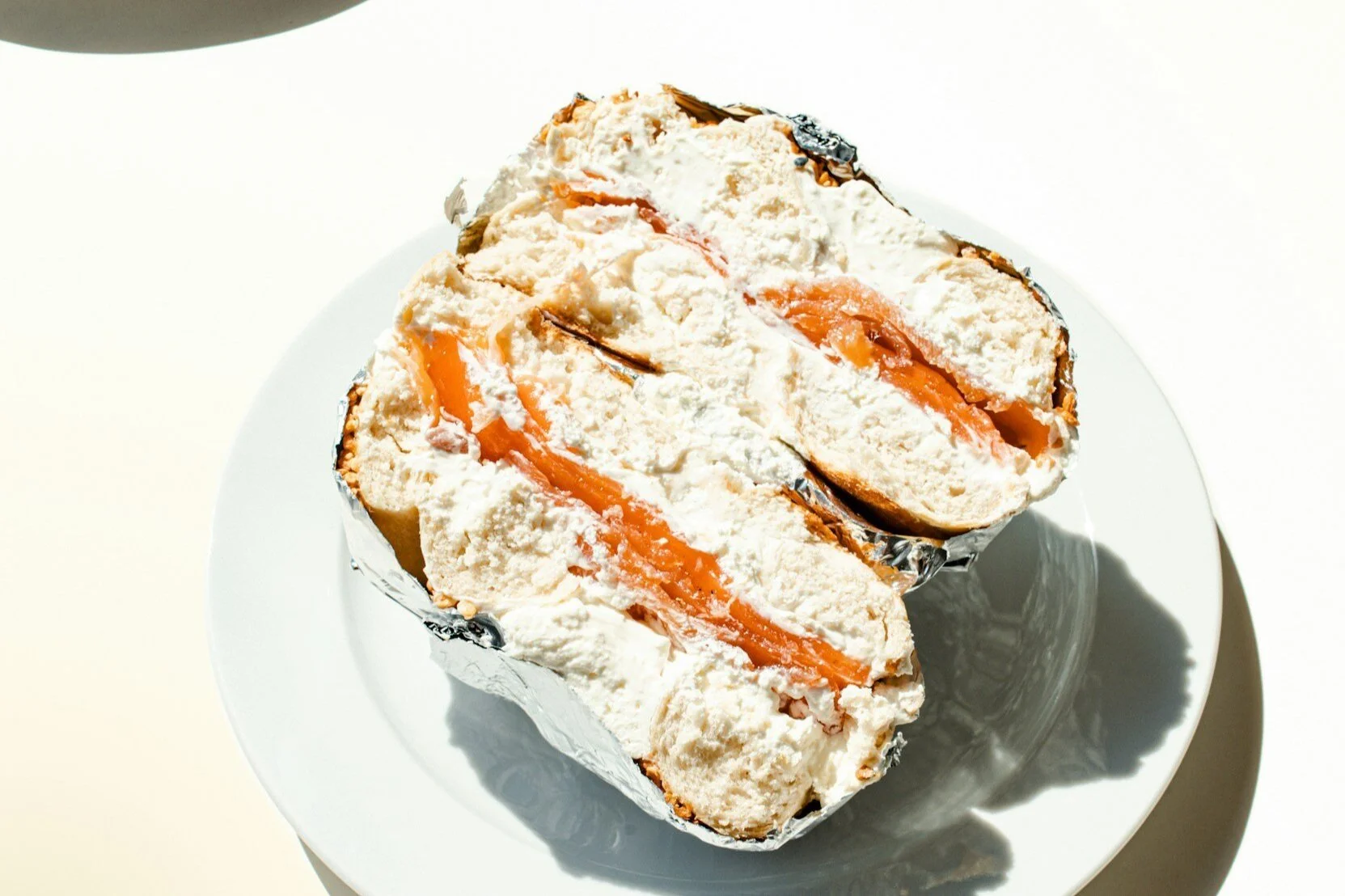
Source: Squarespace/Unsplash
1. Bagels And Co.
Bagels And Co. runs a modern bagel shop on old rules. The classics come first — plain, sesame, everything, made the traditional way — and the newer flavor combinations sit next to them without pushing them aside. It is a kosher deli, and the menu reads like one, running well past bagels. Families settle in, regulars order without looking up, and first-timers get the same treatment. Nothing about the place is trying to be a scene.
The shop's own recipe for its success is plain: simplicity, quality, and tradition. The ingredients are local and fresh, and the bagels are made with care at every stage, from dough to bake. You can taste the difference that discipline makes. A sesame bagel here has a proper crust and a dense, chewy middle. The flavored cream cheeses and the less expected bagel flavors give repeat customers a reason to keep rotating. One visit covers the classic order; the second visit is where the experimenting starts, and the menu is built to reward exactly that.
The menu does not stop at bagels, either. This is a full kosher deli counter, and its own listings add pizza, salads, falafel plates, and brunch dishes to the morning order. That makes it an easy lunch stop too, especially for a group whose members never want the same thing.
The room helps. It is warm, small, and family-friendly, with the easy familiarity of a neighborhood deli that knows its customers by order. Locals treat it as their default. Visitors find it and understand the loyalty within one visit.
There are two shops now, one on Amsterdam Avenue on the Upper West Side and one on York Avenue on the Upper East Side. Both sides of the park have a claim. Pick your avenue and you still get the same bagel, the same spreads, and the same argument from the regular next to you that his location is the better one, which is the most New York quality control system ever devised.
Order: a sesame bagel for the classic test, then one of the house flavor combinations.
Go when: you want a family-friendly kosher deli, not just a bagel counter.
Location: Amsterdam Ave, Upper West Side, and York Ave, Upper East Side.
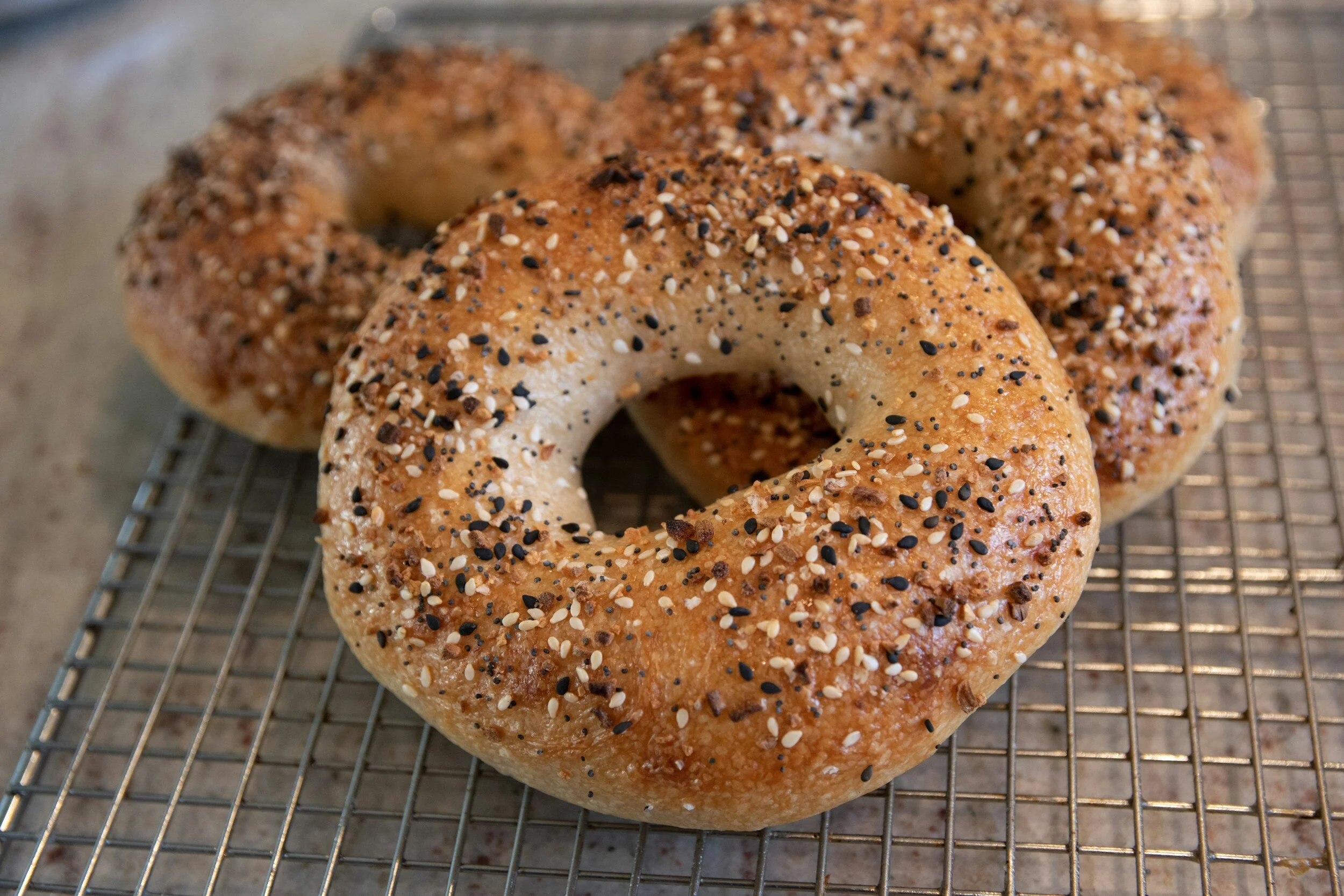
Source: Squarespace/Unsplash
2. Kossar’s Bagels And Bialys
Kossar's Bagels and Bialys has been baking on the Lower East Side since 1936, and it is still the first name in any serious talk about bialys. The Grand Street shop is the original home, a plain bakery counter where the product has always done the talking. Bagels and bialys come out fresh through the day. Generations of customers have built their Sunday mornings around this place. It has outlasted almost everything around it.
The method has three stages, and the shop has stuck to them for close to ninety years. The bagels are kettle-boiled first, which sets the texture and gives the crust its start. Then they bake on burlap boards, the old way, which builds the crust further. Finally they finish on stone, and that last step delivers the crunch. Pure malt syrup goes into the process too, adding a mild natural sweetness you notice without being able to name it. It is slow work by modern standards, and it is the whole point.
The bialy deserves its own sentence, because most bagel shops do not make one worth ordering. A bialy has no hole, just a soft middle filled with onion, and Kossar's built its name on it long before the expansion years. Order both and compare. The bagel gives you chew and crunch; the bialy gives you the bakery's history in a single bite, from a recipe that predates most of the neighborhood's current storefronts.
Kossar's is no longer one shop. Alongside Grand Street there are now locations on York Avenue on the Upper East Side, at Hudson Yards, and on West 72nd Street on the Upper West Side, with the same hand-rolled bagels and bialys at each. The reach is bigger; the bake has not changed to match it. Wherever you buy one, you are eating a piece of the Lower East Side as it used to feed itself.
Order: an onion bialy first, then a classic bagel.
Go when: you want the oldest-school bake on this list, or a Sunday-morning ritual.
Location: 367 Grand St, Lower East Side, plus Upper East Side, Hudson Yards, and Upper West Side.
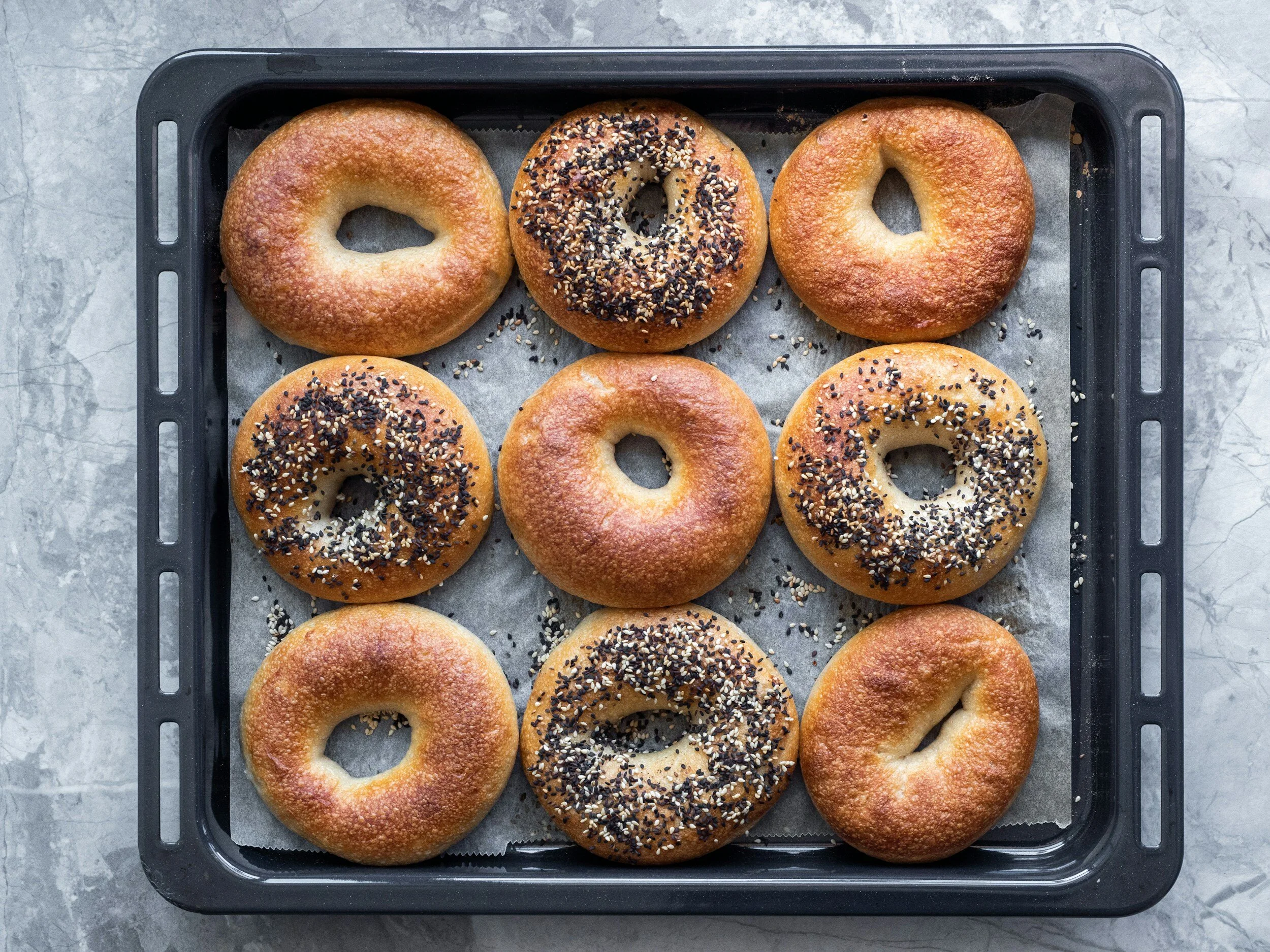
Source: Squarespace/Unsplash
3. Absolute Bagels
Absolute Bagels built its name at Broadway and 108th Street, a few blocks from Columbia, and the line on the sidewalk has long been part of the address. The founder, Sam Thongkrieng, came from Bangkok to New York in the 1980s and learned the trade working at Ess-A-Bagel for years before opening his own shop. A Thai baker making classic New York bagels sounds like a gimmick until you eat one. Then it just sounds like training.
The shop keeps things plain on purpose. No glitz, no branding exercise, just a counter, a case, and bagels that come out hot through the morning. The bagels are on the smaller, rounder side, with a crisp, blistered crust and a dense middle that pulls back when you bite it. The malt sweetness in the dough is the quiet signature. Students, neighbors, and people who rode uptown for this one stop all wait in the same line, and it moves faster than it looks.
That mix is the story of the place: a baker from Bangkok, trained in a classic New York shop, running a counter with almost no decoration and a product that needs none. The bagels sell the shop, and the regulars defend it the way people defend a block or a ball team. In a city that adds a concept to everything, this shop kept the concept out. It is a bagel shop in the oldest sense — hot bagels, fast hands, next customer — and its reputation was built one plain, warm bagel at a time.
Order: a fresh bagel still warm from the oven, kept simple.
Go when: you are near Columbia and the line is moving — it usually is.
Location: Broadway and 108th St, Upper West Side.

Source: Squarespace/Unsplash
4. H&H Bagels
H&H Bagels has been a New York name since 1972, long enough that its bagels turned up on screen over and over: Seinfeld built a famous episode around the shop, and the brand's own site lists Sex and the City and The Office among its cameos. For a lot of people outside the city, this is the bagel they picture first. The name carries that weight, and the shops still have to earn it every morning, one batch at a time.
The recipe is the original one, and the method is the traditional water-bagel process the shop started with. The dough is proofed, then kettle-boiled, given a cold-water bath, and baked in the oven. That sequence sets the crust and the chew, and H&H has held onto it for fifty years.
The ingredients are all-natural and sourced from around the world, and the flour, by the shop's own account, is unbromated and unbleached. Their slogan makes the claim plainly: like no other bagel in the world. New Yorkers can argue with a slogan; the line at the counter argues back.
What you get is the standard-setter: a big, glossy bagel with a firm crust, a tight chew, and enough body to stand up to a heavy filling. It works plain, it works loaded, and it travels well, which helped turn a neighborhood name into a national one.
The brand now ships across the country and has begun franchising, with the dough still kettle-boiled in New York City water and baked on site at each shop. Expansion usually waters a bagel down. Here the process moved with the name, and the bagel still tastes like the one that built the reputation.
Order: a classic water bagel, warm, with cream cheese.
Go when: you want the famous name, or you are introducing a visitor to a New York bagel.
Location: multiple locations across New York City.
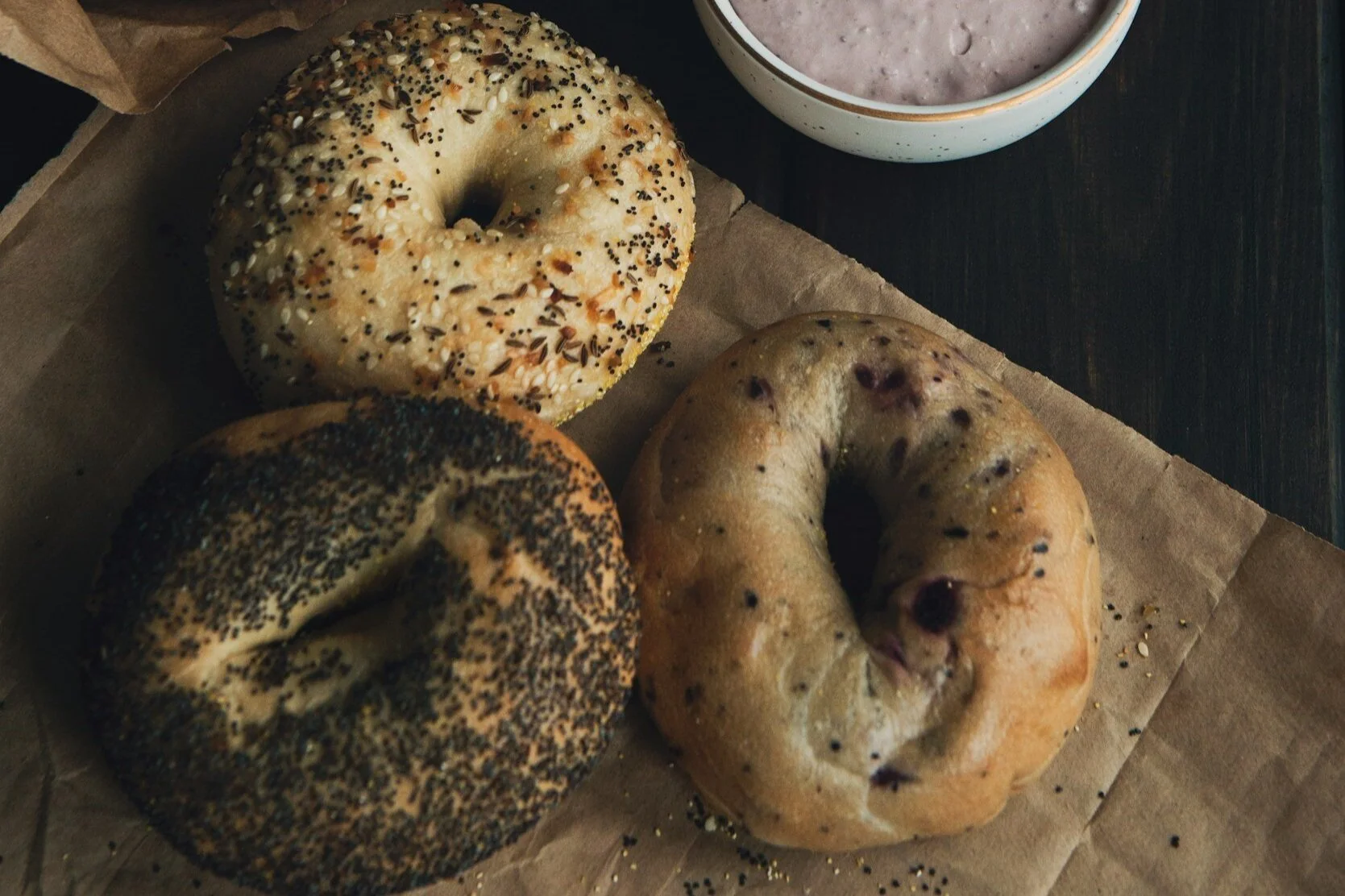
Source: Squarespace/Unsplash
5. Tal Bagels
Tal Bagels is the full-service stop on this list: bagels first, but a whole bakery and deli case behind them. Everything is made on the premises. Danish pastries, croissants, and muffins — including sugar-free and fat-free versions — come out of the same kitchen as the bagels. Then come cakes, cookies, rugelach, breads, and a linzer tart. It is the shop you walk into for a dozen bagels and leave carrying a cake you had no plan to buy, because the case made a better plan for you.
The deli side runs just as deep. The salads include tuna, baked salmon, and whitefish, and the cream cheese case covers plain, vegetable, and scallion. Cold cuts are sliced in-house, with homemade turkey breast and roast beef leading that section of the menu. For a group order, this range is the argument for Tal: one stop covers the bagel people, the pastry people, and the person who claims not to be hungry and then eats half of everything on the table anyway.
The soups are the part regulars mention most after the bagels. Fresh homemade soups rotate through chicken matzo ball, split pea, lentil, and chicken noodle, and a cup next to a bagel turns breakfast into lunch without any extra planning. Then there is the smoked fish. Tal's slicer works with real precision, cutting whitefish, baked salmon, sturgeon, and sable thin and even, the way smoked fish has to be cut if it is going to sit right on a bagel.
The last thing the original write-ups of this shop kept coming back to was the counter itself: tell them what you like and they will work to get it right. That attitude, plus a menu this wide, is why Tal holds its place among older and louder names. It may not win every argument about the single best bagel in New York. It wins the argument about where to feed everyone at once, and on a Sunday morning that is usually the argument that matters.
Order: a bagel with whitefish or baked salmon, sliced thin, plus a cup of matzo ball soup.
Go when: you are feeding a group with different orders and one stop has to cover all of them.
Location: multiple locations in Manhattan, including the Upper East Side, Upper West Side, and First Ave.
Source: Squarespace/Unsplash
6. Black Seed Bagels
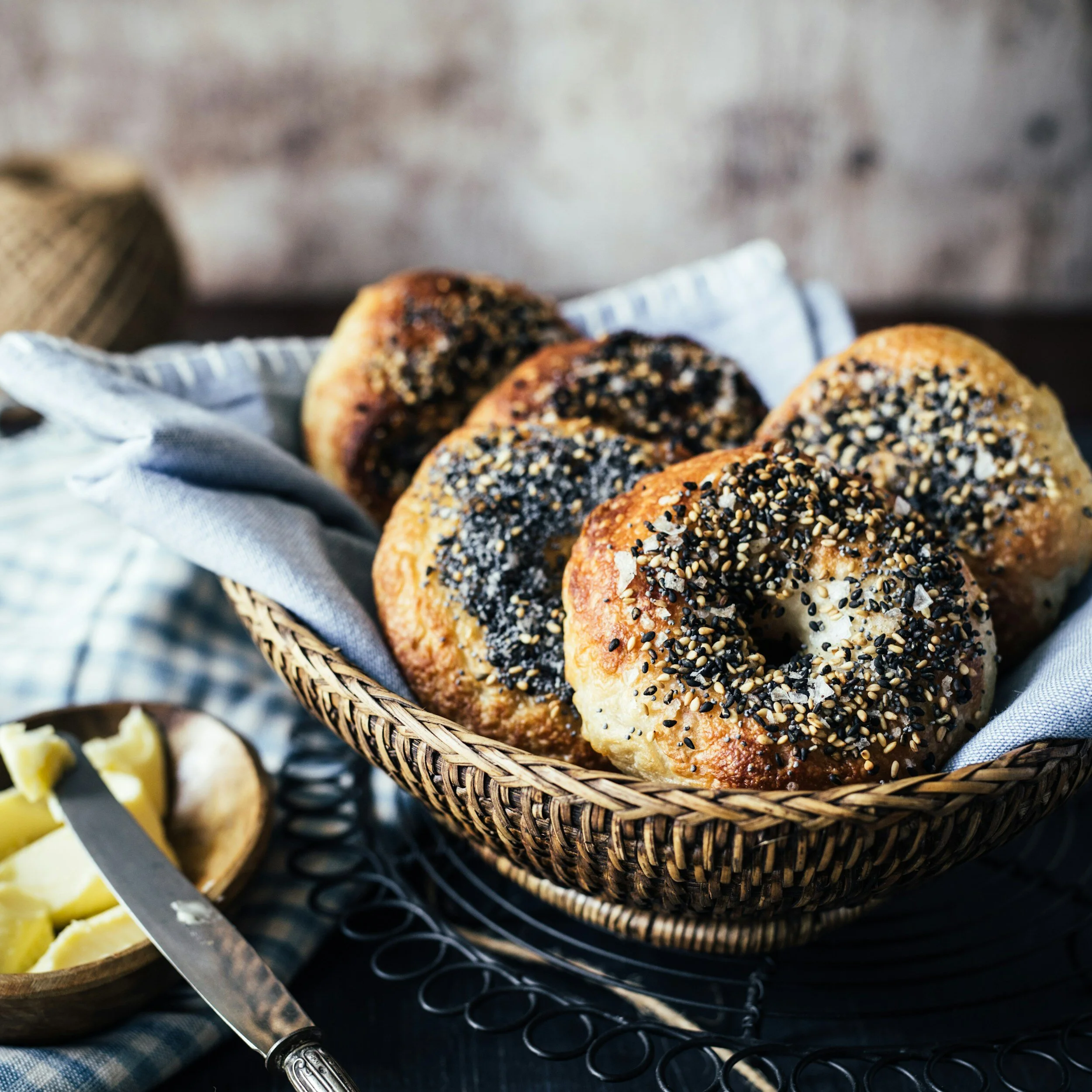
Black Seed Bagels opened its first shop in 2014 and set out to build a better New York bagel by borrowing from Montreal. Executive chef and head baker Dianna Daoheung, a James Beard nominee who was a finalist for Outstanding Baker in 2018, built the recipe and still leads the baking. The result is a bagel a little smaller than the New York standard and a little bigger than a Montreal one. It does not taste like a compromise. It tastes like an argument that two traditions can share one oven and both come out ahead.
The dough is naturally leavened and fermented, and that slow start is where the flavor comes from. Before baking, each bagel is boiled in water with honey in it, which leaves a faint sweetness under the crust.
Then the batch goes into a wood-burning oven, fired by hand. The wood fire gives the crust its crisp edge and a light smoke you will not get from a standard deck oven. It is a longer process than most shops bother with, and every step shows up in the finished bagel.
Out of the oven, the bagels are lightly browned and slide down a marble chute to cool, moved with hand-carved wooden peels. It sounds like theater, and it is, a little — but it is theater in service of the product, the same instinct that runs the open kitchens. The crumb is stretchy and dense in the right way. The crust crackles instead of tearing. A Black Seed bagel eats well plain, with nothing on it, which is the hardest test any bagel on this list has to pass.
From one shop in 2014, Black Seed has grown to ten locations around the city, and the method has traveled with it: honey in the boil, wood in the oven, dough given its time. The growth could have flattened it into a chain version of itself. Instead the bagel stayed small, sweet at the edges, and firm about how it is made. New York did not need a new bagel style. This one made room for itself anyway, between two cities' worth of habit.
Order: a sesame bagel with smoked salmon, cream cheese, tomato, capers, and onion.
Go when: you want the modern, wood-fired take and a bagel that holds up plain.
Location: ten locations across New York City, including Nolita, the East Village, and Rockefeller Center.

Source: Squarespace/Unsplash
7. Ess-A-Bagel
Ess-A-Bagel opened in 1976 on First Avenue, founded by Florence and Gene Wilpon with Florence's brother Aaron Wenzelberg. The family came from an Austrian baking background, and baking was the family trade long before there was a shop with their name on it. Within two years, the hand-rolled bagels were voted the best in the Tri-State area. The line that still forms outside is not nostalgia. It is the same product, made the same way, in bigger rooms. Some institutions coast on their founding date; this one keeps handing you the evidence, warm, in a paper bag.
The bagels are the big ones. An Ess-A bagel is famously oversized, hand-rolled, kettle-boiled, and baked to a deep shine, with a crust that gives and a middle that stays soft and dense. Yes, you are paying for a hole in the middle; in New York real estate terms, it is still the best deal on this list. Split one and you will both be full. Order a whole sandwich on one and lunch is handled, no side order required.
Breakfast made the name — bacon, egg, and cheese; lox with scallion cream cheese — but the menu pushes past breakfast into lunch without a weak step. A BLT or a turkey club built on a sliced bagel works because the bagel itself can hold a sandwich together, which thinner bagels cannot. The cases run wide: spreads, salads, smoked fish, and sweets behind the counter, so a dozen to go can turn into a full spread for a table of people who all want something different.
Almost fifty years in, the shop has grown from that first First Avenue address to a small group of Manhattan locations, including Third Avenue in Midtown and a newer shop near Penn Station. The bagels are still rolled by hand, and the standard has not moved. Plenty of shops on this list do one thing brilliantly. Ess-A does the whole appetizing counter, at volume, every day, and its bagel is still the one other shops get measured against.
Order: lox and scallion cream cheese, or a bacon, egg, and cheese.
Go when: you want the big classic, or a bagel sandwich that counts as a full meal.
Location: 324 1st Ave, Gramercy, and 831 3rd Ave, Midtown, plus West 32nd St.
Conclusion
Seven shops, seven different answers to the same round question. Bagels And Co. for the modern kosher deli; Kossar's for the bialy and a bake that goes back to 1936; Absolute for the Broadway line and a Thai baker's training. H&H for the famous name, Tal for the full counter, Black Seed for the wood oven, and Ess-A for the big hand-rolled classic.
Start with the shop nearest you, order it fresh and untoasted, and work your way through the list, one slow weekend morning at a time. The argument about which one is best is the point — nobody in this city has ever settled it, and lunch is better for it.