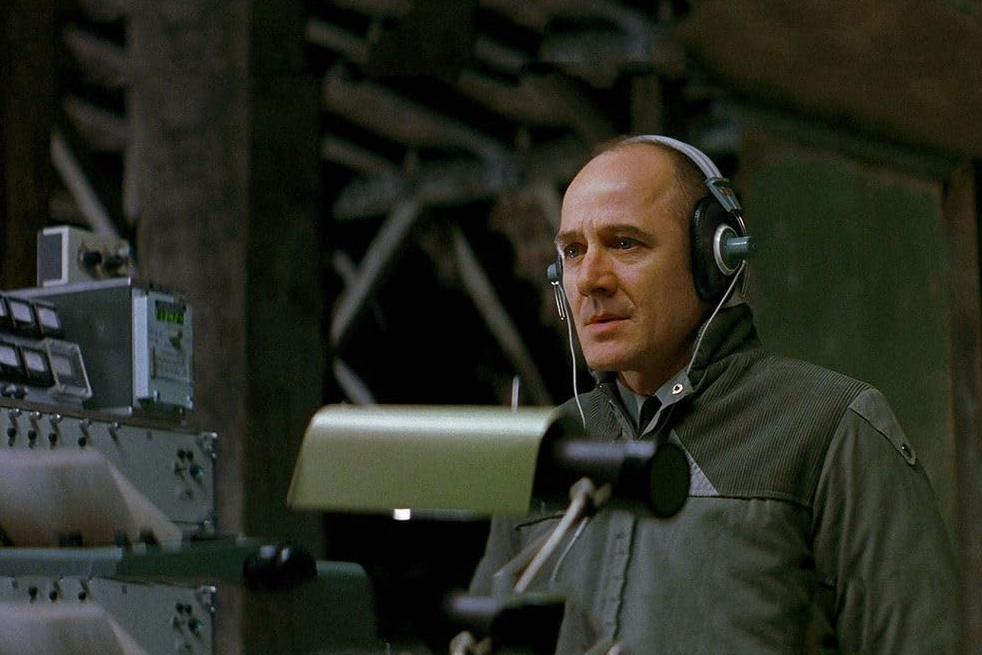
Still image from “The Lives Of Others”
About The Film
Florian Henckel von Donnersmarck’s 2006 masterpiece The Lives of Others (Das Leben der Anderen) offers one of cinema's most intimate examinations of state surveillance. Set in 1984 East Berlin, the film follows Hauptmann Gerd Wiesler, a devoted Stasi officer assigned to wiretap a celebrated playwright, Georg Dreyman.
Wiesler sits in a freezing attic, wearing oversized headphones, meticulously logging every sigh, argument, and private moment in Dreyman’s apartment. The film's brilliance lies not just in its portrayal of totalitarian overreach, but in its revelation of what constant monitoring does to the human soul—both for the person watching and the person being watched.
Decades after the fall of the Berlin Wall, the haunting atmosphere of The Lives of Others offers an urgent lesson for New Yorkers navigating our own era of unprecedented mass surveillance with the rise of flock cameras and other similar technologies. Most of these new surveillance technologies are privately owned by corporations which is an important distinction because in the film the state is responsible for conducting surveillance.
Random scenes from the film have also eerily been circulating across Instagram and social media with little to no context drawing even further parallels to the anxieties that dominated East Berlin.
The Shift from the Cold War Attic to the Concrete Jungle
In 1980s East Berlin, surveillance was labor-intensive. It required physical bugs, paper files, and human operatives spending thousands of hours listening to real-time audio. The Stasi relied on a vast network of informants, but the system had natural limits bound by human capacity and physical infrastructure.
Today, across the five boroughs, surveillance requires no such physical friction.
New York City’s modern surveillance apparatus operates silently, invisibly, and at a scale the Stasi could only dream of:
The Digital Web: Through systems like the NYPD’s Domain Awareness System (DAS), thousands of public and private cameras feed data into centralized algorithms.
Automated Tracking: License plate readers, facial recognition software, and cell-site simulators monitor movement across bridges, subway turnstiles, and sidewalk cafes in real time.
Passive Data Mining: Rather than an officer sitting in an attic with headphones, modern surveillance gathers millions of data points passively—harvesting digital footprints, location histories, and public feeds.
In The Lives of Others, target selection required an explicit state decree. In contemporary urban life, dragnet technology monitors everyone by default, sifting through daily routines to spot anomalies. While much of this mass surveillance operates at the federal level, New York occupies a unique position. Spurred by the tragedy of 9/11 and compounded by its sheer population density, the city remains a top-priority focal point for state and federal security apparatuses alike.
Safety, Tragedy, and the Security Dilemma
Unlike the arbitrary paranoia of the East German state, modern American surveillance did not emerge in a vacuum. The expansion of monitoring infrastructure in New York City was fundamentally accelerated by genuine tragedy and the ongoing obligation to protect human life.
Following the trauma of 9/11, alongside the terrifying reality of mass shootings and evolving threats of terrorism, public safety agencies faced immense pressure to prevent catastrophes before they occur. In a densely populated global center, sophisticated intelligence gathering, public camera networks, and real-time threat detection can arguably justify a certain scale of mass surveillance to deter violence and save lives.
However, this creates the central tension of a free society. Totalitarian regimes expand surveillance to suppress their populace; democracies expand surveillance out of a desire for security. Yet, regardless of motivation, the tools themselves can erode the very democratic freedoms they are deployed to defend.
The Psychological Toll of Being Watched
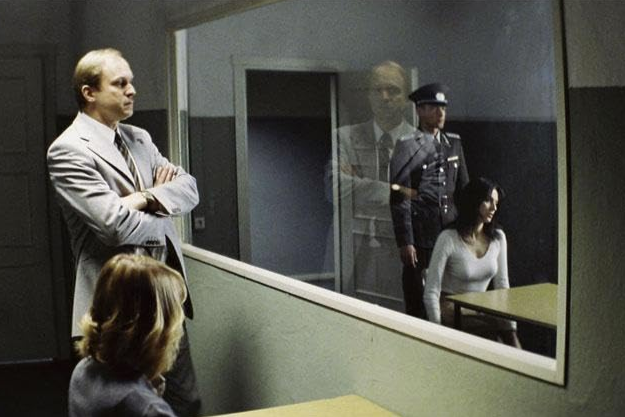
The core tragedy of The Lives of Others is the subtle erosion of intimacy, trust, and creative expression under the shadow of the state. When citizens know or suspect they are being observed, their behavior shifts. Self-censorship becomes second nature, genuine artistic expression gets stifled, and interpersonal trust dissolves.
For New Yorkers, this psychological dynamic manifests in subtler, yet equally profound ways:
Chilling Effects on Public Life: The knowledge that street corners, public parks, and peaceful demonstrations are captured on high-definition video alters how people gather, speak, and protest. Alternatively, when protesters carrying cell phones and recording devices do so consistently, this also acts as a deterrent to excessive use of force by law enforcement.
The Erosion of Private Spaces: In the film, the home was the final battleground for privacy. Today, smart devices, interconnected cameras, and mobile tracking mean the line between public street and private living room has blurred.
Algorithmic Paranoia: In East Berlin, fear stemmed from a human informant’s betrayal. Today, anxiety stems from opaque algorithms—where an incorrect match in automated video analytics or predictive policing models can upend a life without warning. Recently, a woman was even arrested and jailed for 13 days after being misidentified by a Flock camera in connection with a fatal car crash.
The Human Element in an Automated World
The narrative turning point in The Lives of Others occurs when Wiesler’s cold objectivity shatters. By immersing himself in Dreyman’s world—listening to music, witnessing grief, and observing genuine human empathy—Wiesler develops a conscience and ultimately sabotages his own investigation to protect the playwright. The film offers a glimmer of hope: human empathy can break through the mechanics of a police state.
Yet, this transformation highlights the most chilling difference between the film’s past and our present.
Modern surveillance is increasingly automated, algorithmic, and detached from human intervention. An automated license plate reader or facial recognition algorithm does not feel empathy, pause to listen to a piano sonata, or question the morality of its directive. It simply collects, processes, and flags.
Determining the Price of Security
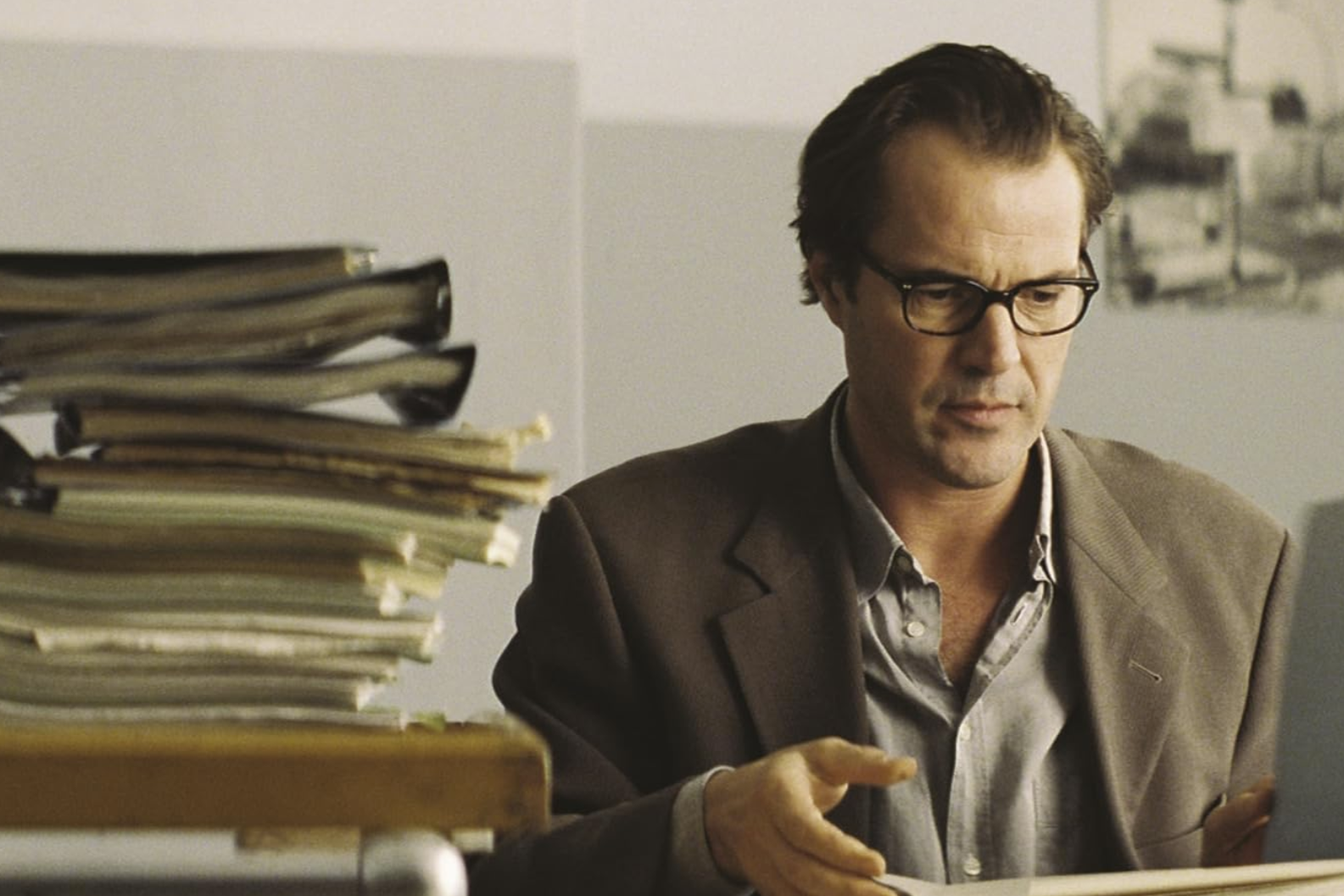
The Lives of Others stands as a powerful reminder that surveillance is rarely static—left unchecked, monitoring naturally expands to fill every available space.
Safety is a fundamental right, but so is civil liberty. In a constitutional democracy, state authority is derived from the consent of the governed. That means it is ultimately up to the public to collectively decide how much privacy we are willing to surrender for the sake of maintaining security, and where the boundaries must be drawn.
Wiesler’s story shows us that when private lives are completely exposed, true freedom ceases to exist. Recognizing that balance is the first step in ensuring our own hyper-connected world doesn't echo the quiet, watchful attics of 1984.