The Haunted History and Hidden Graves of Washington Square Park
Source: Squarespace/ Unsplash
The Golgotha of Greenwich Village
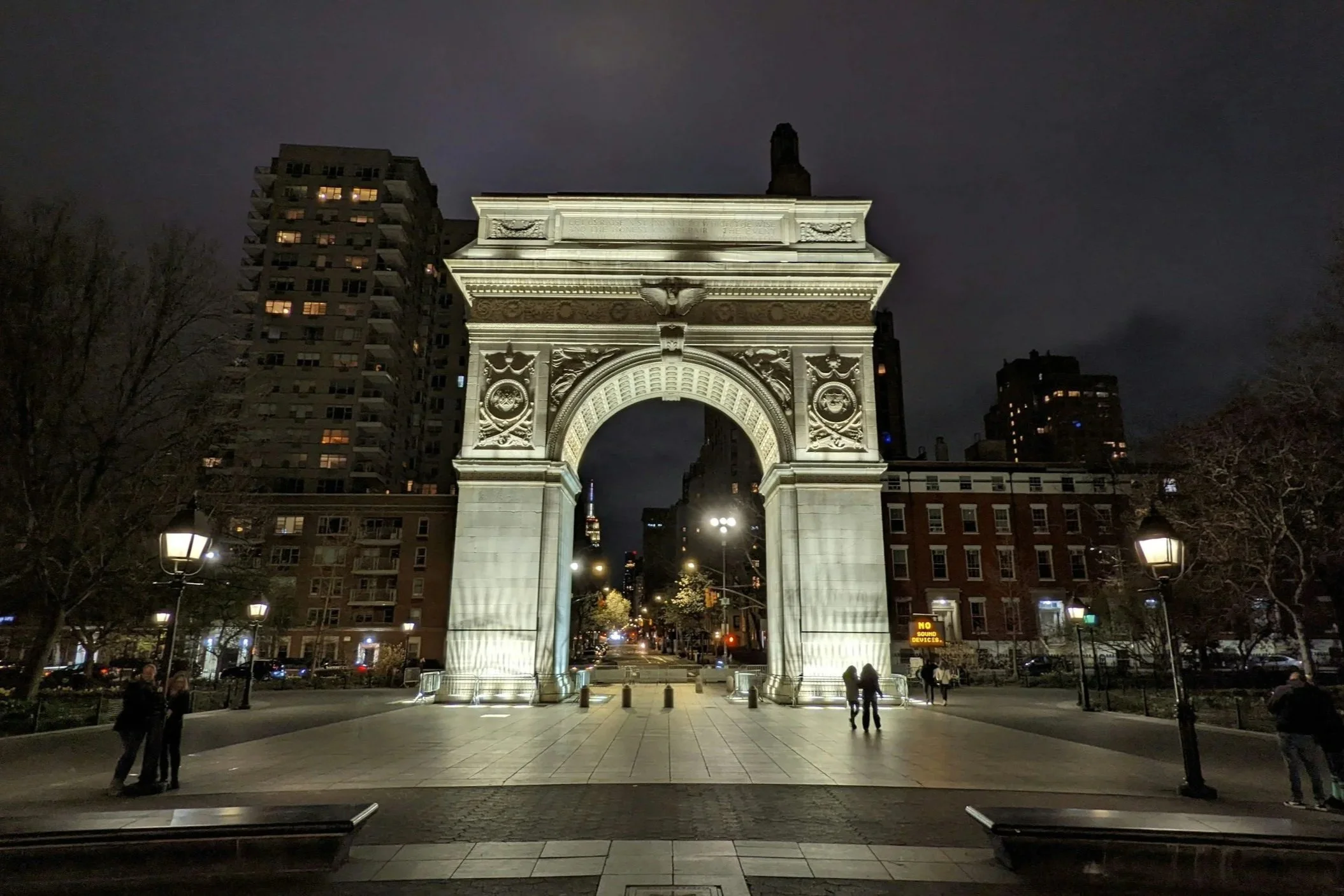
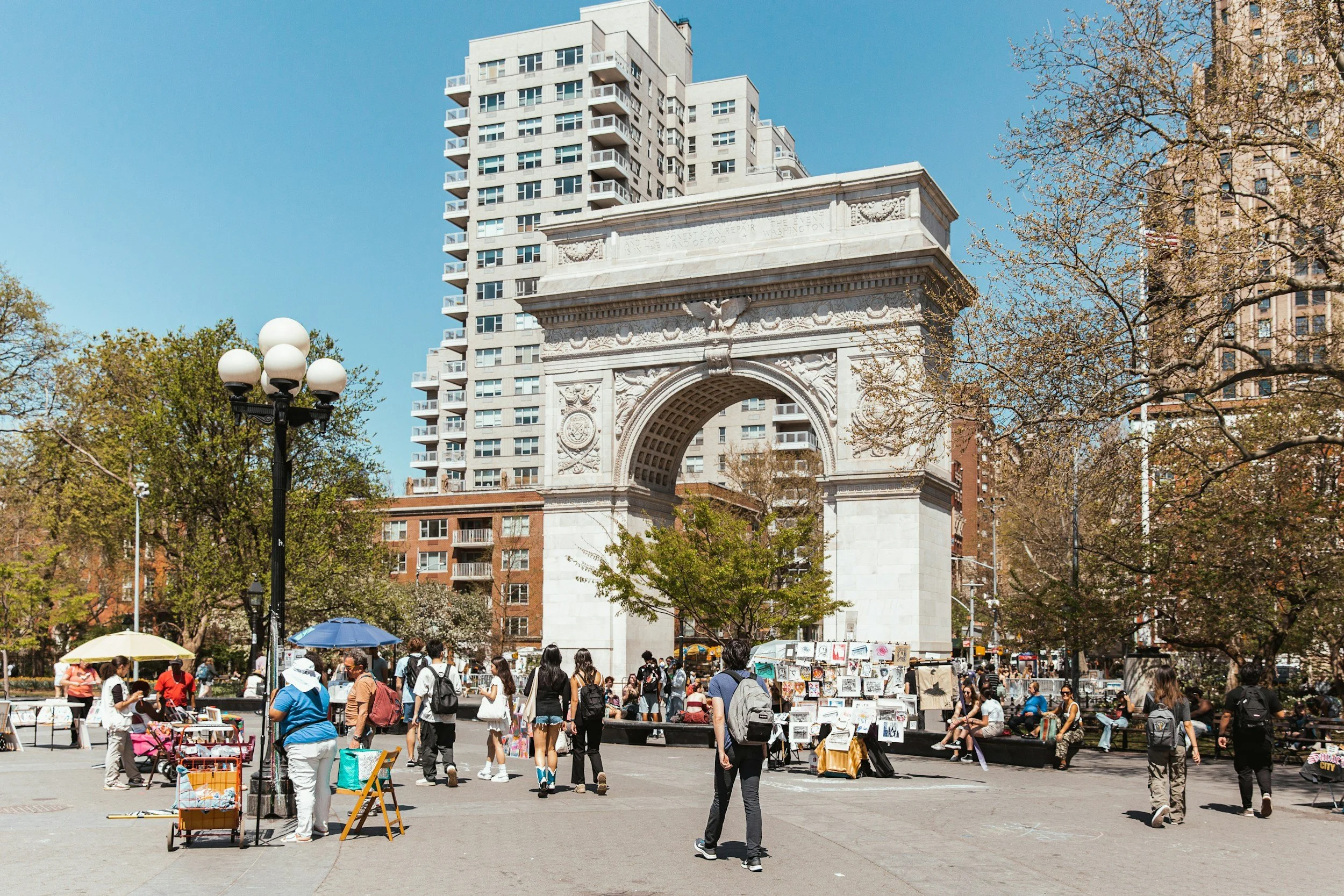
On any given afternoon, Washington Square Park is the vibrant, chaotic heart of Greenwich Village. NYU students lounge on the grass, buskers compete for acoustic space near the iconic marble arch, and chess players slam pieces onto stone tables.
Yet beneath this lively veneer of New York culture lies a darker, somber history. For our readers who walk these paths daily, the ground beneath your feet is quite literally hallowed. Washington Square Park is built directly atop a massive, forgotten necropolis.
Long before it was a fashionable public square, the eastern two-thirds of the current park site served as a potter’s field—a public burial ground for the indigent, the unclaimed, and the impoverished. Established in 1797, the location was chosen precisely because it was a rural, sparsely populated northern suburb of Manhattan.
The site quickly became a grim repository for the victims of the yellow fever epidemics that decimated New York City in devastating waves between 1797 and 1803. Because the highly contagious disease sparked panic, the city banned local churches from burying yellow fever victims in downtown churchyards, forcing thousands of bodies to be carted north to this single, secular field.
Historians estimate that between 1797 and 1825, up to 20,000 bodies were laid to rest beneath the soil. Most were stacked anonymously in deep, common pits without ceremony. When the city closed the burial ground in 1825 to convert the area into a military parade ground, they chose not to relocate the dead. Instead, they simply leveled the uneven terrain, laid down a layer of topsoil, and paved over the past.
The dead frequently remind the city of their presence. During utility work and park redesign projects over the last two decades, construction workers have repeatedly breached historic brick burial vaults and unearthed intact skeletal remains just feet below the pavement. In 2021, the city quietly reinterred a wooden box of partial remains dug up during construction, marking the spot with a subtle, easily missed ground paver near the Sullivan Street entrance.
Source: Squarespace/ Unsplash
The Myth of the Hangman’s Elm
In the northwest corner of the park stands a gnarled, towering English Elm known to locals as the "Hangman’s Elm." Standing at over 110 feet tall and estimated to be more than 330 years old, it is recognized as the oldest living tree in Manhattan.
Local lore insists the tree earned its sinister moniker during the Revolutionary War, when British forces allegedly used its thick, sturdy branches to execute American traitors. Other legends claim that inmates from the nearby Newgate State Prison on Christopher Street were marched to the tree to face the noose.
While oral histories and 19th-century newspaper archives frequently repeat these macabre tales, modern historians have found virtually no primary municipal records to corroborate mass hangings from the tree. The city sheriff did erect a public gallows nearby, but it stood closer to the center of the modern fountain.
The only fully documented execution in the immediate vicinity occurred in 1820, when a young Black woman named Rose Butler was convicted of arson and executed on a gallows constructed across the street. Nevertheless, the legend of the Hangman’s Elm has clung to the park for two centuries, a symbol of the violence woven into the early landscape.
A Registry of Apparitions
Given the sheer volume of unmarked graves, it is no surprise that Washington Square Park is central to Manhattan's ghost lore. In the 19th century, residents living in the newly constructed, aristocratic townhomes along Washington Square North frequently reported a heavy, eerie "blue mist" that would roll off the grass on humid summer nights—a phenomenon locals blamed on the decomposition occurring just below the surface.
Today, specific spectral figures are still reported by early-morning dog walkers and late-night strollers:
The Pacing Soldier: A semi-transparent figure dressed in a tattered War of 1812-era military uniform is occasionally seen walking a rigid patrol line along the southern edge of the park, completely silent as he guards a long-forgotten post.
The Weeping Woman: Near the central fountain—the historic site of the city gallows—witnesses have described a woman cloaked in early 19th-century mourning attire. She reportedly wanders the plaza weeping softly before dissolving into the spray of the water.
Whether you believe in the supernatural or view the park through a strictly historical lens, Washington Square remains a striking reminder of New York's layers. It is an urban oasis where the living play, create, and build directly on top of the silent foundation of the city's past.