The Most Interesting Buildings in New York City
The Most Interesting Buildings in New York City
New York City’s skyline is a living museum of architecture, where historic masterpieces and modern marvels coexist across its five boroughs. Among the countless buildings that define the city’s unique character, a select few stand out not just for their design, but for their stories, symbolism, and cultural impact. Here’s a look at some of the most fascinating structures that capture the essence of New York’s architectural diversity.
Source: Squarespace/ Unsplash
The Cloisters
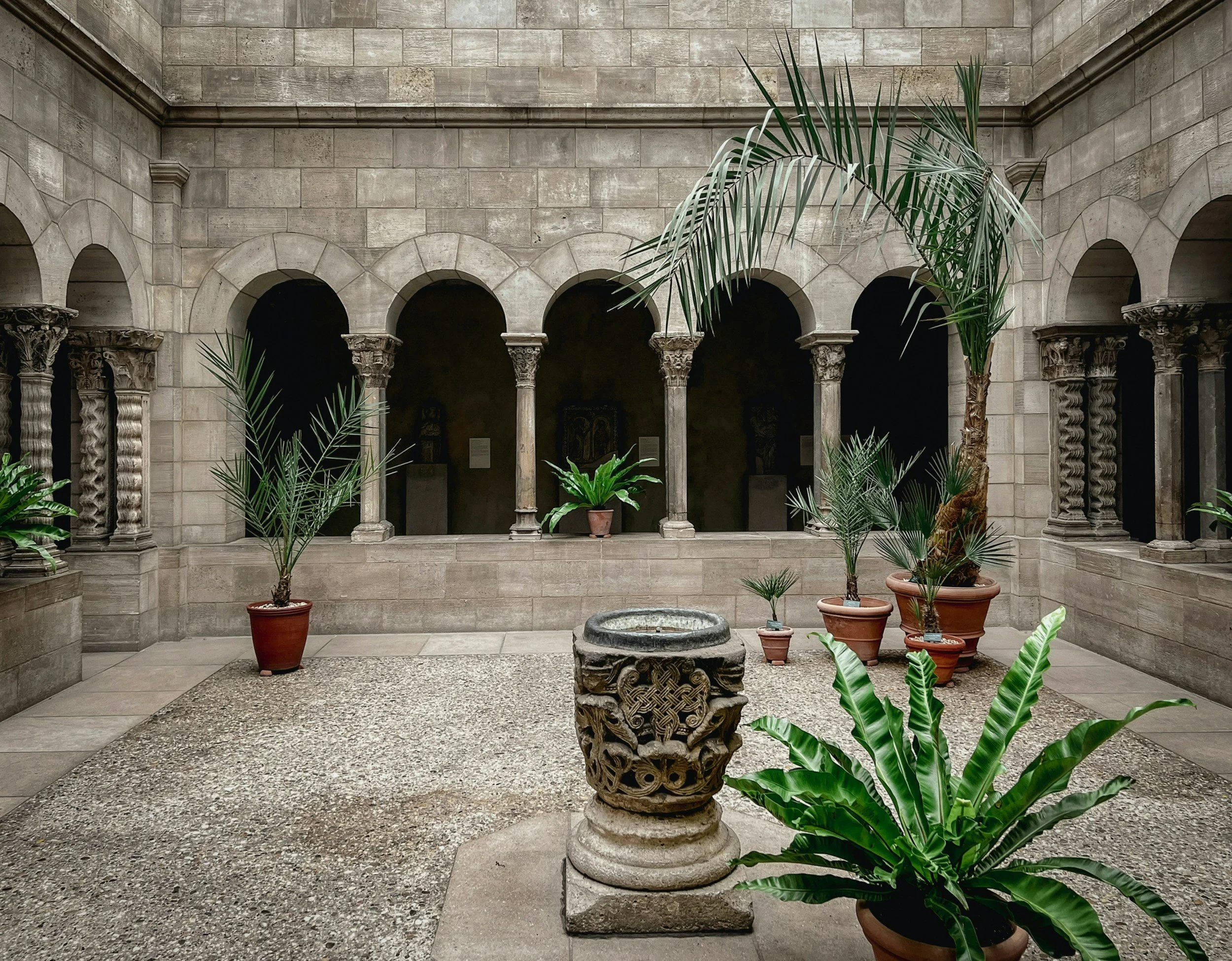
Perched on a hill in Fort Tryon Park, The Met Cloisters transports visitors from Manhattan to medieval Europe. Built in the 1930s using elements from French monasteries, it’s a serene architectural outlier in a bustling city.
Perched atop a hill overlooking the Hudson River, the Met Cloisters offers breathtaking panoramic views of the surrounding landscape. Visitors can enjoy sweeping vistas of the river, the lush Fort Tryon Park, and the majestic George Washington Bridge.
Visitors can also marvel at magnificent illuminated medieval manuscripts, delicate tapestries, intricate metalwork, and breathtaking sculptures.
Stone arches, cloistered gardens, and stained-glass windows create a contemplative atmosphere, perfectly suited for its collection of medieval art and artifacts. Visitors can essentially teleport to a medieval French monastery. It is one of the only places is NYC that uniquely feels incredibly foreign to the city.
Source: Squarespace/ Unsplash
The Chrysler Building
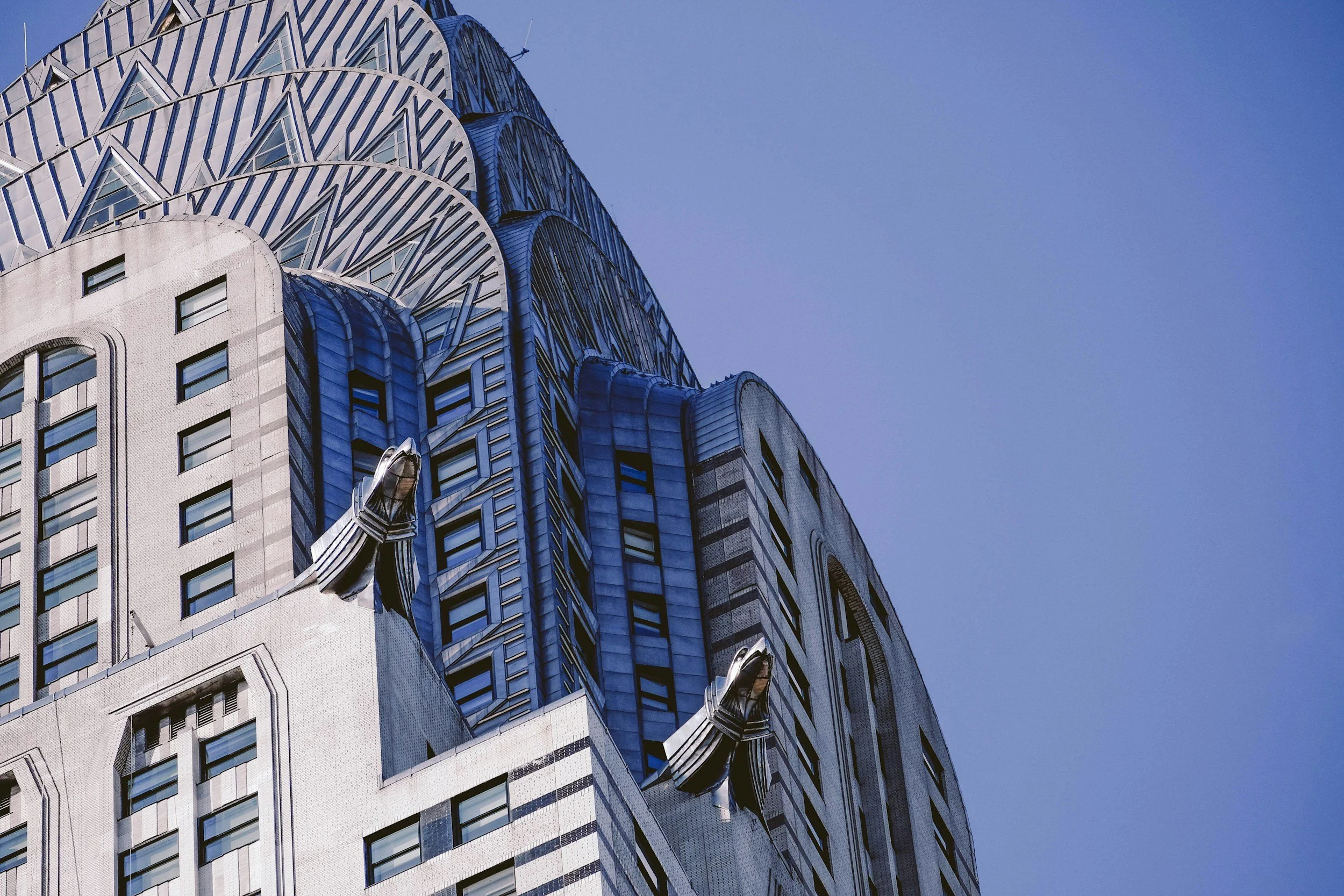
Few buildings capture the spirit of New York in the 20th century like the Chrysler Building. Completed in 1930, this Art Deco gem once held the title of tallest building in the world.
Its stainless-steel spire, gleaming gargoyles, and bold geometric patterns make it one of the most beloved skyscrapers in the world. It’s a lasting symbol of ambition, elegance, and the Machine Age.
The building itself has a complex history. It is a land lease property, where the ownership of the building is separated from the ownership of the land it sits on. One party—often a developer or a co-op corporation—owns the structure and handles its operations, while paying regular "ground rent" to a separate landowner for the right to occupy the space.
Source: Squarespace/ Unsplash
The Flatiron Building
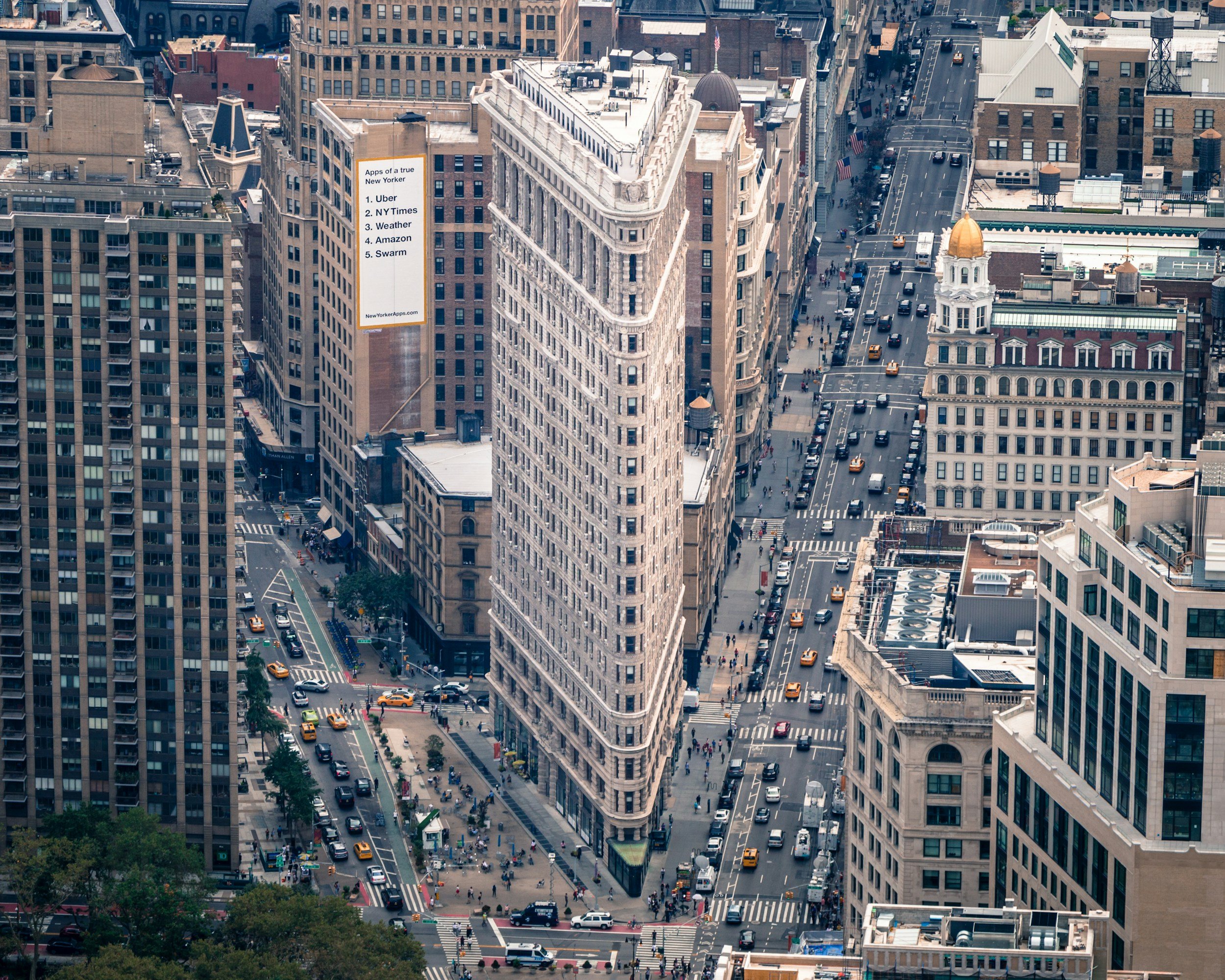
A triangular marvel that has defied convention since 1902, the Flatiron Building is one of NYC’s most photographed landmarks. Its unique wedge shape, designed to fit the odd angle where Fifth Avenue meets Broadway, makes it instantly recognizable. It is this unique wedge shape that is what garnered the building its nickname of “Flatiron.”
One of the notable features of the Flatiron Building is its Beaux-Arts architectural style, characterized by classical influences and decorative details. The facade of the building showcases ornate terra cotta detailing, including floral motifs, sculptures, and intricate reliefs, adding a touch of elegance and grandeur to its exterior.
Though small compared to today's skyscrapers, the building remains a bold example of early steel-frame construction in New York City and Beaux-Arts design.
Source: Squarespace/ Unsplash
33 Thomas Street “The AT&T Long Lines Building”
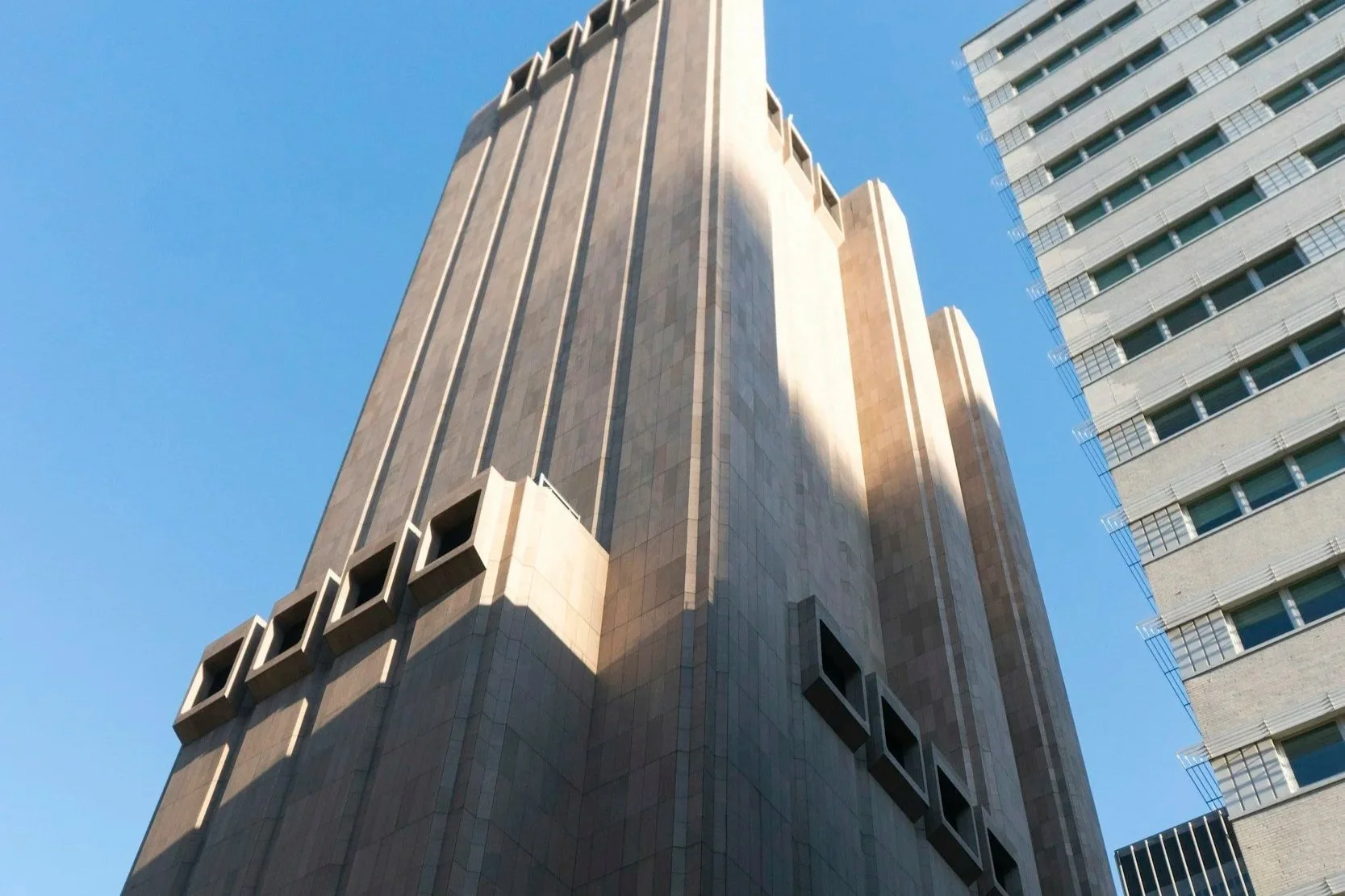
Often dubbed the "Men In Black Building" for its eerie resemblance to science fiction movie sets, this windowless skyscraper in Lower Manhattan is one of the city's most mysterious structures.
Officially a telecommunications hub, 33 Thomas Street has drawn fascination for its brutalist style, massive scale, and the secrecy surrounding its purpose.
The building is owned by AT&T and is officially referred to as the AT&T Long Lines Building. The building is designed to house backup batteries and generators, cooling stations, and other telecommunications technologies. Conspiracy theories aside, it’s a compelling study in function-driven architecture.
Source: Squarespace/ Unsplash
The Helmsley Building
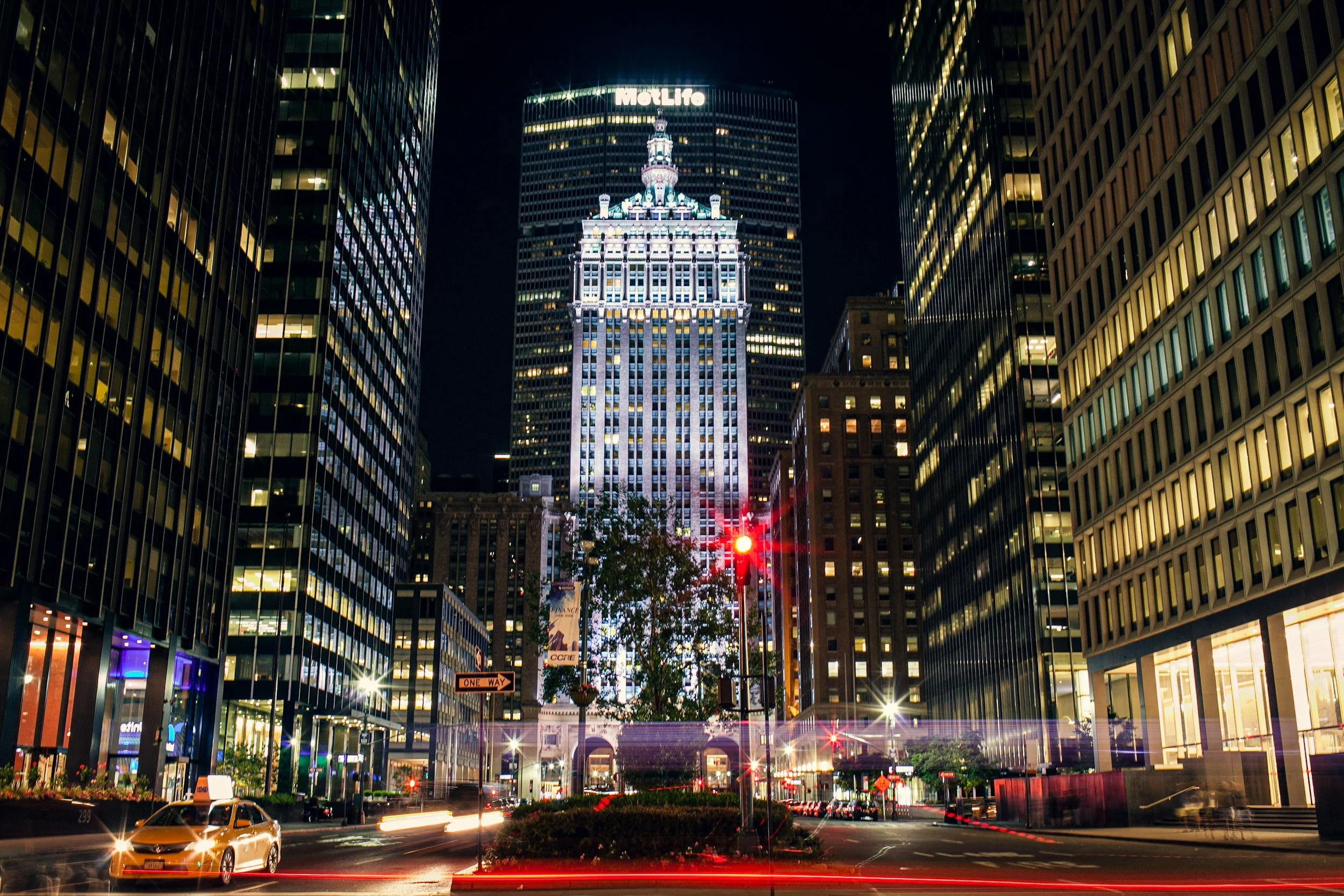
Straddling Park Avenue, the Helmsley Building is an architectural throwback that demands attention. Completed in 1929 and once known as the New York Central Building, its ornate façade and domed clock tower are prime examples of Beaux-Arts architecture.
The building, which is a centerpiece of Park Avenue leading up to Grand Central, has a unique design that allows traffic to pass through its base, creating a dramatic gateway effect for midtown Manhattan.
The building retains very distinct features and was restored recently. Distinct terra-cotta elements define the façade, including 32 freestanding, three-story Corinthian columns. At each column, there is a terra-cotta bracket at the 28th floor and a top bracket at the 32nd floor. The façade also has 74 six-foot-tall terra-cotta bison heads that make up the cornice of the low-rise structure.
Source: Squarespace/ Unsplash
The Solomon R. Guggenheim Museum
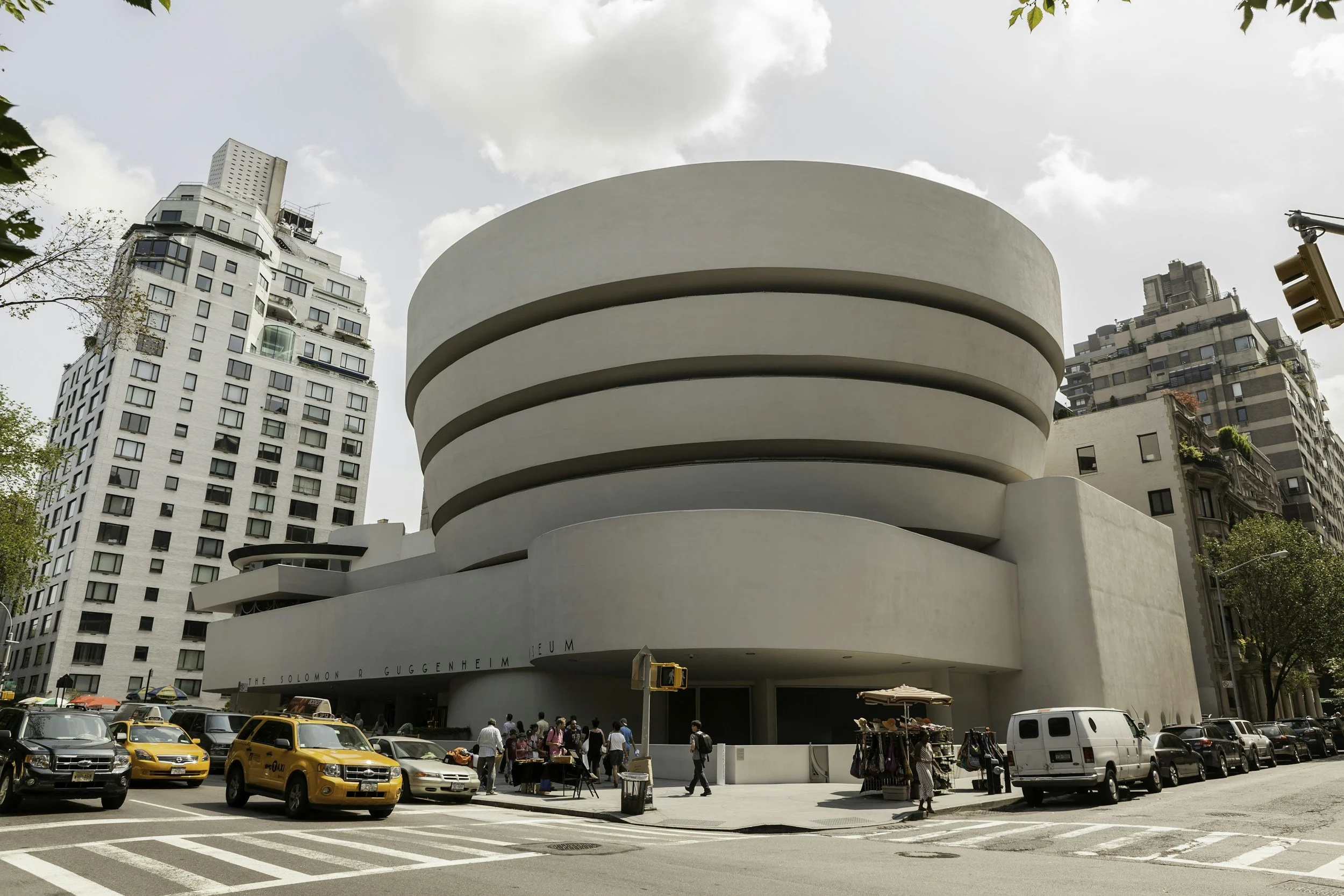
The Guggenheim is widely considered a "modernist cathedral," designed by Frank Lloyd Wright as a revolutionary departure from the traditional box-like museum. Its seamless, ivory-colored concrete spiral creates a sense of "architecture in motion," where visitors experience art while moving along a continuous quarter-mile ramp.
The building is crowned by a massive 92-foot glass dome that floods the central rotunda with shifting natural light, making the structure itself as much a masterpiece as the works it houses.
The building was also featured in the blockbuster film “Men In Black.” The building, with its distinctive spiral form, served as a backdrop during the introduction of the film, adding a touch of artistic grandeur to the extraterrestrial narrative. The feature not only showcases the museum's architectural significance but also underscores its cultural prominence as a symbol of creativity and innovation in both the art world and popular culture.
Source: Squarespace/ Unsplash
Alwyn Court
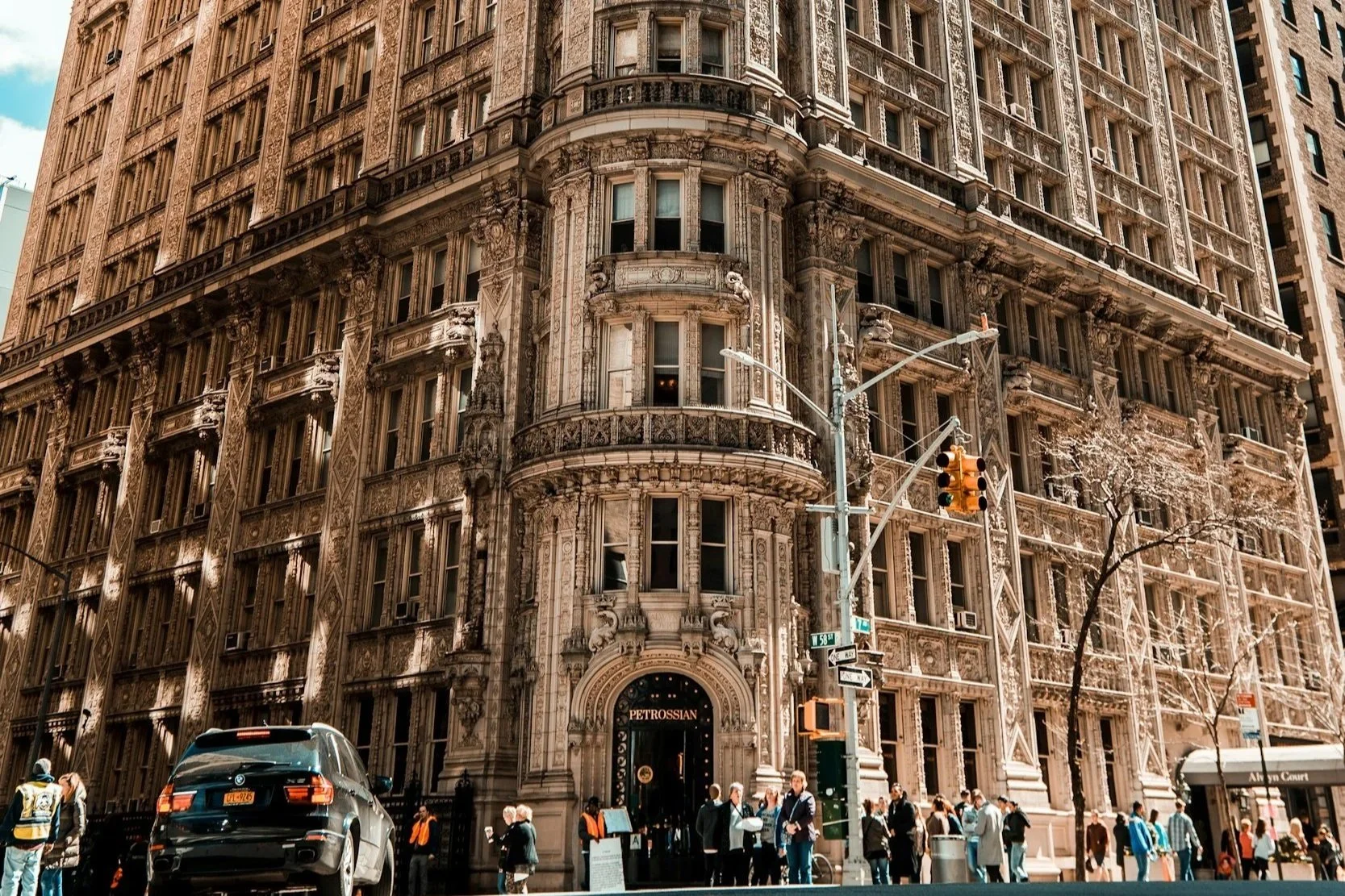
Located at the corner of West 58th Street and Seventh Avenue, Alwyn Court is a masterpiece of architecture and one of the most visually dense buildings in the city.
Alwyn Court is celebrated as one of the most ornate residential buildings in the city, characterized by a façade completely covered in intricate terra cotta ornamentation. Built in the French Renaissance style, the exterior features elaborate details such as urns, flowers, and the crowned salamander—the symbol of King Francis I.
While its interior was subdivided into smaller apartments during the Great Depression, the building maintains a spectacular central atrium with a "trompe l'œil" mural that creates the illusion of carved stonework, continuing the theme of grandeur inside.
Conclusion
These buildings are more than just landmarks—they’re chapters in New York’s architectural narrative. From medieval revival to sleek minimalism, from museums to mystery towers, each structure tells a story about the city’s past, present, and evolving identity. Whether you’re an architecture enthusiast or a casual passerby, these fascinating buildings invite you to look up, look closer, and discover the layers of design that shape the city that never sleeps.