Broadway’s The Great Gatsby Has All the Right Pieces, The Only Thing It’s Missing Is A Better Soundtrack
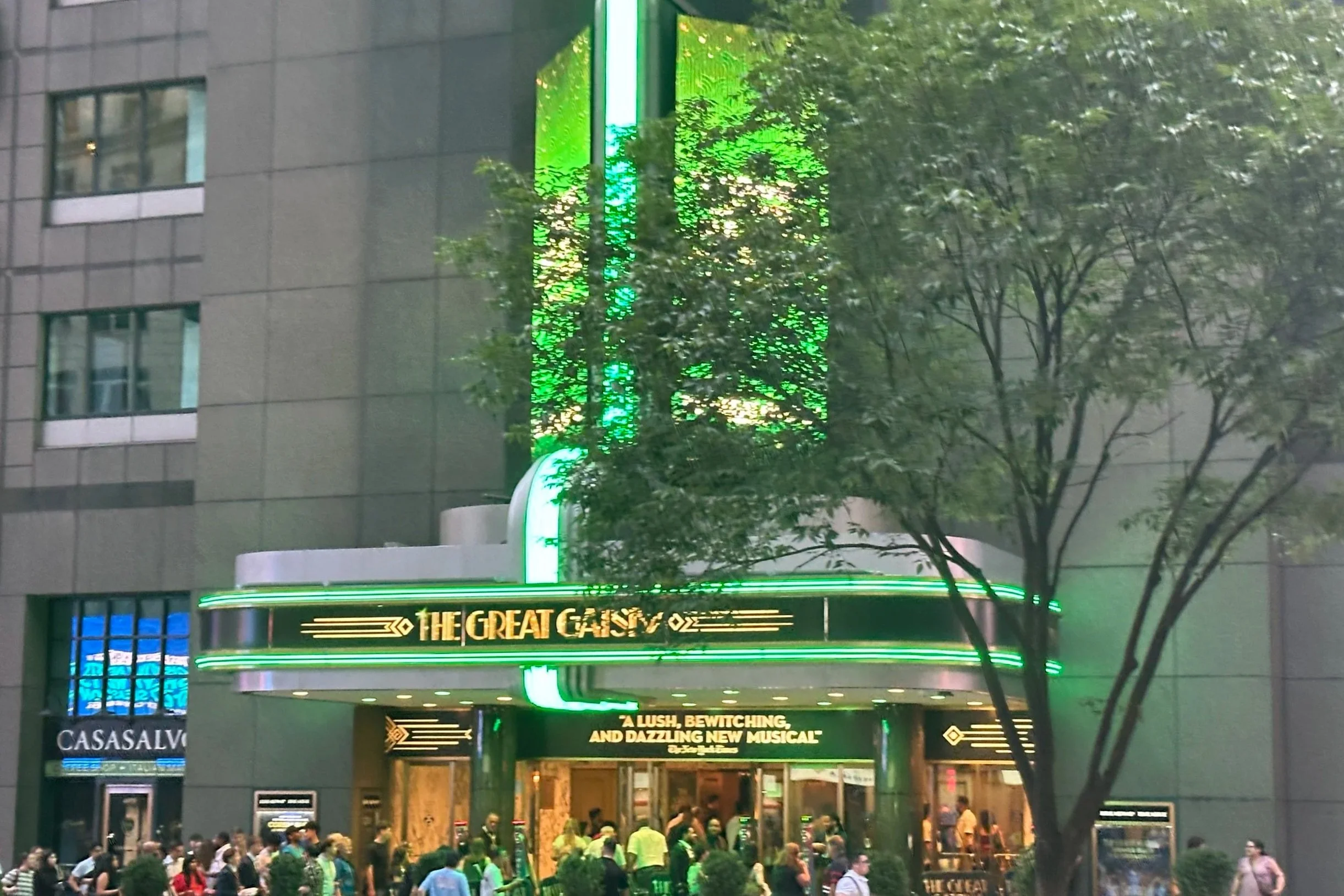
Photo by The Empire City Wire
About The Play
The Great Gatsby is a 1925 novel by American author F. Scott Fitzgerald, widely regarded as one of the definitive works of 20th-century American literature.
Set on Long Island’s North Shore and in New York City during the summer of 1922, it serves as a critique of the Roaring Twenties, exploring themes of wealth, obsession, class division, and the disillusionment of the American Dream.
Broadway’s latest adaptation of The Great Gatsby arrives with all the glitz and high-energy ambition of one of Jay Gatsby’s legendary Saturday night parties. Yet, for New Yorkers walking out of the theater, the lingering impression is of a production that spent so much time building the glittering exterior that it forgot to protect the fragile, tragic heart beating underneath.
The Triumph of Design and Performance
Visually, the production is an undeniable triumph. The set design captures the dizzying dichotomy of the Jazz Age, swinging effortlessly from the oppressive, ash-choked industrial gloom of the Valley of Ashes to the blinding, crystalline decadence of West Egg. Costumes burst with fringe, sequins, and bold vintage silhouettes that move with an intoxicating fluidity under dramatic stage lighting.
Equally impressive is the caliber of the cast. The actors step onto the stage with immense theatrical talent, anchoring their performances in genuine emotion and raw dramatic urgency. When dialogue takes the forefront, the performers command the room, mining F. Scott Fitzgerald's timeless themes of obsession, class, and the illusion of the American Dream. Their vocal instruments are exceptional, capable of filling the auditorium with power and resonance.
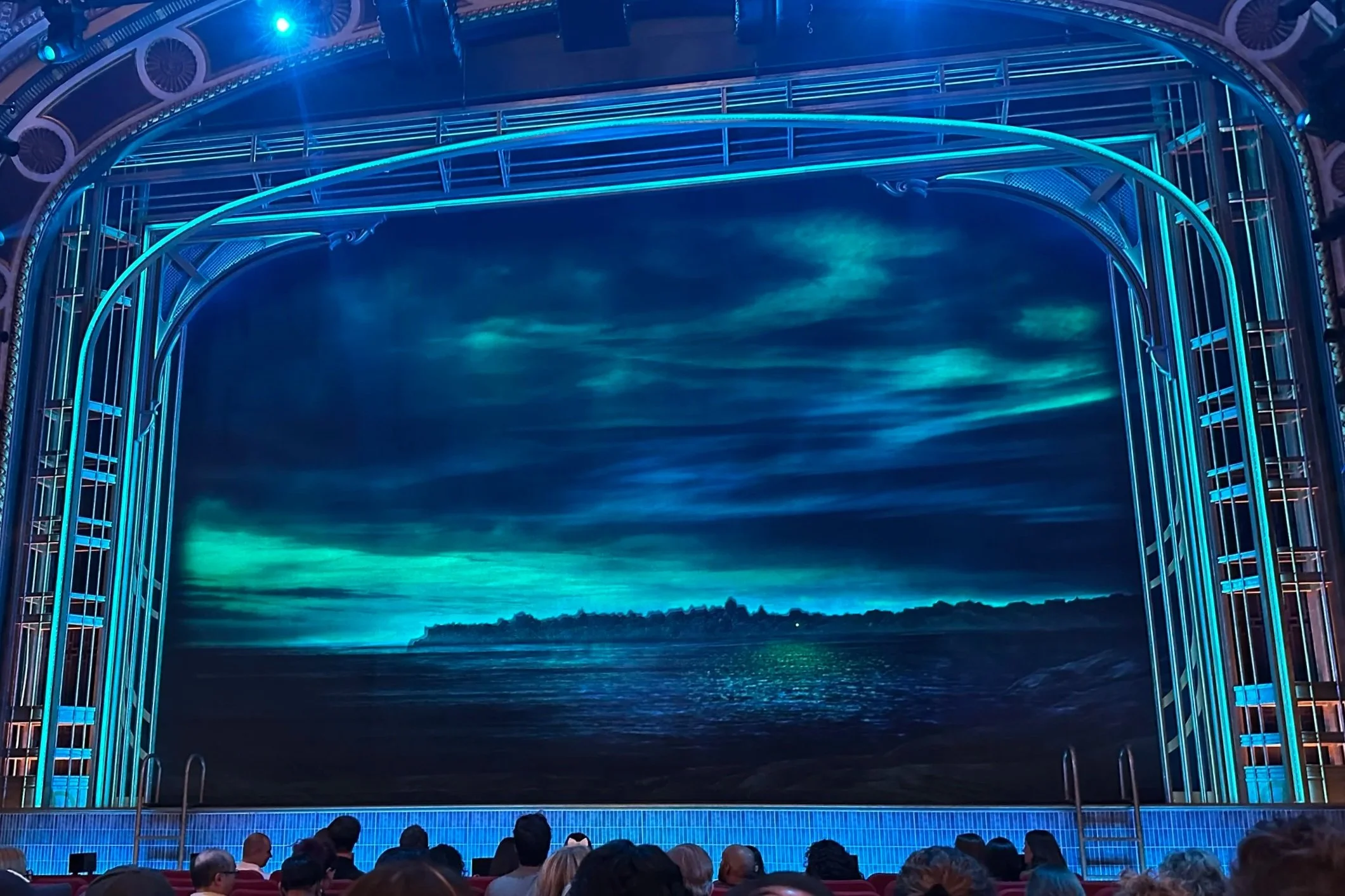
Photo by The Empire City Wire
Where the Production Stumbles
The fatal flaw lies not in who is performing, but in what they are asked to sing. The production suffers from an overabundance of music, clogging the narrative pipeline with numbers that feel obligatory. Instead of letting dramatic tension simmer and build through character interactions, the show repeatedly leans on music as a plot device.
Compounding this pacing issue is the score itself. Despite the cast’s powerhouse vocals, the songs are fundamentally forgettable, lacking distinct hooks, lyrical depth, or emotional resonance. Rather than elevating the drama, these musical interludes constantly pull the audience out of the emotional stakes by trying to bake as much context into the songs as possible. Just as a character reaches a moment of profound vulnerability or heartbreak, a soaring, unmemorable ballad sweeps in, diffusing the tension and leaving the scene feeling hollow.
Conclusion
The play has great bones to become something as long running as say Phantom, but if it continues as a musical, they play should instead integrate original theatrical performances without relying on the music to carry the story and the plot forward. By burying emotional scenes beneath an avalanche of weak musical numbers, it misses the chance to be a true roaring success.
Ultimately, The Great Gatsby remains a dazzling theatrical spectacle worth seeing for its technical mastery and formidable acting talent.