Source: Empire City Wire
About The Book
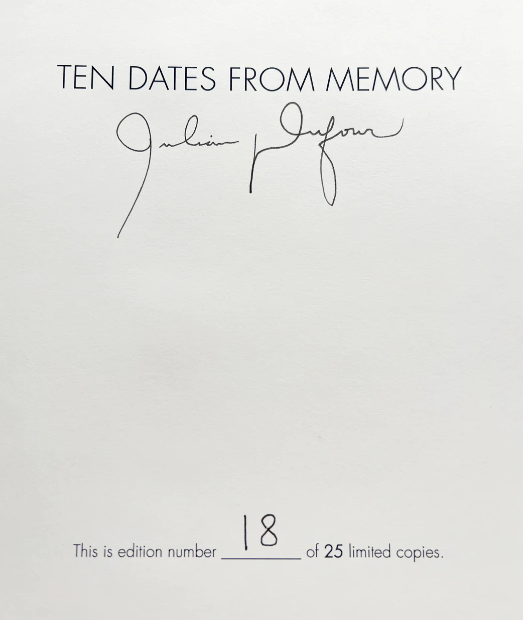
"Ten Dates From Memory" is a small book made to be held. It runs 24 pages, printed in black and white, steel ring bound at 8.5 by 11 inches, and made by hand. The cover carries a photograph Dufour took himself, and the edition was limited to 25 signed copies — an artist's object as much as a text, built to be kept rather than shelved and forgotten.
The book is the first printed work from Julian Dufour, an artist and writer whose practice moves between visual art and the written word. In conversation, he described a working life that has crossed disciplines for years, and a debut that grew out of watching those forms overlap. The result is a cross-genre piece, part memoir and part invention, that treats the book itself as part of the artwork.
Dufour came to the book from pictures as much as from sentences. He talked about being drawn to different art forms early on, and about treating visual work and writing as parts of the same practice rather than separate careers. That habit of crossing forms explains the shape of the debut: a printed object you read, but also one you handle, turn over, and keep.
The starting point, Dufour explained, was the recent turn toward journaling as a tool for mental well-being. He was interested in the habit but not in simple recollection; instead, he pushed the material toward fiction, building a narrative out of his own experiences and letting imagination fill the spaces memory left. The dates of the title are remembered, reworked, and partly invented — which is the subject of the book as much as its method.
The Creative Process
Making the book was a physical process, and Dufour treated the materials as part of the meaning. He chose the paper stock by texture and weight, matched to the tone of the contents, and shot the cover photograph himself, keeping the link between the artist and the object direct. In a print run of 25, decisions like those are not production details; they are the work. Every copy passed through his hands in a way a commercial print run would never allow.
The writing went through other hands before it settled. Peer review sessions, Dufour said, changed the book — readers pushed back, pointed at weak spots, and helped him refine both the story and its telling. The experience converted him: he now plans to build that kind of feedback into the timeline of future projects from the start, rather than treating response as something that arrives after the fact.
Running under all of it is his subject: how unreliable memory is. Dufour drew on his professional and academic background in talking about the fallibility of recall, and that idea shapes the book's structure, where anecdote and reflection sit side by side. What a person remembers, what they misremember, and what they invent to close the gap — that is the material he works in.
Key Takeaways From The Book
If the book has a single argument, it is that humor is a way through hard material, not an escape from it. Dufour uses it as a coping mechanism, holding vulnerability and resilience in the same hand, and the effect on readers is a quiet one: the book stays with you after the last page, less like a statement than like a conversation you keep turning over.
"Ten Dates From Memory" is a short book with a long subject. In 24 handmade pages, Dufour makes a case for paying attention to your own past — honestly, including the parts you have improved in the telling. It is a modest object with an immodest ambition: to make readers examine how their own stories got made.