Everything To Know About NYC’s Plans To Harness Subway Platform Heat To Power City Buildings
Source: Squarespace/ Unsplash
Summer In NYC
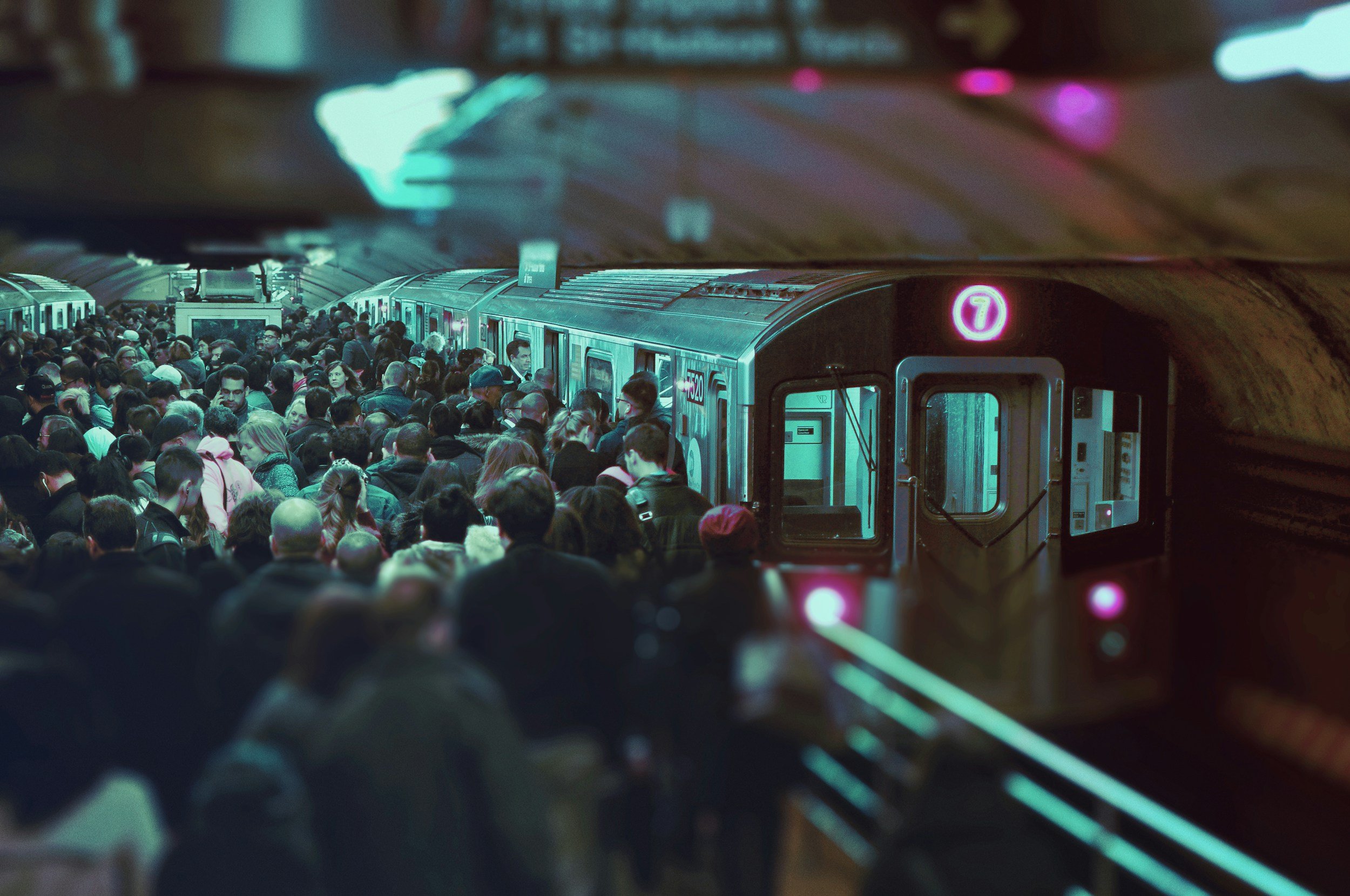
For New Yorkers, surviving summer commuting often comes down to a test of endurance on sweltering subway platforms. Stations can reach unbearable levels, with temperatures routinely soaring up to 20 degrees higher than the street level above. Now, city and state leaders are studying an innovative strategy designed to turn that underground misery into a clean energy resource.
The Metropolitan Transportation Authority, in partnership with New York City, has launched an $800,000 feasibility study to explore a Thermal Energy Network (TEN) in Lower Manhattan. The project focuses on the interconnected Brooklyn Bridge-City Hall (4/5/6) and Chambers Street (J/Z) station complex—one of the hottest transit hubs in the entire system, where platform temperatures averaged a blistering 96 degrees during summer peak hours.
The mechanics of the plan rely on closed-loop geothermal infrastructure and radiant cooling technology. Radiant panels installed along the ceilings and walls of the platforms will absorb intense, ambient heat from idling trains and crowds. Chilled water circulating through pipes will transfer that thermal energy underground into geothermal boreholes drilled beneath the station complex.
“There are few feelings worse than escaping the extreme summer heat only to find yourself on a subway platform that is even hotter. Unfortunately, for millions of commuters that is the reality of our transit system — with some stations soaring up to 20 degrees hotter than the outside temperatures,” said Mayor Zohran Mamdani about the plan. “We now have an opportunity to do more than rebuild Chambers Street top to bottom. We can make our subway platforms cooler and more comfortable while putting wasted heat to work during the winter. That means lower energy costs, a more resilient subway system and a cleaner energy future for New York City.”
How Will It Be Implemented?
To test this system without interrupting daily service, engineers plan to utilize the abandoned center platform at the 113-year-old Chambers Street station as the primary drill site for the boreholes. Once stored deep in the earth, that captured summer heat can be pumped back up during the winter to warm nearby municipal buildings, cutting baseline heating costs and reducing fossil fuel reliance for city-owned properties.
If proven feasible, the system would mark the first thermal energy network integrated into a major U.S. transit network. Beyond shaving several degrees off brutal platform conditions, radiant cooling operates 25 to 35 percent more efficiently than standard air conditioning systems.
The feasibility contract is slated for award this fall, with actual engineering design work targeted for early 2027 if tests confirm the underground geology is viable. For a transit system where extreme summer heat has long felt like an unsolvable tax on commuters, reclaiming that wasted energy may finally offer a sustainable way forward.