PETA Protesters Assaulted At COS Fashion Show By CEO Cosplaying As ICE
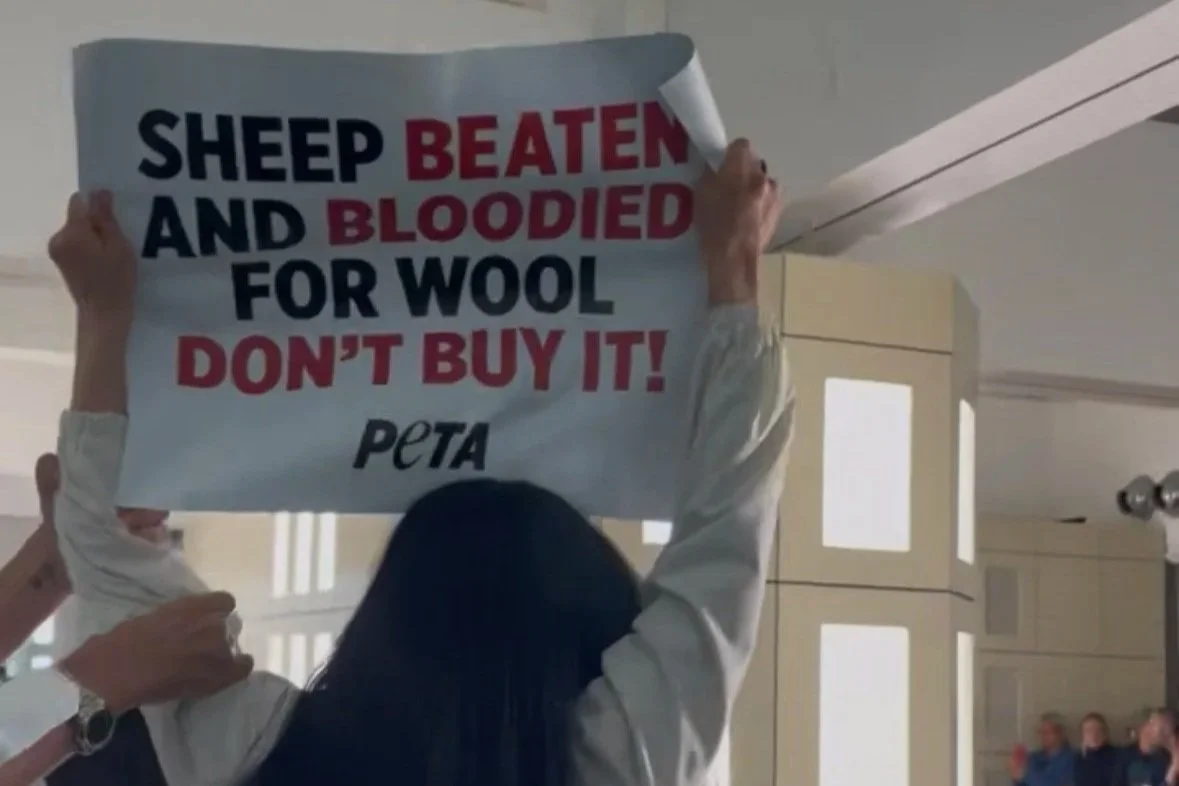
Photo courtesy of PETA.
Catwalk Altercation
New York Fashion Week was disrupted when an altercation broke out at the COS Fall-Winter runway show in Manhattan, resulting in the executive head of American fashion being placed on leave after physically subduing animal rights activists on the catwalk.
Steven Kolb, CEO and president of the Council of Fashion Designers of America (CFDA), was filmed tackling, pinning, and physically restraining two People for the Ethical Treatment of Animals (PETA) protesters who stormed the runway.
The disruption occurred during the presentation for Swedish label COS, a brand owned by the H&M Group. As models navigated the runway, two activists carrying printed signs entered the space, shouting slogans demanding an end to the use of wool in fashion.
Rather than allowing event security to step in, Kolb directly confronted the protesters. Video footage captured Kolb grabbing one of the activists, snatching her sign, covering her mouth with his hands, and wrapping his leg around her to pin her to the floor while models continued walking past. He was also filmed cornering and shoving a second activist, Mason Melito, and attempting to cover his face to silence his shouting.
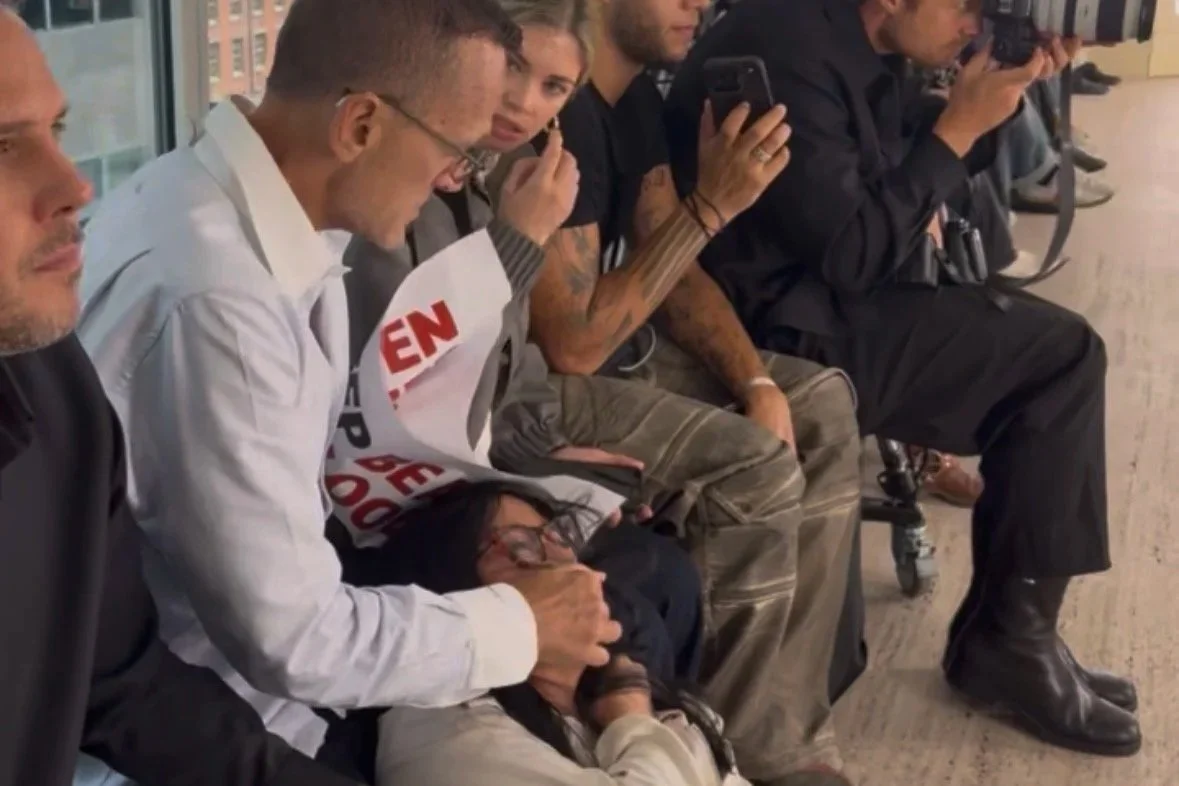
Photo courtesy of PETA.
Industry Response and Executive Leave
PETA characterized the incident as a physical assault, arguing that the executive’s aggressive attempt to silence peaceful demonstrators mirrored the underlying hostility of the commercial textile industry.
Following widespread attention to the videos, Kolb issued a statement on social media admitting he had acted inappropriately and acknowledging that he should have permitted security staff to manage the disruption.
The CFDA announced that Kolb had been placed on a formal leave of absence pending an internal investigation. In an official statement, the trade association noted it takes the incident seriously and remains dedicated to maintaining professional engagement standards across New York Fashion Week events.
With similar events unfolding across the streets of America perpetuated by members of ICE (United States Immigration and Customs Enforcement), this behavior is now finding its way into high society events like fashion week runway shows. PETA representatives stated that the activists involved are reviewing their legal options regarding potential criminal charges related to the physical contact.
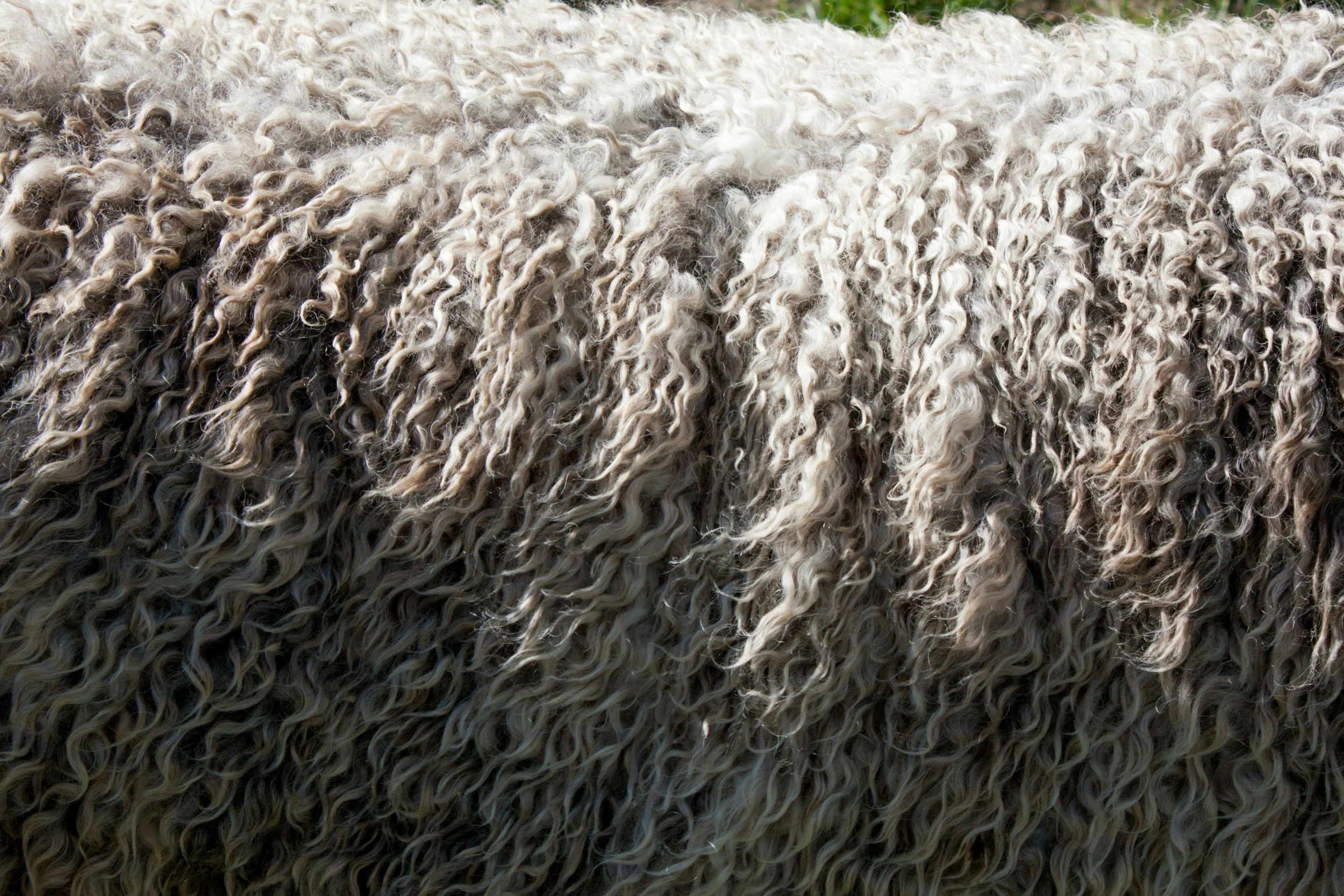
Source: Squarespace/ Unsplash
Campaign Against Wool
While the CFDA banned animal fur at New York Fashion Week venues in late 2025, the policy does not extend to wool.
While documented instances of animal abuse and harmful practices (such as painful mulesing or mistreatment during shearing) exist within the global wool supply chain, wool is fundamentally a natural, organic fiber grown by sheep. Synthetic textiles like polyester, acrylic, nylon, or fleece—are petroleum-derived plastics.
Peta cites 17 exposé films that show sheep being kicked and beaten, stepped on and left with deep wounds after shearing on more than 150 farms around the world. Their protest forms part of an ongoing international effort pressuring retail conglomerates to eliminate animal-derived fibers from their supply chains.
While pure wool avoids the microplastic and fossil fuel traps of synthetic textiles, it is not without its own environmental footprint. Sheep farming requires extensive land use and generates greenhouse gas emissions (predominantly methane from ruminant digestion).
Because of this, environmental and animal ethics groups often debate whether livestock farming or plastic production is worse overall. However, from a material chemistry and ocean health standpoint, natural fibers like wool, organic cotton, and linen remain structurally distinct from—and ecologically preferable to—synthetic plastic fabrics. There is no easy win-win solution here, but it is important to acknowledge both sides of the coin.