Josh Safdie’s Marty Supreme is a Kinetic, Chaos-Fueled Time Capsule Into The 1950’s

Source: A24’s Instagram profile
About The Film
In Josh Safdie’s solo directorial outing, Marty Supreme, the grit of 1950s New York City isn’t just a backdrop—it’s the main character.
Filming took place on the Lower East Side, drawing widespread attention as the film’s A-list stars were frequently spotted around the city.
The film also takes place across the world in countries like Japan and Egypt among others but NYC plays a central role.
Starring Timothée Chalamet as Marty Mauser (a fictionalized riff on the legendary table tennis hustler Marty Reisman), the film captures the frenetic energy of a city on the edge of a nervous breakdown.
The budget was reported to be around $70 million, making it one of the most expensive projects the film’s production company, A24, has ever backed. A24 also produced Uncut Gems, another Safdie project, which had a $19 million budget and went on to gross $50 million at the global box office, a strong return for an intense, anxiety-inducing thriller with a niche appeal.
The marketing for the film was also as epic and grand if not more so than the film itself. Chalamet organized Marty Supreme branded blimps to fly over LA. He also even suggested painting the Statue of Liberty orange in a 20 minute video he posted of a strategy meeting with the film’s marketing team.
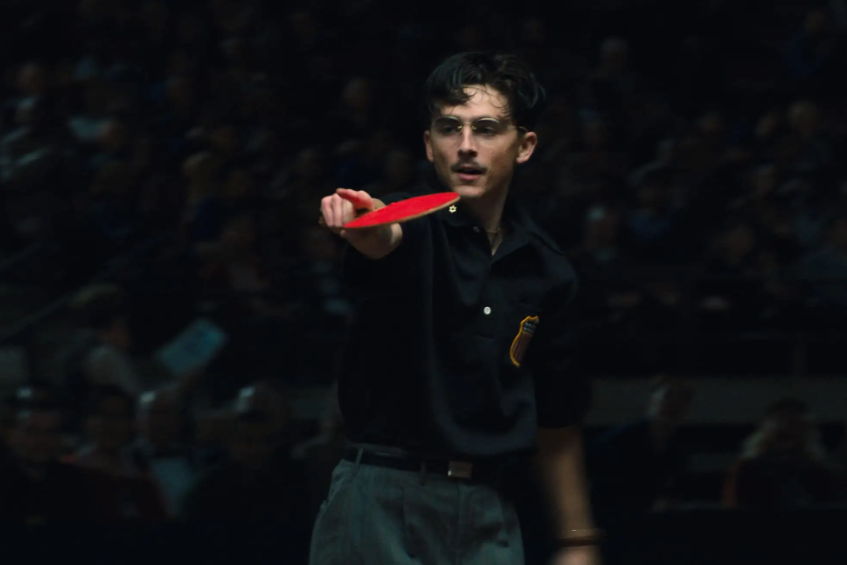
Photo From Marty Supreme
Atmosphere Over Structure
The film functions less like a traditional biopic and more like an anthropological study of mid-century hustle. The Safdie signature is all over this: loud, overlapping sound design and a kinetic visual style that makes a basement ping-pong match feel like a high-stakes heist.
The set and costume design are undeniably some of the film’s strongest assets. Every suit, smoke-filled parlor, and street corner feels meticulously curated, offering a “time capsule” experience that allows the audience to breathe in the smog of 1950s NYC.
While the aesthetics are locked in, the storytelling is a little scattered. Marty Supreme often feels like a collection of scenes designed for social media virality rather than cinematic depth. The dialogue is punchy and “meme-able” with plenty of eye raising one liners and memorable quotes. On the other hand, at times the dialogue occasionally replaces genuine character development with stylistic posturing.
The film’s biggest hurdle is its lack of structure. Rather than a clear beginning, middle, and end, the plot meanders through Mauser’s rises and falls with no coherent arc. We see the hustle, we hear the noise, but its hard to feel the stakes are high when MacGuffins enter and exit the story so frequently.
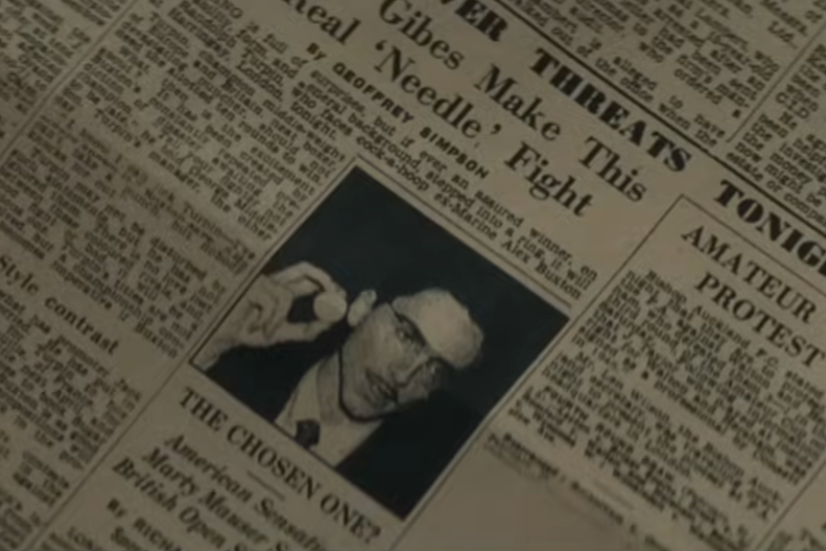
Photo From Marty Supreme
The Acting
Timothée Chalamet and Odessa A’zion, a married woman Chalamet is having an affair with, anchor the film with a raw, undeniable magnetism. As Marty and Rachel, their chemistry acts as a vital grounding force against Safdie’s trademark frenetic energy, portraying two souls who become each other's only refuge.
Their connection feels remarkably authentic as they navigate a 1950s New York that is as unforgiving as it is vibrant, proving that even in the city’s most relentless moments, the struggle to survive is always better fought together.
The supporting cast of the film is also a blend of polished veterans with non-actors creating a textured, lived-in, raw, and authentic bench of actors. Gwyneth Paltrow delivers a highbrow performance as Kay Stone, utilizing her natural “screen legend” aura to portray a socialite whose elegance masks a deep, emotional vulnerability.
In sharp contrast, Kevin O’Leary makes a polarizing film debut as the business magnate Milton Rockwell; rather than attempting a transformative performance, O’Leary leans into his real-life “Mr. Wonderful” persona from his time on the business show Shark Tank to portray a ruthless, cold-blooded tycoon.
Meanwhile, Tyler, The Creator (Tyler Okonma) avoids the pitfalls of a typical celebrity cameo by imbuing Wally with a frantic, electric energy that matches Chalamet’s pace, proving himself a natural fit for Safdie’s high-stress, kinetic world.
Wrap Up
Marty Supreme is a propulsive and aesthetic cinematic journey solidifying Josh Safdie’s ability to command a massive, period-accurate canvas on his own. While the film’s two-and-a-half-hour runtime can feel overstuffed—with a few wandering subplots and pacing issues that may test the patience of casual viewers—the end product compensates for its length.
From the hyper-realistic set design by Jack Fisk to Miyako Bellizzi’s impeccable 1950s costuming, the world of the Lower East Side is brought to life with such granular detail that you can practically smell the cigarette smoke and ping-pong paddle rubber.
The acting remains the film's strongest asset, bridging the gap between its frantic energy and its more intimate character studies. Timothée Chalamet delivers a strong performance that is charismatic and magnetic, while the supporting cast adds a layer of authenticity and old school flavor.