

In Desperate Bid To Limit Negative Coverage, President Donald Trump Bans Free Speech In His Bubble Of Alternative Reality
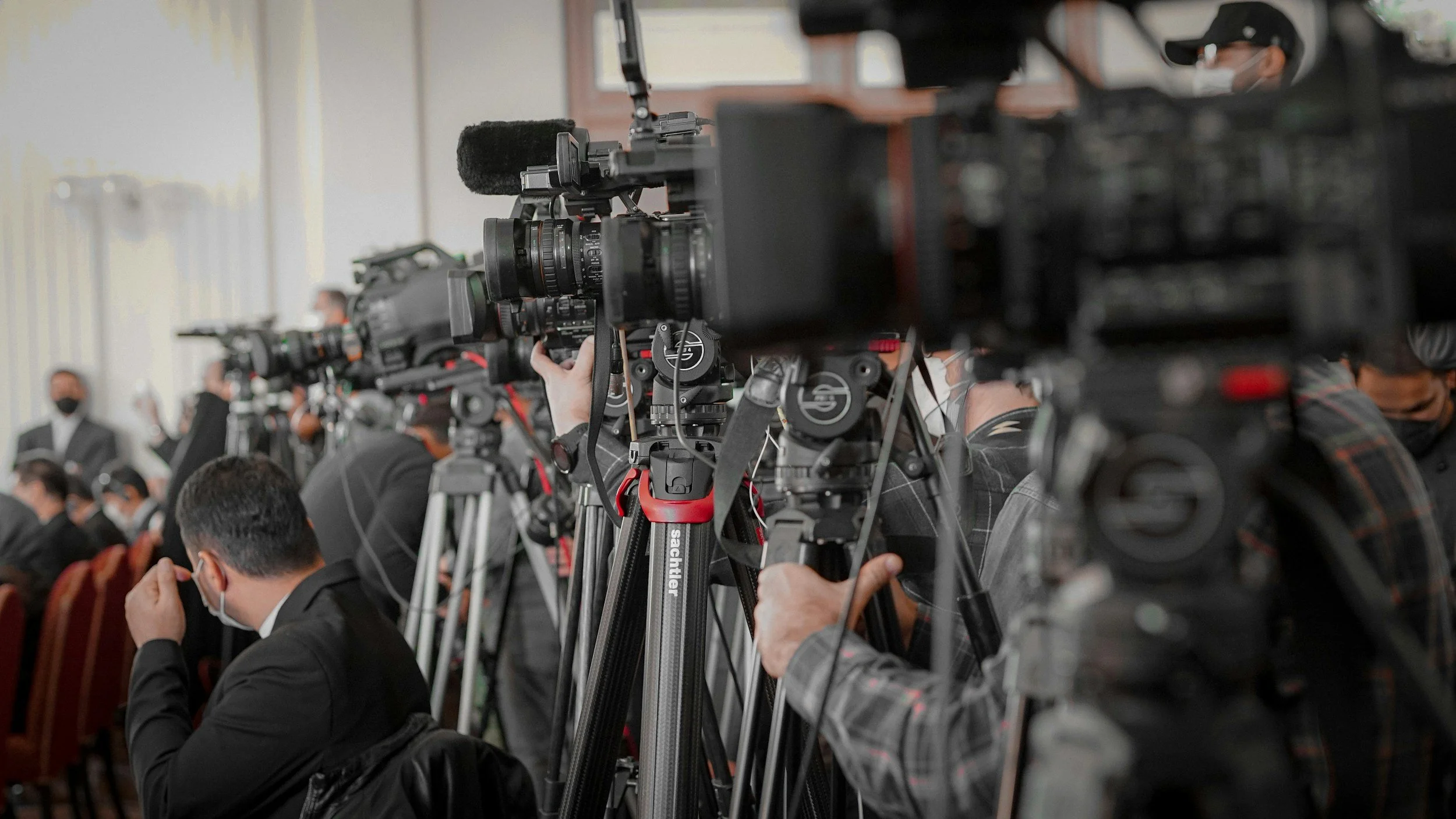
Source: Squarespace/ Unsplash
The Danger of Banning Free Speech And A Free Press
When government institutions begin systematically locking out reporters, the immediate story often focuses on court filings and legal maneuvers. But the true issue cuts much deeper than court proceedings.
The recent decision to strip press credentials from major news organizations—namely CNN, MS NOW, and Politico, which are now suing the Trump Administration for violating the First Amendment and the Constitution’s due process protections—represents a direct assault on the fundamental principles of free expression and democratic accountability.
For any democratic system, the free flow of information isn't a secondary luxury; it is the cornerstone. By attempting to insulate the executive branch from critical reporting, President Trump risks replacing transparent public governance with an echo chamber designed solely for approval. It’s a four year old’s equivalent of sticking their fingers in their ears and saying “I’m not listening.”
Insulation Over Explanation
Shutting out journalists whose reporting fails to align with official narratives is an effort to construct a controlled reality. When President Trump opts to ban journalists rather than engage with tough questions, it signals a fundamental unwillingness, inability, or blatant incompetence to publicly justify his actions. Instead he has been reverting to childish character attacks like when he told a Bloomberg News journalist “quiet piggy” for asking him a question about Jeffrey Epstein.
True leadership requires defending policies through evidence and reason, facing scrutiny, and engaging with challenging perspectives. Attempting to manage public perception by removing independent observers mirrors the classic posture of ignoring an issue in hopes it vanishes. However, insulating an administration from criticism does not erase policy failures; it merely hides them from public view.
So how did we wind up here?
It begins with the Bush administration’s ability to mask lying with complex marketing tactics and unique word choices. In the lead-up to the 2003 invasion of Iraq, the Bush-Cheney administration engineered a highly orchestrated public relations campaign that leveraged corporate marketing tactics—including strategies made prominent by Republican strategist and pollster Frank Luntz—to determine precisely which false narratives resonated most with a traumatized post-9/11 public.
Rather than sharing vetted and accurate intelligence with congress and the American public, administration figures systematically tested emotive terminology, discovering that precise, terrifying phrases like “The War on Terror” vs. “The War in Iraq” effectively overrode public skepticism and conflated Saddam Hussein directly with the September 11 attacks.
This carefully polished sales strategy, which according to a comprehensive study by the Center for Public Integrity issued at least 935 false statements regarding Iraqi threat levels in a two-year span, treated military intervention not as a grave last resort of statecraft, but as a product to be test-marketed, framed, and sold to the American populace. We have now evolved to a point where the president no longer needs to convince the public of anything he does, he can lie blindly and face little to no accountability since republicans control all 3 branches of government.

Source: Squarespace/ Unsplash
The Erosion of Independent Information Dissemination
Press access to official government proceedings is not a privilege granted to journalists for their own benefit. It is a legally protected constitutional right designed for those who depend on independent reporting to understand what is being done in the name of the American public.
When independent media is excluded from standard access, the public loses its primary window into how executive decisions are made, how resources are allocated, and how power is exercised. Substituting independent oversight with state-vetted communications transforms public information into pure propaganda, leaving readers and viewers with an incomplete and extremely biased picture of state action.
President Trump did not implement a blanket press ban—sparing outlets that offer favorable coverage, a group that continues to shrink—and instead targeted left-leaning news organizations specifically.
A Dangerous Precedent for Open Society
The implications of using access as a tool of editorial leverage extend far beyond any single administration or news outlet. When viewpoint discrimination becomes an accepted administrative tactic, it sets a precedent that fundamentally undermines the First Amendment.
If access to public officials depends on favorable coverage, the role of an independent press as a check on power is compromised. The strength of a free society relies on the principle that those in power must remain answerable to the public. Silencing critical voices does not build strength; it exposes President Trump’s deep vulnerability to scrutiny and weakens the democratic framework designed to keep power in check.