Source: Squarespace/Unsplash
About The Brooklyn Bridge
As one of the oldest suspension bridges in the United States, the Brooklyn Bridge has faced the test of time, enduring decades of wear and tear. In this article, we will delve into the extensive renovations taking place on the Brooklyn Bridge, examining the structural upgrades, aesthetic enhancements, and technological advancements that are breathing new life into this beloved landmark.
The Brooklyn Bridge is getting a major overhaul. After more than 140 years carrying New Yorkers across the East River, the landmark is in the middle of a sweeping renovation meant to keep it standing for another century. John A. Roebling designed the bridge. Construction began in 1869 and was completed in 1883, and at the time it was the longest suspension bridge in the world.
It is one of the oldest suspension bridges in the United States. Decades of traffic, weather, and plain old wear have taken their toll. This article lays out what is actually being done: the structural work, the cable repairs, the cosmetic restoration, and the new technology going into the span.
The Need for Renovations
The bridge spans the East River, connecting Manhattan and Brooklyn. It has been a working transportation artery for well over a century. Relentless exposure to the elements and heavy daily traffic have worn the structure down. Corrosion, aging steel, and outdated components all needed attention. The renovations are designed to fix that: to make the bridge safe and functional for the long haul. Multiple projects were underway, with the major restoration completed in 2023.
The structural side of the work starts at the foundation. Crews inspect and repair the masonry, reinforce the granite towers, and replace corroded steel. The anchorages get rehabbed too. They hold the immense weight of the main cables, so keeping them sound is non-negotiable.
Modern materials and construction methods do the heavy lifting here. The goal is straightforward: keep the bridge solid against the forces of nature. The work touches nearly every part of the span. From the deck to the towers, nothing in the original 1883 structure gets a pass.

Source: Squarespace/Unsplash
Cable Rehabilitation
The main cables do the heaviest work on the bridge. They carry the full weight of the deck and everything on it, day after day. Keeping them in working order is the core of the renovation. Every wire inside those cables gets examined for signs of wear, fatigue, or damage.
Inspectors go through the cables wire by wire. Anything that looks compromised gets flagged for repair or replacement. It is slow, exacting work. The cables are original 19th-century engineering, and the people working on them have to respect that.
Damaged sections are cut out or repaired in place. New wire goes in where the old wire has given out. Then comes the part that protects everything: coating. Each cable gets a protective layer designed to fight corrosion.
Salt air and weather are relentless on the East River. Without that coating, the steel would deteriorate far faster. The coating work is as important as the repairs themselves. It is what keeps the cables intact between inspection cycles.
Old methods and new ones work side by side here. Traditional cable craftsmanship meets modern materials science. The result: cables that keep their strength, and a bridge that keeps carrying its load.
This is not decorative work. If the cables fail, the bridge fails. That is why this section of the renovation gets the most attention. Roebling's design put the cables at the center of everything. They are the load-bearing core of the span.
That is why the inspection goes wire by wire instead of cable by cable. A problem in one wire can spread if it is not caught. Crews look for the usual enemies: corrosion from salt air, metal fatigue from constant flexing, and physical damage from decades of exposure. Where a wire is too far gone, it comes out and a new one goes in. Where it can be saved, it gets repaired and sealed.
The work happens in stages along the length of the bridge. Sections are taken on one at a time so the bridge keeps functioning. Protective coatings are the second half of the job. They seal the steel against moisture and the corrosive river air.
The coating is not cosmetic. It is the barrier that stands between the steel and the elements, year after year. Reapplication happens on a schedule. The bridge's maintenance crews keep the coating intact long after the renovation wraps.
What makes the job unusual is the mix of eras. Nineteenth-century cable construction meets twenty-first-century materials and monitoring. The craftsmen working the cables use techniques that would be familiar to Roebling's crews. The materials they apply are entirely modern.
That combination keeps the bridge viable. The design was sound in 1883; the upkeep carries it forward.
Source: The Empire City Wire
Aesthetic Enhancements
The renovations are not only structural. The bridge is also getting its looks back. The Gothic-style arches get careful restoration. So does the delicate filigree work across the span.
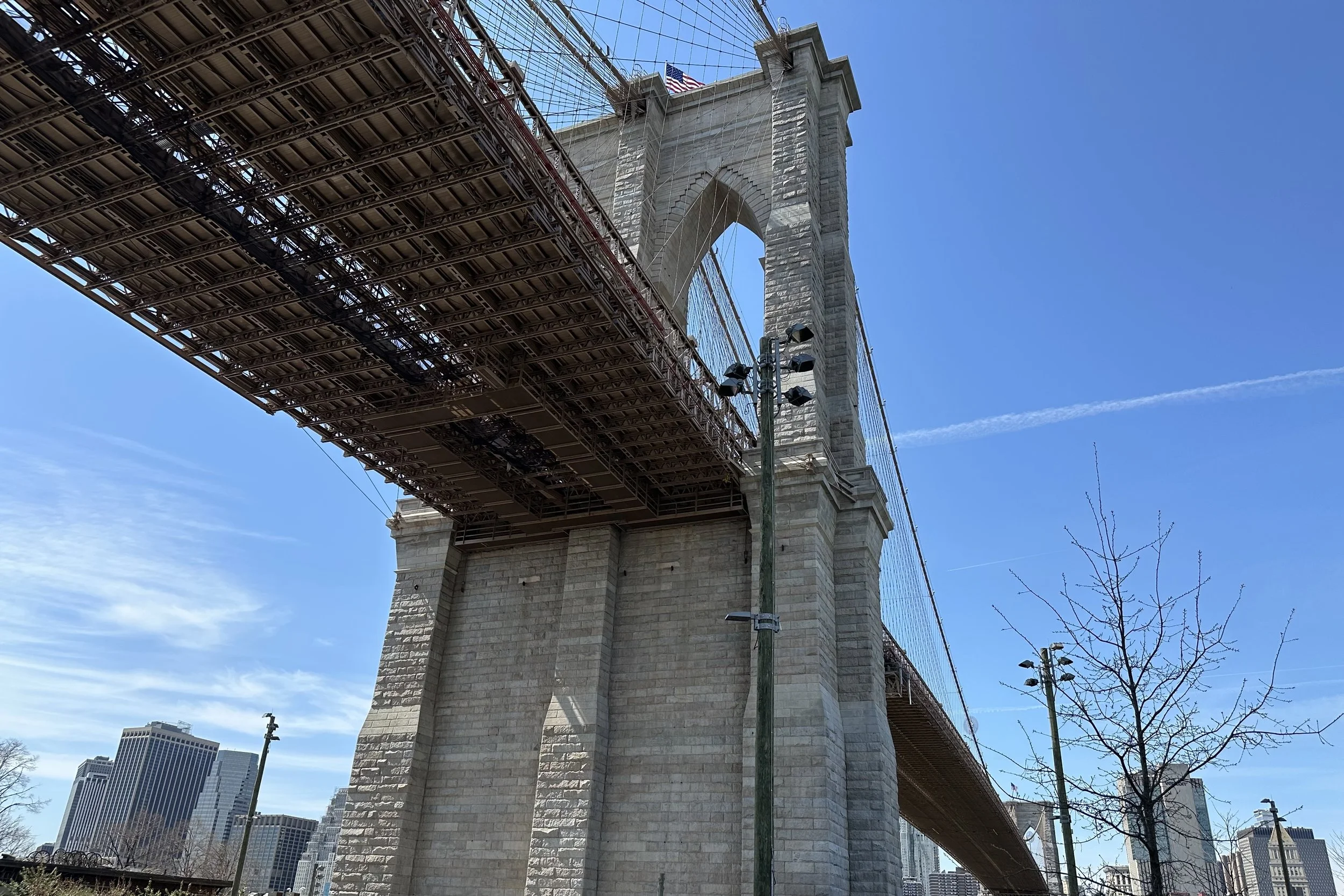
The granite towers are cleaned, repaired, and repointed. Their appearance comes back to what it once was. The ornate lampposts and the American flags get refurbished too. The details matter as much as the big pieces.
The biggest visual change is the stonework. Years of grime had turned the towers a dark, sooty grey. The cleaning has brought them back to nearly white. The difference is hard to overstate. The towers look brighter than they have in living memory.
As one account in the Westview News put it: "The masonry has never looked as good in our lifetimes, or since the bridge was first built; we are used to seeing a darker brown than even brown paint, but now the towers are nearly white in the bright sunshine." The grime was a record of the bridge's age. Soot, dirt, and pollution built up over decades in the middle of the city. Stripping it away revealed the granite underneath. The stone looks the way it did when the bridge first opened.
The restoration team worked the stone by hand in places. It is painstaking work across an enormous surface. The result is a bridge that looks closer to its 1883 self. The cleaning alone changed how the whole span reads against the skyline.
The Gothic arches are the bridge's signature. Restoring them means cleaning each stone and repairing what the weather broke. Repointing the towers is mortar work. Old, crumbling mortar comes out and new mortar goes in, joint by joint.
It is the kind of work you only notice when it is done badly. Done right, the towers just look like themselves again. The lampposts along the span are original-style fixtures. Each one gets taken down, repaired, and refinished.
The American flags flying from the towers are part of the picture too. They get refurbished along with everything else. The aesthetic work runs alongside the structural work. Both are part of the same effort to keep the bridge standing and looking like itself.

Source: Squarespace/Unsplash
Technological Advancements
The bridge is a 19th-century structure. The renovation brings 21st-century tools to it. Old stone and new technology now share the same span. The work is as much about the future as the past.
The upgrades go beyond looks. They are built to make the bridge safer and easier to use for decades. Monitoring systems are the centerpiece. Sensors embedded in the structure track its health around the clock.
They pick up stress, wear, and fatigue in the steel and stone. Small problems get caught before they turn big. That early warning changes how maintenance works. Crews can fix issues on a schedule instead of in a crisis.
The sensors talk to engineers in real time. The bridge reports on its own condition. It is a quiet upgrade. Nobody crossing the bridge will notice the sensors, but they change everything behind the scenes.
Lighting is the visible part of the tech upgrade. New systems light the bridge at night for drivers and pedestrians. The lighting also puts the bridge on display after dark. The span becomes part of the nighttime skyline in a deliberate way. Safety and spectacle share the same fixtures: better visibility for people crossing, a better view for everyone else.
The tech additions do not alter the bridge's historic character. They sit underneath it, supporting the structure without changing its face. The goal: a bridge that works like a modern one while looking like itself. That balance is the point of the whole project. Preserve the landmark, and give it the tools to last.
The monitoring covers the full span. Towers, cables, anchorages, and deck all feed data back to the engineers watching them. The systems run continuously. Structural health does not take nights off on a working bridge.
When a sensor flags something, crews investigate. The response is targeted instead of guesswork. That precision saves money and time. It also keeps the bridge open while work happens around the traffic.
The lighting upgrade replaced older fixtures with modern ones. The new lights use less energy and throw better coverage.

Source: Squarespace/Unsplash
Preservation and Public Engagement
Preservation runs through every part of the renovation. Experts make sure the upgrades do not erase the bridge's history. The goal is to keep the landmark intact while making it work for the future. Old and new have to coexist.
The renovation also opens the bridge up to the public. Educational programs explain the bridge's history and engineering. Guided tours take visitors through the story of the span. Exhibitions cover the ongoing renovation work itself.
The idea is to give people a stake in the landmark. A bridge people understand is a bridge people care about. That engagement matters. Public support is part of what keeps preservation projects funded and moving. The Brooklyn Bridge renovation is a long job with a simple aim: keep a 19th-century landmark working in a 21st-century city.
Structural repairs, cleaner stonework, and new technology all serve that aim. The bridge stays safe, useful, and recognizable. It remains what it has always been: the link between Manhattan and Brooklyn, and one of the defining sights of New York. The work will outlast the crews doing it. That is the nature of preservation: build for the people who come next.