Source: TikTok @michaelrahmani
The Creation Of Battery Park City
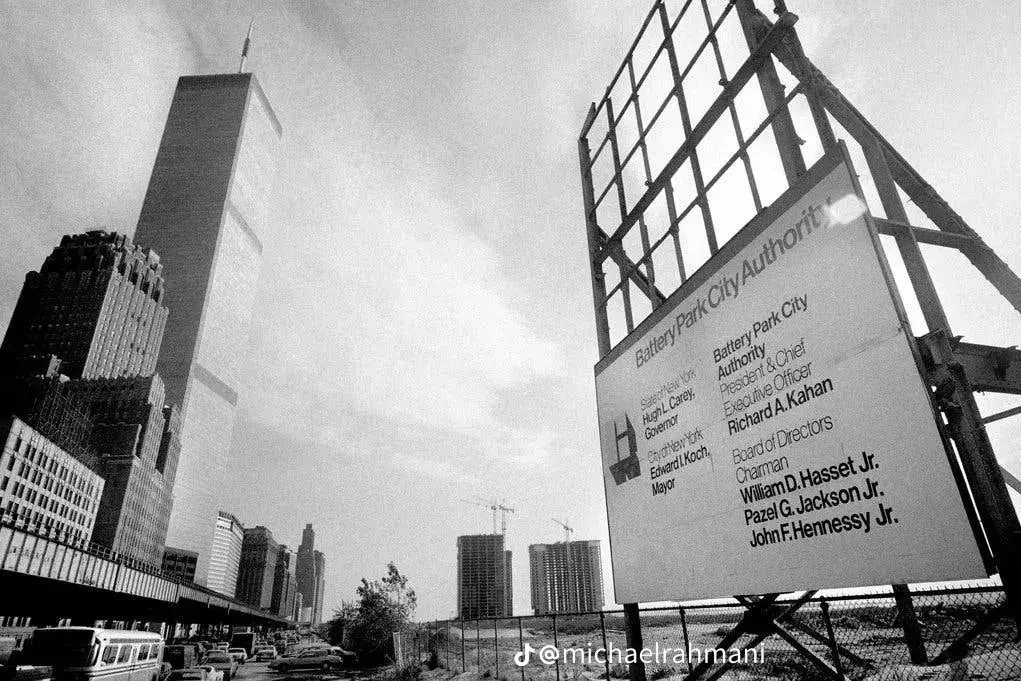
Battery Park City did not grow the usual way. It was built, on purpose, on land that did not exist before: a landfill pushed out into the Hudson River off the southern tip of Manhattan. In its early days the site was bare fill and open space, waiting for streets.
The plan took shape in the 1960s. New York had a working waterfront it no longer used the old way, and a chance to trade dead industrial shoreline for housing, parks, and offices. Soil and rock went into the river load by load, and the shoreline moved west, one truck at a time, for years.
Raising a neighborhood out of a river is slow, careful work. The fill had to settle and hold before anything could stand on it, and the building had to account for the water on the other side of the bulkhead. Get the base wrong and nothing above it matters. The engineers got it right.
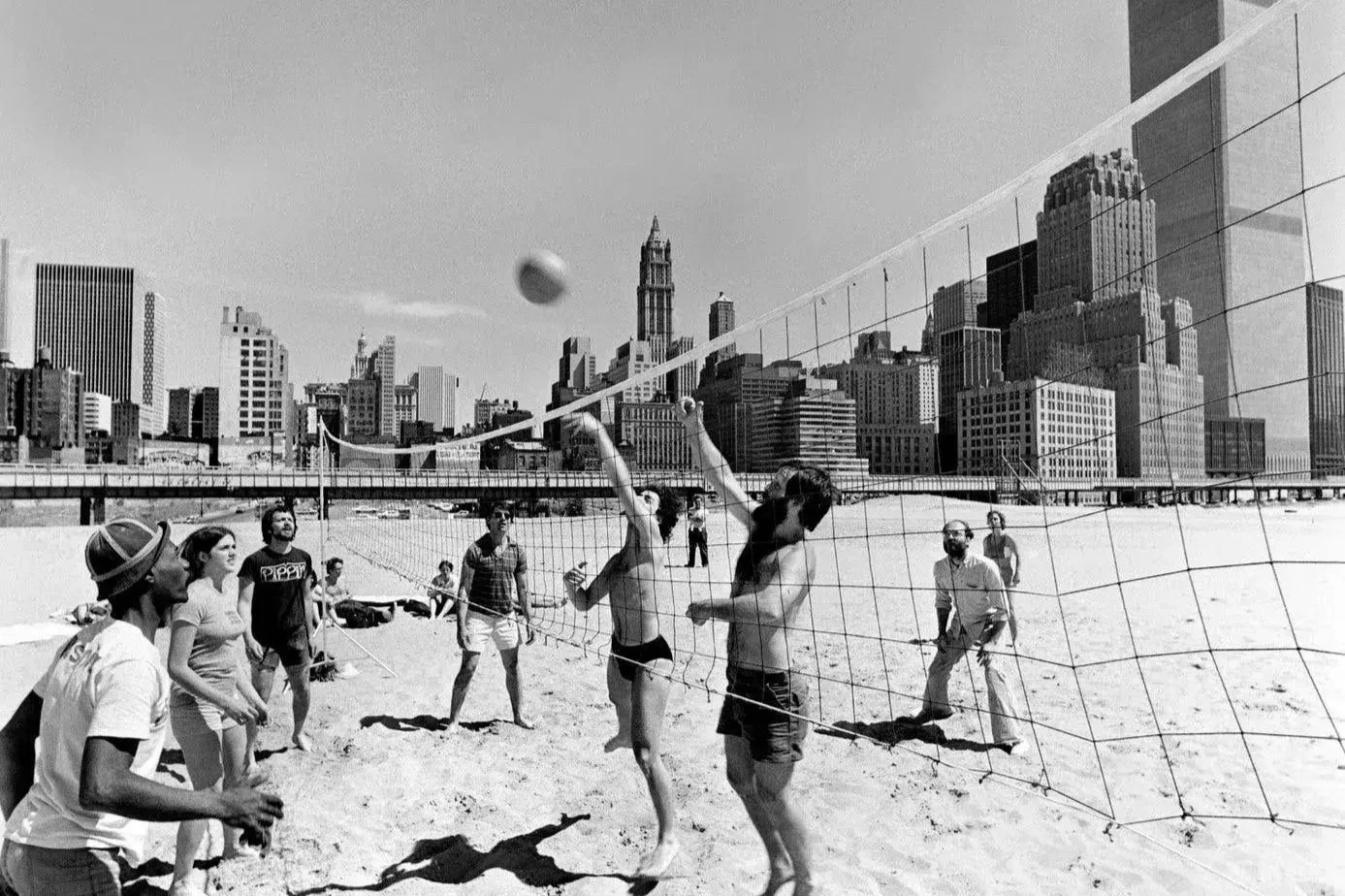
For a long stretch, the land sat mostly empty, a wide flat expanse with the skyline behind it and the river in front. It looked like a promise nobody had kept yet. Development came in phases, building by building, park by park, until the empty lots filled in and the place started to read as a neighborhood.
The result is a part of Manhattan that feels planned because it was. Wide sidewalks, lawns running down to the water, and towers set back from the street all came out of that decision to build on fill. New York made land, then charged waterfront rents for it, which may be the most New York sentence in this guide.
Source: TikTok
What Is Battery Park City?
Battery Park City is a planned neighborhood on the southwestern tip of Manhattan, built on that reclaimed land along the Hudson. It runs from around the Battery up toward Tribeca, with the river on one side and West Street on the other. It is dense, residential, and noticeably calmer than the Financial District streets just east of it.
The parks are the point. A long esplanade follows the water for the length of the neighborhood, with lawns, gardens, and benches spaced along it. Runners use it at dawn, office workers eat lunch on it, and everyone else uses it at sunset. The Statue of Liberty sits out in the harbor the whole time, doing its part for the view.
Housing fills most of the blocks: modern apartment towers, many of them built with green technology and energy standards that were early for New York. Schools, playgrounds, and ballfields sit between the buildings, which is why the neighborhood feels lived in rather than visited. Families stay here for years.
Culture fits into that mix quietly. The Museum of Jewish Heritage stands near the southern end, and the Skyscraper Museum sits on Battery Place, a fitting subject for a neighborhood built out of a river. Restaurants line the waterfront and the side streets, most of them with a view of the water if you pick your table well.
For workers, the appeal is simple: the World Trade Center transit hub is a short walk away, and most Lower Manhattan offices are closer than that. People can live ten minutes from their desks and still come home to a park. That trade explains the rents.

Source: Brookfield Place
Brookfield
Brookfield Place is the neighborhood's front room: a shopping and office complex across West Street from the World Trade Center, built around a tall glass atrium called the Winter Garden. Palm trees grow under the glass, and the whole place looks out on the marina and the Hudson.
The tenants upstairs explain the tone. Major banks and financial firms keep offices in the towers above the shops, so the ground floor runs formal at lunch and quieter at night. The retail is aimed high: luxury brands and boutiques.
Food is the better reason to come. A food hall serves many cuisines under one roof, fast enough for a lunch break, while full-service restaurants handle longer meals and business dinners. You can eat well here, as long as you will pay downtown prices for the view.
Come for one part and you will likely stay for the others. Shop a little, eat something, then walk out the back of the Winter Garden onto the waterfront. It sets the terms for the neighborhood: polished, calm, and built around the river.
Go when: a weekday, when the Winter Garden is busy and the food hall is fully open.
Location: 230 Vesey Street, across West Street from the World Trade Center

Source: Squarespace/Unsplash
Westfield (WTC)
Across West Street, inside the World Trade Center complex, stands the Oculus: the white, winged transit hall and shopping center run by Westfield. It opened on August 16, 2016, with 125 retail spaces, and at the time it was the largest shopping center in Manhattan. Even people who never buy anything walk through it just to look up.
The site carries weight that a normal mall does not. The Oculus replaced the Mall at the World Trade Center, the underground shopping center under the original towers, destroyed on September 11, 2001. Santiago Calatrava designed the new hall to bring light down into the station below, and on a bright day the main hall does feel like the inside of a ribcage made of windows.
Retail fills the floors around that hall, high-end names next to everyday ones. London Jewelers is the name the complex points to most often, with its cases of watches and jewelry, but the mix runs wider than luxury: clothing, electronics, gifts, and food spread across several levels, all of it threaded through a working train station.
That station is the building's second job. The Oculus is the World Trade Center terminal for PATH, the end of the line for trains from Newark and, on weekdays, from Hoboken, connecting New Jersey commuters to the subway lines that meet here. Thousands of people pass through on their way somewhere else, which keeps the shops busy and the hall loud at rush hour.
The hall also works as a public room, not just a passage. Concerts, art installations, and seasonal displays run in the main space through the year, and the balconies above it are fine indoor seats for doing nothing at all. Office workers eat lunch along the railings, and photographers wait for the light to move across the floor. The building earns its crowds honestly.
Treat it as both stops at once. Give the hall ten minutes just for the architecture, walk the balconies for the retail, then decide whether you are shopping or just passing through with everyone else. Either way, it is the rare transit hub people photograph on purpose, and the easiest indoor hour in Lower Manhattan when the weather turns.
Go when: mid-morning, after the PATH rush and before the lunch crowd.
Location: 185 Greenwich Street, World Trade Center

Source: Squarespace/Unsplash
The Waterfront At Brookfield
Step out of Brookfield Place on the river side and the neighborhood changes tempo. The waterfront promenade runs along the Hudson in front of the complex, with wide paving, rows of benches, and tables from the restaurants that face the water. Boats move past, ferries cross to New Jersey, and the skyline behind you goes quiet.
Lunch and dinner both work here, outside when the weather allows. The waterfront restaurants serve the office crowd at noon and a slower crowd at night, and a table facing west gets the harbor, the marina, and the Jersey City skyline across the river in a single view. Few downtown tables come with that much water in the frame.
The boats are not decoration. North Cove Marina sits in the inlet in front of Brookfield Place, holding yachts and sailboats through the warmer months, with sailing lessons and charters running out of it in season. Watching a crew work a boat out of its slip, ten minutes from Wall Street, is one of the neighborhood's better free shows.
Come back in the morning and it belongs to dog walkers, runners, and parents with coffee — the same paving the dinner crowd claims by evening.
Face west at the end of the day and the geography pays off. The sun drops over New Jersey, the light goes long across the harbor, and the promenade fills with people who planned to be exactly there. Watching New Jersey take the sunset is the one time New Yorkers gladly let it have the spotlight.
Go when: the last hour before sunset, for a table facing the water.
Location: the esplanade in front of Brookfield Place, on the Hudson River
Conclusion
Battery Park City rewards a slow afternoon more than a checklist. Start inside Brookfield Place, cross West Street for the Oculus, and finish on the waterfront as the light changes. Three stops, one neighborhood, and a reminder that some of Manhattan's best ground was not ground at all until New York built it.