The Washington Post Is Now Another Casualty Of Billionaire Mismanagement
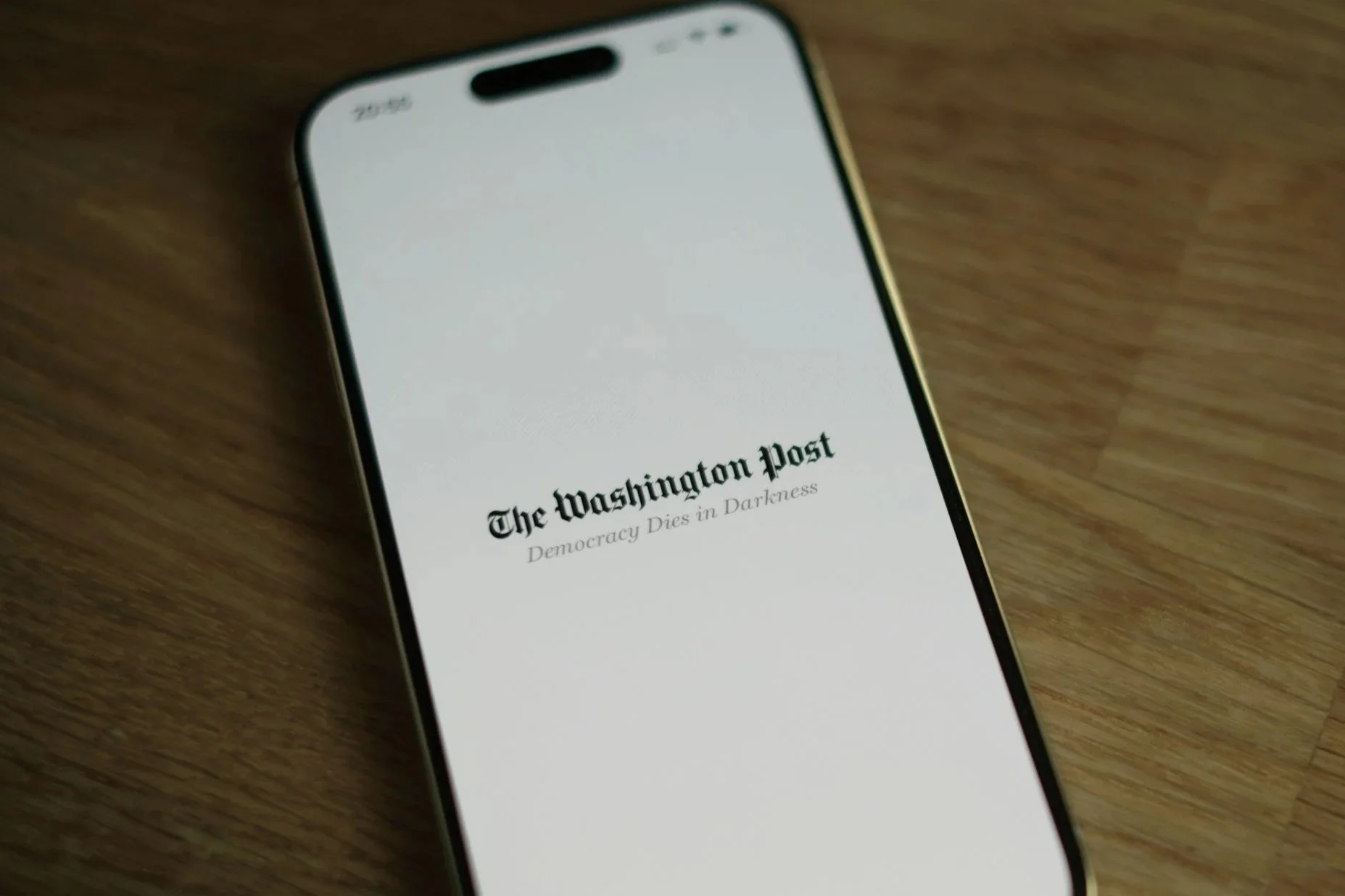
Source: Squarespace/ Unsplash
Democracy Dies In Darkness
The legendary newsroom that once brought down the presidency of Richard Nixon is now a shadow of its former self. This week, The Washington Post became the latest high-profile casualty of what critics are calling "billionaire mismanagement."
In a sweeping purge that has sent shockwaves through the industry, owner Jeff Bezos and the paper’s leadership announced layoffs affecting one-third of its total workforce.
While The Washington Post isn’t based out of NYC, the impact this will have across the broader industry will be felt across the country and the world. For New Yorkers who value a free and robust press, the scale of the destruction is staggering. This isn't just a minor "trimming of the fat," it is a fundamental dismantling of a national institution.
The Scale of the "Strategic Reset"
Executive Editor Matt Murray announced the cuts during a somber Zoom call on Wednesday, February 4, 2026. While the paper has faced financial headwinds in recent years—including a reported $100 million loss in 2024—the severity of these layoffs suggests a retreat from the Post’s historical ambitions.
The cuts have effectively gutted multiple core pillars of the publication:
The Sports Department: Entirely closed "in its current form." A section that once housed legends like Shirley Povich and Michael Wilbon is being reduced to a small "features" team.
International Bureaus: The paper is sharply scaling back its global footprint. Bureau chiefs and correspondents in Cairo, New Delhi, Sydney, and Jerusalem were among those let go.
Specialized Desks: The books department has been shuttered, and the graphics team was slashed from 25 staffers to just nine.
Metro Coverage: The local news department—responsible for covering the D.C. region and holding local power to account—is being significantly restructured and reduced.
Billionaire Mismanagement
The irony of the situation was personified by the layoff of Caroline O’Donovan, the Post’s lead reporter covering Amazon—the very company that made Jeff Bezos one of the wealthiest men in history. Her firing, along with hundreds of others, has intensified the narrative that the Post’s billionaire ownership is no longer a shield for journalism, but a liability.
While Bezos was initially hailed as a savior when he purchased the flailing paper in 2013, his recent stewardship has been defined by silence and controversial interference. The exodus of subscribers began in earnest last year following Bezos's last-minute decision to block the editorial board's endorsement of Kamala Harris, a move that cost the paper over 250,000 digital subscribers and decimated internal morale.
Just as Musk rebranded Twitter as "X" and gutted its safety and moderation teams—leading to a surge in misinformation and a flight of advertisers—Bezos’s recent actions have triggered a similar exodus of the Post’s "customers," in this case, its digital subscribers.
For informed readers, the comparison is sobering: while Musk turned the "digital town square" into a chaotic megaphone for his own ideology, Bezos has overseen the decline of a historic watchdog. In both instances, the "billionaire savior" narrative has collapsed, replaced by a reality where core institutional value is sacrificed for cost-cutting or political alignment, leaving the public with a significantly diminished view of the world.
A Diminished Public Good
Former Executive Editor Martin Baron described the current state of the paper as a "case study in near-instant, self-inflicted brand destruction." For informed readers, the concern goes beyond the loss of jobs; it is about the loss of information. When a major news organization retreats from war zones and local school board meetings alike, the public is left in the dark.
As laid-off journalists took to social media to share their stories—including one foreign correspondent let go while reporting from a war zone in Ukraine—the sentiment remains the same: "Democracy Dies in Darkness" was meant to be a warning, not a prophecy.