Source: Squarespace/Unsplash
Coffee culture in NYC
New York runs on coffee the way other cities run on tap water — constantly, unthinkingly, and in staggering volume. The bodega cup is the city's true official beverage: light and sweet, in the blue-and-white paper cup, handed across the counter. It deserves its own monument, and no serious coffee list should pretend it doesn't exist. But underneath that daily ritual sits a second tier, and it's enormous: the rooms where coffee gets treated as a craft, where beans are sourced like wine grapes, roast dates are printed on the bag, and the person behind the bar trained for the job like an apprenticeship.
This city has more of those rooms per square mile than anywhere else in America — a blessing and a filtering problem in equal measure. For every genuinely great cup there are a dozen rooms coasting on reclaimed wood and an expensive espresso machine — beautiful spaces serving forgettable coffee to people working on screenplays. The laptop camper with the seven-dollar latte and the dead-outlet stare is a New York archetype at this point, and most coffee lists are just directories of where to find him.
Coffee here isn't a beverage category, it's infrastructure. The city runs on it the way it runs on the subway — invisibly, essentially, at all hours. The 6 AM commuter cup, the 10 AM meeting cup, the 3 PM deadline cup, the 11 PM creative cup: New York's work ethic has a caffeine delivery schedule, and the rooms on this list serve every shift of it.
So this isn't that directory. These are the five rooms we'd actually send a friend to — the cups worth crossing town for, the places where the coffee justifies the trip rather than just accompanying it. An Upper East Side roaster doing bold the right way. The precision-obsessed operation that turned the pour-over into a discipline. A Nolita shapeshifter that pours morning coffee and midnight cocktails with the same conviction. The closest thing coffee has to a theme park, on 9th Avenue. And an East Village corner that couldn't care less about any of that and makes a great cup anyway.
Five cups, five neighborhoods, five different answers to the same morning question. Pick the one that matches yours.
Source: Squarespace/Unsplash
Variety Coffee Roasters: A Celebration of Bold Flavors and Artisanal Craftsmanship
Variety Coffee Roasters is the answer to a specific Upper East Side problem: where do you get a serious cup without the downtown preciousness? The room roasts bold — darker, chocolatier, lower-acid than the third-wave norm — and doesn't apologize for it. This is coffee that tastes like coffee, not like a wine tasting. The espresso has weight. The drip has backbone. If your palate was trained on the fruit-bomb Ethiopians of the pour-over era, Variety will recalibrate you in one cup.
There's a reason it owns the neighborhood: uptown has historically been a coffee desert compared to downtown and Brooklyn, and Variety filled the gap by simply being excellent. The beans are ethically sourced, the roast profiles are dialed in, and the baristas actually know what they're pouring — ask about the single origin and you'll get an answer, not a blank stare. In a neighborhood where a great cup used to require a subway ride, that's not a small thing.
The room itself is all business: clean lines, fast service, the hum of a neighborhood that has places to be. Nobody's camping with a laptop for six hours; people come in, get the good cup, and get on with the day. That's the UES social contract, and Variety honors it. The result is the rare neighborhood room that treats coffee as a craft without treating the customer as a student. It won't convert the light-roast evangelists, and it doesn't try to. Bold, honest, consistent — rarer than it sounds.
Order: Drip or cortado — let the roast do the talking.
Go when: You want the bold cup, done right.

Source: Blue Bottle Coffee
Blue Bottle Coffee: A Haven for Coffee Purists
Blue Bottle Coffee is the precision instrument of this list. Where other rooms chase vibe, Blue Bottle chases the perfect cup with an almost scientific discipline: beans sourced well above specialty-grade minimums — the house standard sits at 84 points on the 100-point scale, clear of the 80-point specialty floor — roasted small-batch and brewed to the gram. The pour-over here isn't a menu item, it's a practice.
The rooms are spare and Japanese-inflected: light wood, clean sightlines, nothing competing with the cup. Service is exact without being cold. This is the connoisseur's room — if you care about the difference between a washed and a natural process, the barista will happily talk your ear off.
With locations across the city, it's the easiest excellent cup to find, which is its own achievement. Consistency at scale is the hardest thing in coffee, and Blue Bottle mostly pulls it off. The sustainability commitments are real, and the whole operation runs like it was designed by people who lose sleep over extraction times. They were.
Order: Pour-over, single origin.
Go when: You want to taste what the fuss is about.
The Wooly: Where Heritage Meets Contemporary Elegance
The Wooly is the shapeshifter of this list, and the only room here with a genuine origin story. It started in the Woolworth Building — the great cathedral of commerce downtown — pouring coffee in one of the most storied lobbies in American architecture. When it moved to Nolita, it kept the name, which tells you something: the Wooly isn't a location, it's an idea. Heritage poured daily.
The move could have been an identity crisis, trading the Woolworth's marble grandeur for downtown's more intimate scale. Instead it reads as a homecoming. Nolita's old-New-York bones suit the Wooly's temperament — the neighborhood of cast-iron facades and corner joints, where heritage is the actual architecture rather than a branding exercise. The room kept its soul and found better lighting.
There's an old-soul quality to the space now: warm materials, low light, the sense that the day's first cup and the night's last drink belong to the same continuum. Because here, they do. The Wooly runs a genuine day-to-night operation — serious morning coffee service, a full restaurant at midday and dinner, and a cocktail bar after dark. Most rooms that attempt the triple play do one thing well and fake the other two. The Wooly doesn't fake any of them.
The coffee program holds its own against the specialists on this list: proper espresso, careful pours, beans treated with respect. But the real argument is the arc of the day. Come for the morning cup and stay for lunch. Come for lunch and stay for a drink. The room rewards lingering in a way the grab-and-go specialists can't, and the staff moves between dayparts without missing a step.
Then there's the cocktail program — the night shift's answer to the morning's precision. Handcrafted drinks, a deep back bar, mixologists who treat a Manhattan with the same seriousness the baristas bring to a cortado. The transition is the magic trick: same room, different light, different crowd, same standards. It's the rare room that works for the 8 AM regular and the 11 PM crowd without either feeling like they're in the wrong place.
For Nolita, the Wooly fills a specific gap: plenty of beautiful rooms downtown, but few that work at every hour. Most pick a lane — morning café or evening bar. The Wooly refused, and that refusal is the business model.
Order: Cortado in the morning; a proper cocktail after dark.
Go when: You want one room for the whole day.

Source: SimplyGraphs
Starbucks Reserve Roastery: An Immersive Coffee Journey
Yes, it's Starbucks. No, it's nothing like the one on your corner. The Starbucks Reserve Roastery on 9th Avenue is the company's moonshot — a sprawling, multi-level temple to the idea that coffee can be theater. Copper roasting drums spin in the open. Bars ring the floor, each dedicated to a different brewing method. The menu runs to rare small-lot coffees you'd never find in a green-apron store, plus a full cocktail program for the evenings. It's the Willy Wonka factory of coffee, and it's worth seeing once even if you think you're over Starbucks.
The skepticism is fair and worth addressing head-on: this is a global chain doing an experiential flagship, and there's real corporate machinery behind the magic. But the coffee program is genuinely serious — small-batch roasts, careful brewing across a half-dozen methods, baristas who know their lots. The theatrical roasting isn't just set dressing; the beans roasted on site go into the cups served on site, and you can taste what freshness does.
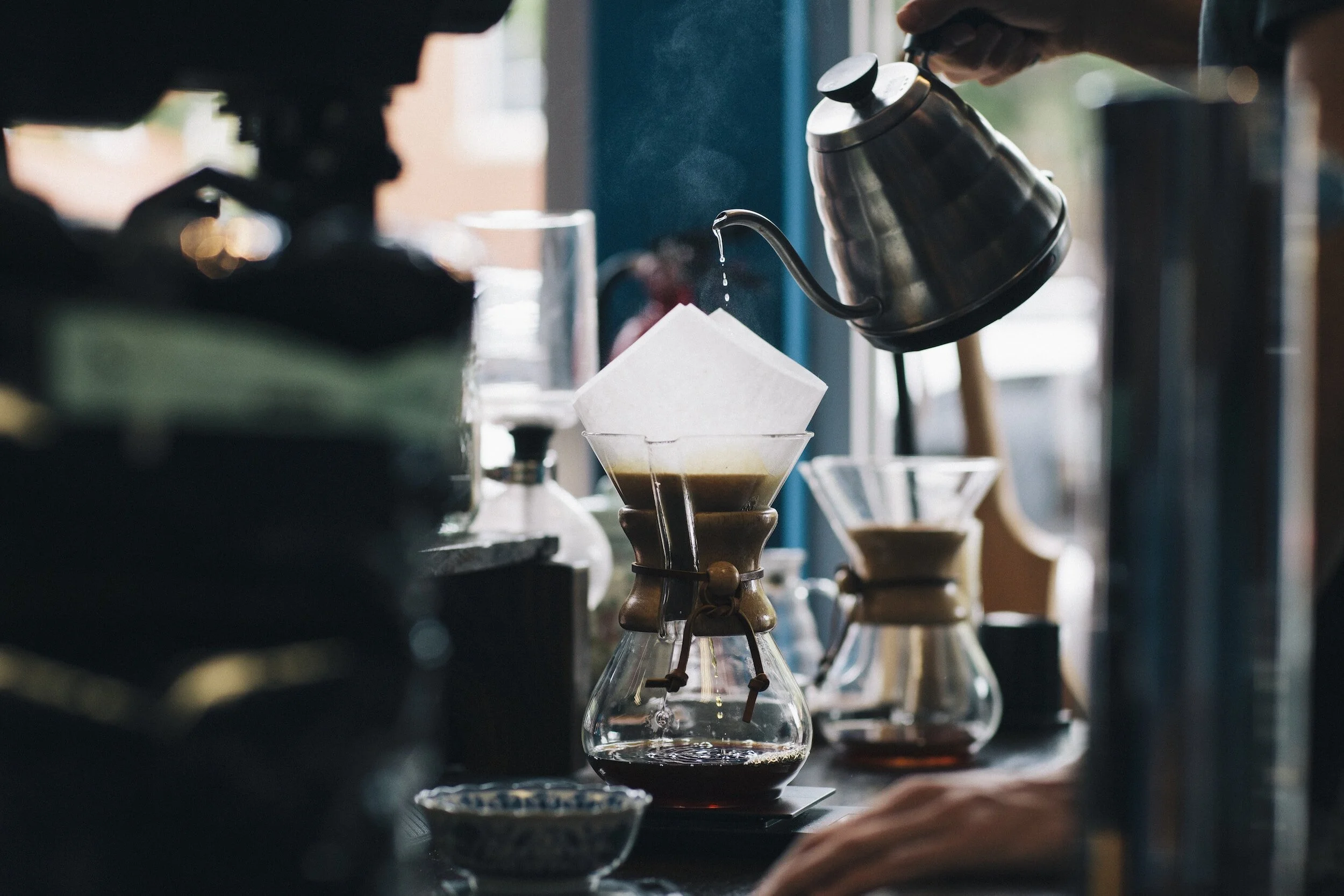
What the Roastery gets right — and what the corner stores can't — is scale as an asset rather than a compromise. The footprint means room for the full brewing arsenal: pour-over, Chemex, siphon, cold brew towers, the works. It means a menu with actual range instead of the standard four drinks, and it means the rare lots get a showcase instead of a shelf. For the coffee-curious, it's the single best classroom in the city: every method, side by side, ready to compare.
Go for the spectacle, stay for the cup. The siphon bar alone is worth the trip — watching a vacuum brewer do its slow, bubbling chemistry is the kind of thing that reminds you coffee is, at bottom, a beautiful process. And the cocktail program, built on coffee spirits and espresso, is better than it has any right to be. It's touristy, it's crowded, it's absolutely worth it. And for the visitor who only knows the green-apron version, it's a genuine revelation — the moment Starbucks stops being a habit and becomes, briefly, an experience.
Order: A siphon-brewed single origin; espresso martini after dark.
Go when: You want the full production, or you're showing the city to a visitor.
Source: Squarespace/Unsplash
Mudspot: A Cozy Haven for Coffee Aficionados
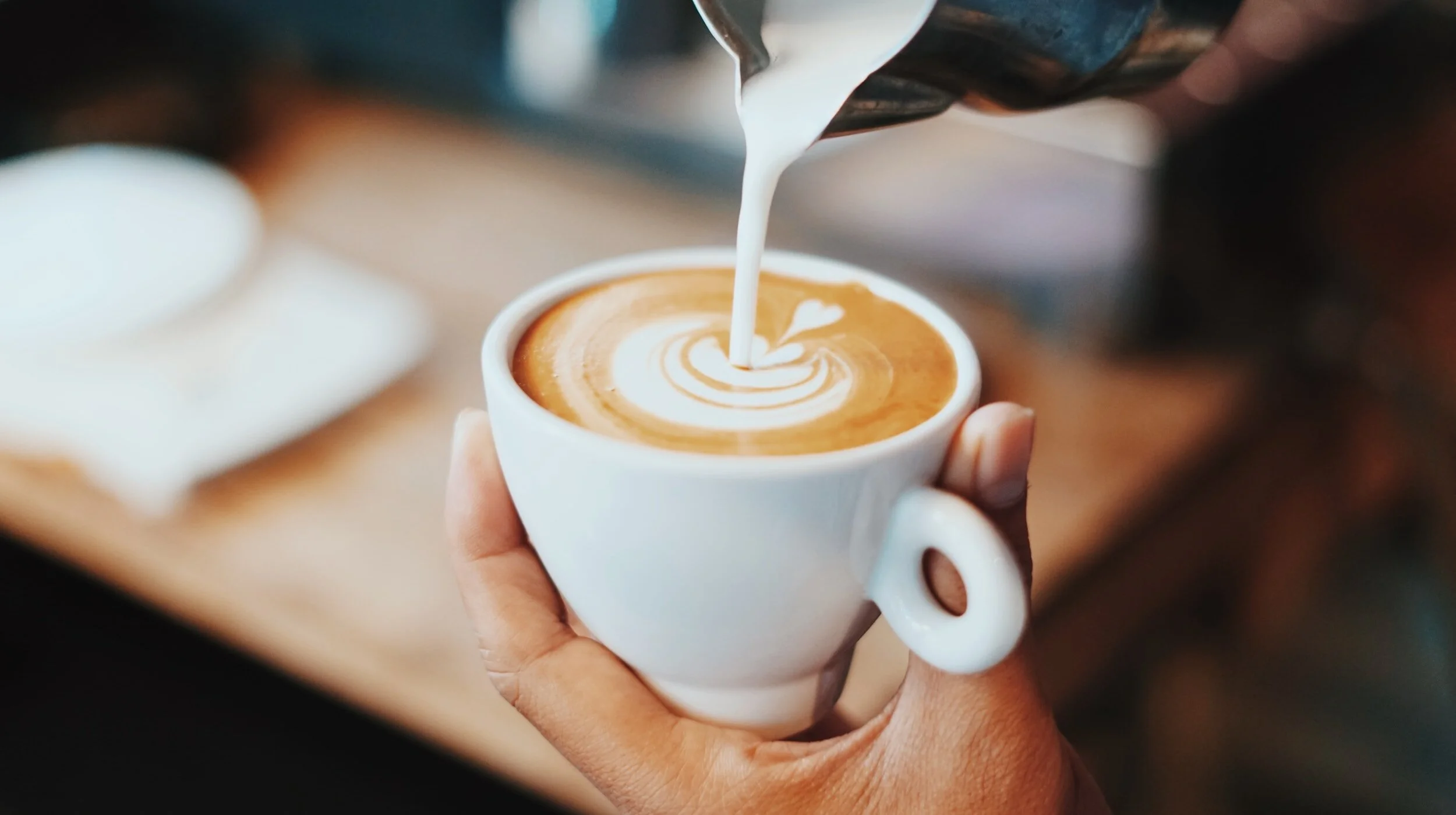
Mudspot is the East Village's answer to everything else on this list: unpretentious, a little worn around the edges, and completely uninterested in the performance of coffee culture. The room is cozy in the way that can't be designed — it has to accumulate. Regulars, plants, the particular light of a village storefront. The menu is straightforward, the coffee is good, and nobody's going to lecture you about extraction.
The lore says it's a Timothée Chalamet favorite, per the fashion press. Take that for what it's worth, but the room earns its reputation without famous regulars. This is the neighborhood joint as it should be: warm, reasonably priced, full of people who live within ten blocks.
What Mudspot understands — and what the precision rooms sometimes forget — is that a coffee shop is also a living room. The best cup in the world doesn't matter if the room makes you want to leave. Mudspot makes you want to stay: for the second cup, for the conversation, for the afternoon that disappears. In a city that monetizes every square foot of lingering, that's a small act of generosity.
Order: Whatever's brewed; sit by the window.
Go when: You want the village, not the scene.
Conclusion
Five cups, five neighborhoods, five different mornings. The bold roast uptown, the precision pour, the room that does it all, the full production, the village corner that keeps it simple. New York's coffee culture isn't one thing — it's the whole spectrum, from the bodega cup to the siphon bar, and the city is better for all of it.
These five are the ones we'd send a friend to. But the real list is longer than any article — it's the corner you discover on your own block, the barista who remembers your order, the room that becomes yours. Start here. Then go find the sixth.