The Best Film Directors of All Time: Masters of Cinema

Source: Squarespace/Unsplash
Our List Of Directors
Few professions demand as much vision, creativity, and precision as directing, and the history of cinema is marked by the work of extraordinary filmmakers whose artistry has defined entire eras of film.
Among the greats, Christopher Nolan, Steven Spielberg, Martin Scorsese, Quentin Tarantino, and Wes Anderson stand out as unparalleled auteurs.
These legendary directors hail from diverse corners of the globe, yet their work transcends borders and languages, resonating with audiences worldwide. Christopher Nolan, born in London, brings a distinctly British precision to his intricate narratives; Steven Spielberg, an American icon, has universalized Hollywood storytelling; Martin Scorsese, a son of Italian immigrants in New York, infuses his films with raw cultural authenticity; Quentin Tarantino, from Tennessee, channels a uniquely American blend of grit and style; and Wes Anderson, a Texan, crafts whimsical, universally relatable tales. Despite their varied backgrounds, their films are celebrated on every continent, proving that great storytelling knows no boundaries and unites people through the shared magic of cinema.
The ability of these directors to craft compelling narratives, build immersive worlds, and redefine storytelling has secured their places as some of the best film directors of all time.

A still from The Dark Knight Rises.
Christopher Nolan: The Architect of Complex Realities
Christopher Nolan’s films are defined by an obsession with the malleability of time and a staunch commitment to analogue, practical filmmaking on a gargantuan scale. His work is instantly recognizable for its non-linear narrative structures—seen in the reverse-chronological order of Memento or the nested timelines of Inception—which function like intricate puzzles designed to respect the audience's intelligence.
Visually, Nolan is one of the industry's last purists, famously shunning CGI in favor of in-camera spectacles like flipping a real semi-truck in The Dark Knight or crashing a functional 747 in Tenet. These massive set-pieces are almost always captured on IMAX or 70mm film, creating a high-contrast, immersive texture that digital cameras struggle to replicate.
Narratively, his protagonists are often obsessive, emotionally guarded men—frequently dressed in sharp suits—who are forced to navigate existential crises involving memory, grief, or the distortion of reality. When paired with a driving, metronomic score (typically by Hans Zimmer or Ludwig Göransson), a Nolan film feels less like a traditional movie and more like a high-stakes "epistemological thriller" that demands to be experienced in the largest theater possible.
Steven Spielberg: The Master Storyteller
No list of legendary directors would be complete without Steven Spielberg, a filmmaker whose career spans genres and generations. From the awe-inspiring adventure of Jurassic Park to the poignant drama of Schindler’s List, Spielberg’s unparalleled ability to evoke emotion and wonder has made him a household name.
As the director of Indiana Jones: Raiders of the Lost Ark, Spielberg blended thrilling adventure with humor, establishing a new type of action hero in Harrison Ford’s portrayal of the intrepid archaeologist. The film’s high-energy pacing, memorable set pieces, and sharp dialogue made it an instant classic.
With a knack for balancing spectacle and substance, his films have become cultural touchstones that define cinematic excellence.
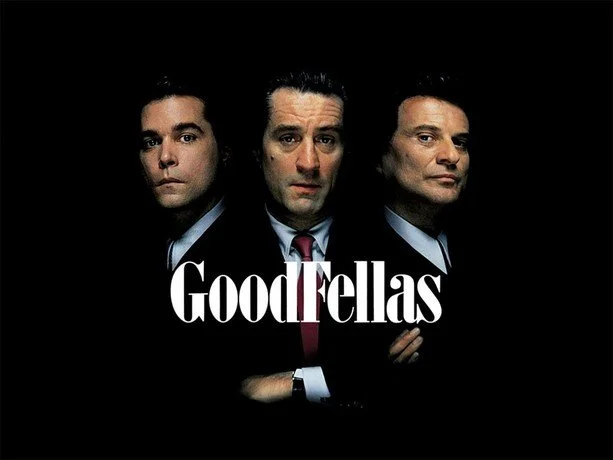
The Goodfellas Movie Poster
Martin Scorsese: The Chronicler of Humanity’s Depths
Martin Scorsese’s cinema is a visceral, kinetic exploration of the human condition, deeply rooted in the gritty realism of New York City and the heavy moral weight of his Italian-American Catholic upbringing.
Martin Scorsese’s career is a masterclass in character-driven storytelling. Renowned for his exploration of moral ambiguity and human vulnerability, Scorsese has delivered iconic films like Goodfellas, Taxi Driver, and The Irishman. His work often functions as a psychological deep-dive that refuses to judge its characters, instead forcing the audience to experience their world through an unflinching, often dizzying lens of self-made hustle and American symbolism.
His visceral style and meticulous attention to detail bring authenticity to every frame, earning him a reputation as one of the greatest chroniclers of the human experience.
Quentin Tarantino: The King of Stylized Storytelling
Quentin Tarantino is a cinematic rebel whose work is unmistakably his own. His work is instantly recognizable for its rhythmic, pop-culture-heavy dialogue and non-linear storytelling, which often uses chapter headings and "reshuffled" timelines to build tension and reveal character motivations. Tarantino has created instant classics such as Inglorious Basterds, Pulp Fiction, Kill Bill, and Django Unchained.
Ultimately, his movies function as "love letters to cinema itself," populated by morally ambiguous characters, fictional brands like Red Apple Cigarettes, and eclectic soundtracks that have cemented him as a postmodern auteur.
His fearless approach to filmmaking and unapologetic celebration of cinema’s raw, pulpy core have solidified his status as an icon of modern film.

A still from The Grand Budapest Hotel
Wes Anderson: The Poet of Whimsy and Aesthetic
Wes Anderson’s films are a feast for the senses, with films like The Grand Budapest Hotel and Moonrise Kingdom, Anderson crafts whimsical worlds that resonate with emotional depth and universal themes.
Wes Anderson’s cinematic style is defined by a meticulous, storybook-like precision that prioritizes extreme symmetry, vibrant color palettes, and a distinctively “deadpan” emotional tone. His films often resemble living dioramas or cross-section dollhouses, utilizing planimetric composition—where the camera is placed perfectly perpendicular to the scene—and rhythmic “whip pans” to navigate highly detailed, vintage-inspired sets.
Narratively, Anderson focuses on the “bittersweet” complexities of dysfunctional families, grief, and arrested development, often structuring his stories into literary chapters or using framing devices like narrators to underscore a sense of nostalgia.
The dialogue is famously delivered with a flat, monotone affect that creates a sharp contrast against the whimsical, pastel-hued visuals, allowing deeply felt themes of loneliness and belonging to resonate beneath the surface. His unique style and narrative voice have made him one of the most distinctive directors of our time.
Conclusion
These five directors represent the pinnacle of cinematic artistry, each bringing their own voice, vision, and innovation to the screen. Their work continues to inspire audiences and filmmakers alike, pushing the boundaries of what cinema can achieve. Whether through heart-pounding action, poignant drama, or visually stunning storytelling, Nolan, Spielberg, Scorsese, Tarantino, and Anderson have not only shaped the medium but also left indelible marks on the art of filmmaking itself.